Maharashtra Transfers Major Land To Back Metropolitan Infrastructure
ECONOMY & POLICY

Maharashtra Transfers Major Land To Back Metropolitan Infrastructure

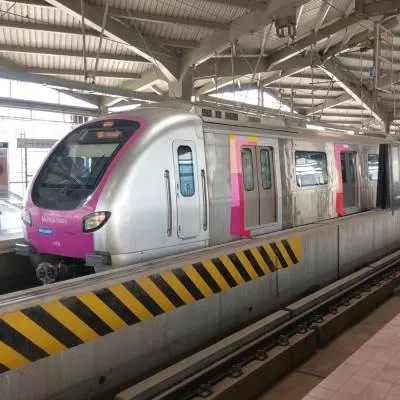
The Maharashtra government has transferred 33,954 hectares of land to the Mumbai Metropolitan Region Development Authority to support a major infrastructure programme valued at Rs three trillion (tn). The allocation is intended to fast track planned projects and to provide a sizeable asset base that the authority can monetise to raise funds for development. Officials indicated that the land transfer forms a central element of the strategy to deliver projects across the metropolitan region.

The Mumbai Metropolitan Region Development Authority will deploy the land to accelerate transport, housing and urban infrastructure projects and to improve regional connectivity. The authority is expected to combine land monetisation with debt and partnerships to mobilise resources and to attract private investment for expedited implementation. This approach is designed to reduce reliance on annual budgetary allocations and to create a steady pipeline of project finance.

State departments will coordinate on approvals and on conversion of land parcels to project-ready formats so that construction and procurement can start promptly. Governance arrangements are to be strengthened to ensure transparent selection of partners and fair valuation of assets before any transfer of development rights or concession agreements. The scale of the allocation requires systematic planning to avoid ad hoc decisions.

The transfer is likely to alter the funding landscape for metropolitan projects and to stimulate employment, supply chains and ancillary economic activity during the construction phase. Observers will watch implementation closely for adherence to environmental safeguards and rehabilitation requirements where applicable, and for equitable distribution of benefits. If executed efficiently, the measure could accelerate delivery of long-standing infrastructure priorities in the region. Monetisation efforts are expected to unlock revenue over the medium term and to provide recurring resources for maintenance and future schemes.

"Join industry leaders at RAHSTA Expo, India's premier platform for roads, highways and traffic infrastructure. Register now to explore innovations, network with experts and shape the future of mobility."

The Maharashtra government has transferred 33,954 hectares of land to the Mumbai Metropolitan Region Development Authority to support a major infrastructure programme valued at Rs three trillion (tn). The allocation is intended to fast track planned projects and to provide a sizeable asset base that the authority can monetise to raise funds for development. Officials indicated that the land transfer forms a central element of the strategy to deliver projects across the metropolitan region. The Mumbai Metropolitan Region Development Authority will deploy the land to accelerate transport, housing and urban infrastructure projects and to improve regional connectivity. The authority is expected to combine land monetisation with debt and partnerships to mobilise resources and to attract private investment for expedited implementation. This approach is designed to reduce reliance on annual budgetary allocations and to create a steady pipeline of project finance. State departments will coordinate on approvals and on conversion of land parcels to project-ready formats so that construction and procurement can start promptly. Governance arrangements are to be strengthened to ensure transparent selection of partners and fair valuation of assets before any transfer of development rights or concession agreements. The scale of the allocation requires systematic planning to avoid ad hoc decisions. The transfer is likely to alter the funding landscape for metropolitan projects and to stimulate employment, supply chains and ancillary economic activity during the construction phase. Observers will watch implementation closely for adherence to environmental safeguards and rehabilitation requirements where applicable, and for equitable distribution of benefits. If executed efficiently, the measure could accelerate delivery of long-standing infrastructure priorities in the region. Monetisation efforts are expected to unlock revenue over the medium term and to provide recurring resources for maintenance and future schemes.

Next Story
Real Estate

Pecan Realty Completes Rs 1.5 Billion Transactions

Pecan Realty has recently completed four institutional transactions worth over Rs 1.5 billion over the past two years, strengthening its position as an execution-led real estate platform. The deals include resolution-led acquisitions, structured finance transactions and capital partnerships across its development portfolio.The transactions covered acquisitions through the National Company Law Tribunal process and helped provide repayment or exits to both private and public sector lenders. The company said the deals demonstrate its ability to resolve complex project situations, work with instit..

Next Story
Real Estate

SNN Estates Expands North Bengaluru Housing Project

SNN Estates has announced an expansion of its SNN Estates Felicity residential project in North Bengaluru following strong buyer demand, with 75 per cent of the first-phase inventory sold within three days of launch.The developer will add 76 apartments in the new phase, taking the project's estimated revenue potential to around Rs 1,000 crore upon completion of Phase 2.Spread across 6.5 acres in Rachenahalli, near Manyata Tech Park, the project comprises 604 apartments in 1.5, 2, 2.5, 3 and 4 BHK configurations. The development includes a 50,000-sq-ft clubhouse with amenities such as sports co..

Next Story
Infrastructure Urban

SCG Drives ASEAN Industrial Transformation Strategy

SCG is strengthening its focus on ASEAN as a key growth region by advancing industrial transformation, enhancing competitiveness and building resilient regional value chains. Thammasak Sethaudom, President and Chief Executive Officer, SCG, highlighted the need for industries to continuously develop capabilities, strengthen resilience and deepen regional cooperation to achieve sustainable long-term growth.SCG views ASEAN as an important growth engine alongside China, supported by favourable demographics, trade connectivity and investment flows. With ASEAN’s GDP projected to grow by around 4.7..

Advertisement

Subscribe to Our Newsletter

Get daily newsletters around different themes from Construction world.

STAY CONNECTED

Advertisement

Advertisement

Advertisement