Mahindra And Mahindra Overtakes JSW MG To Claim Second Spot
ECONOMY & POLICY

Mahindra And Mahindra Overtakes JSW MG To Claim Second Spot

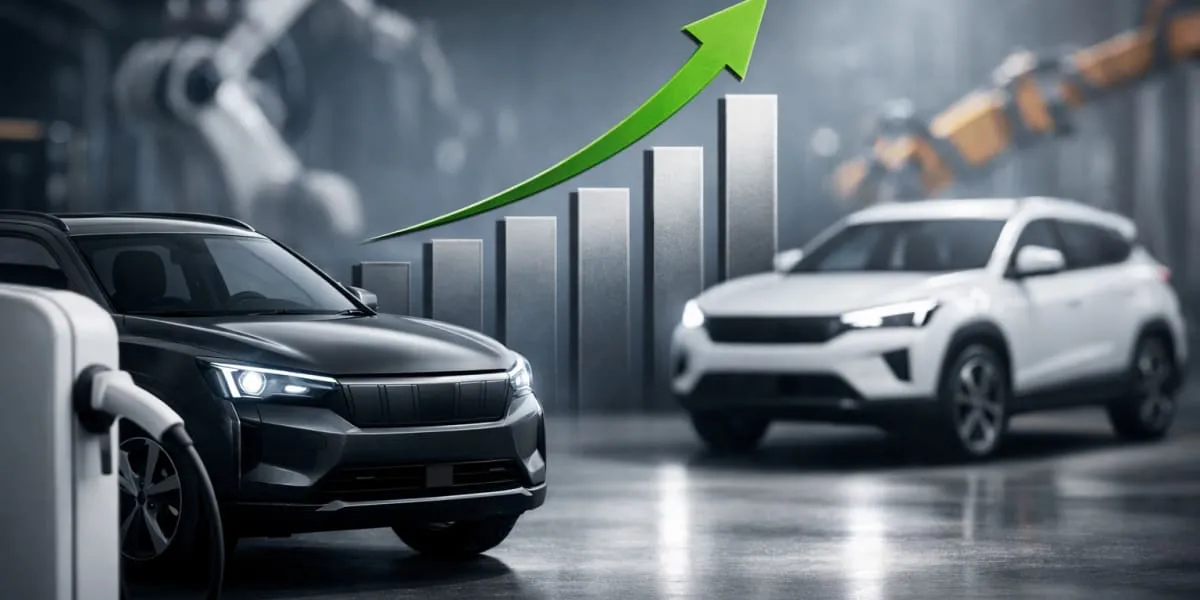
Mahindra and Mahindra has moved into second place in the domestic electric vehicle market, overtaking JSW MG Motor according to industry data. The shift marks a notable reshuffling among manufacturers vying for market share as consumer demand for electric cars continues to expand. The development follows a period of intensified model launches and supply chain adjustments across the sector. The repositioning reflects sustained investment in electric mobility by the company over recent quarters.\n\nMahindra consolidated gains through an expanded product range, higher production runs and targeted pricing strategies that improved availability for buyers. Dealers reported stronger footfall and test drive volumes, while the company enhanced distribution and aftersales networks to support sales growth. These operational changes reduced lead times and helped to convert enquiries into purchases more effectively. Logistical improvements and vendor partnerships also contributed to steadier component supplies.\n\nThe move to second place alters competitive dynamics by increasing pressure on rivals to scale output and refine offerings, while also sharpening focus on cost structures. Analysts noted that manufacturers pursuing rapid electrification must balance investment in new models with the need to sustain margins amid intense price competition. For customers the result is greater choice and competitive pricing that could accelerate uptake of electric vehicles. The tighter contest may prompt greater innovation in battery technology and service offerings.\n\nLooking ahead, manufacturers are expected to intensify localisation of components and collaborate on charging infrastructure to lower ownership costs and improve convenience. Policy support and investment in public charging networks remain crucial to sustain long term growth in the sector. Market watchers will monitor whether the reshuffle is sustained as firms roll out future models and expand capacity. Investors and policymakers will watch production targets and infrastructure roll outs closely as a test of durability.

Mahindra and Mahindra has moved into second place in the domestic electric vehicle market, overtaking JSW MG Motor according to industry data. The shift marks a notable reshuffling among manufacturers vying for market share as consumer demand for electric cars continues to expand. The development follows a period of intensified model launches and supply chain adjustments across the sector. The repositioning reflects sustained investment in electric mobility by the company over recent quarters.\n\nMahindra consolidated gains through an expanded product range, higher production runs and targeted pricing strategies that improved availability for buyers. Dealers reported stronger footfall and test drive volumes, while the company enhanced distribution and aftersales networks to support sales growth. These operational changes reduced lead times and helped to convert enquiries into purchases more effectively. Logistical improvements and vendor partnerships also contributed to steadier component supplies.\n\nThe move to second place alters competitive dynamics by increasing pressure on rivals to scale output and refine offerings, while also sharpening focus on cost structures. Analysts noted that manufacturers pursuing rapid electrification must balance investment in new models with the need to sustain margins amid intense price competition. For customers the result is greater choice and competitive pricing that could accelerate uptake of electric vehicles. The tighter contest may prompt greater innovation in battery technology and service offerings.\n\nLooking ahead, manufacturers are expected to intensify localisation of components and collaborate on charging infrastructure to lower ownership costs and improve convenience. Policy support and investment in public charging networks remain crucial to sustain long term growth in the sector. Market watchers will monitor whether the reshuffle is sustained as firms roll out future models and expand capacity. Investors and policymakers will watch production targets and infrastructure roll outs closely as a test of durability.

Next Story
Infrastructure Transport

Sector 51-52 Metro skywalk in Noida remains shut despite being ready for over a year

Thousands of commuters travelling between Delhi Metro Rail Corporation’s (DMRC) Sector 52 station and Noida Metro Rail Corporation’s (NMRC) Sector 51 station continue to face daily inconvenience as the 300-metre air-conditioned skywalk connecting the two stations remains closed, despite being completed over a year ago, according to a report.The Noida Metro Rail Corporation built the foot overbridge to enable a seamless interchange between the Delhi Metro and Noida Metro networks. However, pending finishing work and a structural obstruction have delayed its opening.Krishna Karunesh, Chief E..

Next Story
Infrastructure Transport

Maharashtra clears Metro Line 5A, expansion of Mumbai Metro Line 5

The Maharashtra government has approved the expansion of Mumbai Metro Line 5 along with a new integrated corridor, Metro Line 5A, forming a combined 34.2-km metro network across the Thane-Bhiwandi-Kalyan-Ulhasnagar belt. The integrated project has been cleared at an estimated cost of ₹18,130.55 crore, according to a government resolution (GR).Metro Line 5 was originally approved in October 2017 as a 24.9-km fully elevated corridor with 17 stations connecting Thane, Bhiwandi and Kalyan, with an initial project cost of ₹8,416.51 crore. The corridor is being developed in two phases.The first ..

Next Story
Infrastructure Transport

Bengaluru Metro expansion seen driving office demand

Bengaluru’s expanding metro network is expected to emerge as a major catalyst for real estate growth, with the Yellow and Pink Lines likely to boost both office demand and residential prices across key micro-markets, according to a report by Colliers India.The report estimates that over the next two years, Bengaluru could witness an additional 5–7 million sq ft of Grade A office space demand across the Central Business District (CBD), Secondary Business District (SBD) and Electronic City. Improved metro connectivity and reduced commute times are expected to drive higher occupier interest a..

Advertisement

Subscribe to Our Newsletter

Get daily newsletters around different themes from Construction world.

STAY CONNECTED

Advertisement

Advertisement

Advertisement