Mahindra in advanced talks to raise $605 mn for EV unit
ECONOMY & POLICY

Mahindra in advanced talks to raise $605 mn for EV unit

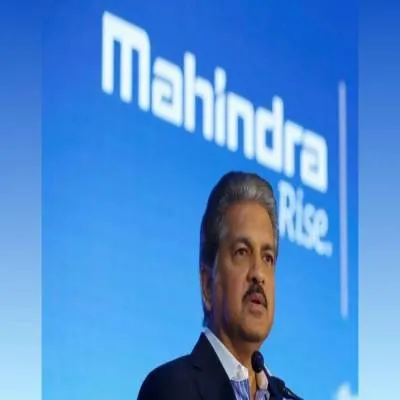
Mahindra & Mahindra, the leading Indian sports utility vehicle manufacturer in terms of revenue, is currently engaged in advanced negotiations with British International Investment (BII) and other global investors to secure funding of up to Rs 50 billion for its electric vehicles (EV) division, according to multiple sources familiar with the matter.

If the talks regarding Mahindra Electric Automobile prove successful, this would mark BII's second investment round in the Indian conglomerate. The deal is expected to value the company's EV subsidiary 10-15 per cent higher than the previous funding round, which placed it at a valuation of Rs 700.70 billion, according to one of the aforementioned sources.

In July 2022, BII had previously signed an agreement with Mahindra Electric to invest Rs 19.25 billion through compulsory convertible preference shares, which would result in a stake ranging from 2.75 per cent to 4.76 per cent, depending on the achievement of specific milestones. Mahindra was also set to invest a similar amount in the EV subsidiary through equity.

Mahindra's second fundraising round for its EV division comes at a time of heightened competition in the local market. Indian automobile companies are seeking external funding to expedite product launches and expand capacities in the EV segment to meet ambitious decarbonisation targets.

As per Mahindra's customary disclosures to stock exchanges, the company has outlined a capital expenditure of approximately Rs 100 billion in its EV subsidiaries between FY22 and FY27. Out of this total, Rs 40 billion will be invested between FY22 and FY24, with the remainder allocated until FY27.

Mahindra has plans to introduce five new EV models between April and October 2025. The automaker anticipates that e-SUVs will constitute 20-30 per cent of its overall SUV portfolio, amounting to around 200,000 units in volume.

Until May, Mahindra had dispatched 3,690 units of the XUV 400, an e-SUV launched in January. This accounted for nearly 2.2 per cent of the total passenger vehicles sold during that period.

Mahindra & Mahindra, the leading Indian sports utility vehicle manufacturer in terms of revenue, is currently engaged in advanced negotiations with British International Investment (BII) and other global investors to secure funding of up to Rs 50 billion for its electric vehicles (EV) division, according to multiple sources familiar with the matter.If the talks regarding Mahindra Electric Automobile prove successful, this would mark BII's second investment round in the Indian conglomerate. The deal is expected to value the company's EV subsidiary 10-15 per cent higher than the previous funding round, which placed it at a valuation of Rs 700.70 billion, according to one of the aforementioned sources.In July 2022, BII had previously signed an agreement with Mahindra Electric to invest Rs 19.25 billion through compulsory convertible preference shares, which would result in a stake ranging from 2.75 per cent to 4.76 per cent, depending on the achievement of specific milestones. Mahindra was also set to invest a similar amount in the EV subsidiary through equity.Mahindra's second fundraising round for its EV division comes at a time of heightened competition in the local market. Indian automobile companies are seeking external funding to expedite product launches and expand capacities in the EV segment to meet ambitious decarbonisation targets.As per Mahindra's customary disclosures to stock exchanges, the company has outlined a capital expenditure of approximately Rs 100 billion in its EV subsidiaries between FY22 and FY27. Out of this total, Rs 40 billion will be invested between FY22 and FY24, with the remainder allocated until FY27.Mahindra has plans to introduce five new EV models between April and October 2025. The automaker anticipates that e-SUVs will constitute 20-30 per cent of its overall SUV portfolio, amounting to around 200,000 units in volume.Until May, Mahindra had dispatched 3,690 units of the XUV 400, an e-SUV launched in January. This accounted for nearly 2.2 per cent of the total passenger vehicles sold during that period.

Next Story
Infrastructure Transport

Dhalbhumgarh Airport Faces 150-km Rule Hurdle

The issue has resurfaced following a recent statement by Union Civil Aviation Minister Ram Mohan Naidu, who said that under existing aviation policy, a new greenfield airport is generally not permitted within an aerial distance of 150 kilometres of an operational civilian airport. He added, however, that if a formal proposal is submitted, its impact on the existing airport can be examined and relaxations may be considered on a case-by-case basis. While the clarification has revived some hope for Dhalbhumgarh, it has also underlined the scale of the technical challenge facing the project. Unde..

Next Story
Infrastructure Transport

Stakeholders Seek Parallel Ops For Vizag Airports

With road and metro rail links to Bhogapuram still several years away, stakeholders in north Andhra Pradesh have renewed demands to continue civil operations at INS Dega even after the commissioning of Bhogapuram International Airport. The new airport is expected to begin commercial operations from June. Officials said close to 80 per cent of the airport infrastructure at Bhogapuram, including the terminal building and internal approach roads, has already been completed. However, inadequate external connectivity remains a key concern. Making a case for parallel operations, Andhra Pradesh Air ..

Next Story
Infrastructure Transport

Govt To Roll Out V2V Tech To Cut Road Crashes

In an effort to curb road accidents, particularly in low-visibility conditions such as dense fog, the government is set to roll out vehicle-to-vehicle (V2V) communication technology that will allow cars to exchange real-time data and alert drivers to potential dangers. The announcement was made by Union Road Transport and Highways Minister Nitin Gadkari after the 43rd meeting of the Transport Development Council. The technology involves installing an on-board unit (OBU) in vehicles, enabling wireless data exchange between nearby cars. This will allow vehicles to share information such as spee..

Advertisement

Subscribe to Our Newsletter

Get daily newsletters around different themes from Construction world.

STAY CONNECTED

Advertisement

Advertisement

Advertisement

Advertisement

Open In App