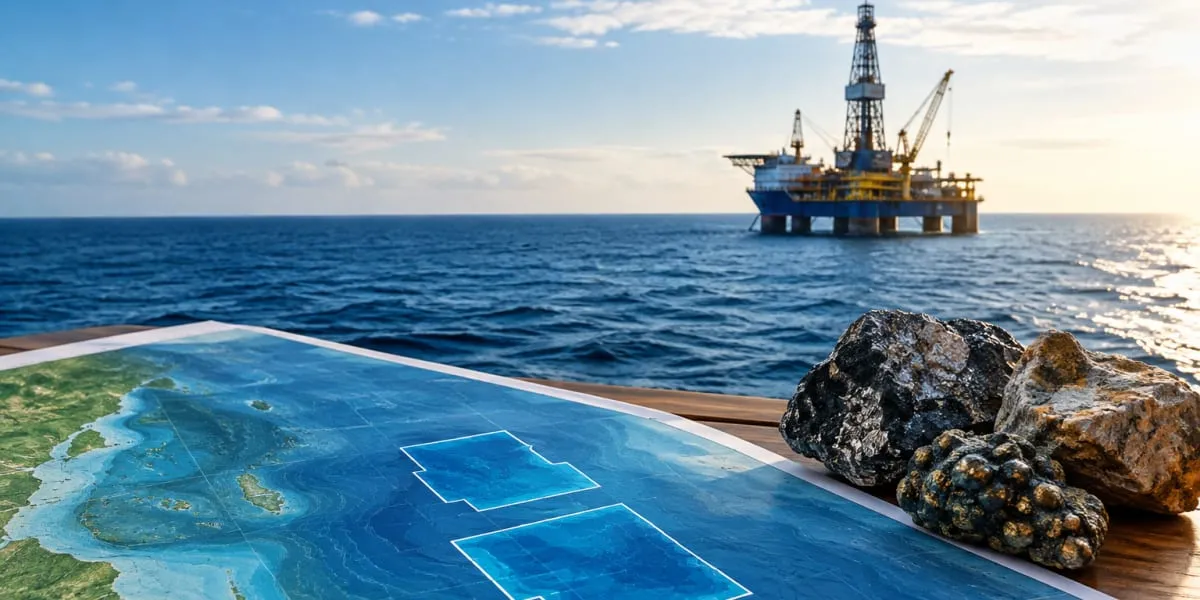
Manori Desalination Plant to Supply 200 MLD to Mumbai
ECONOMY & POLICY

Manori Desalination Plant to Supply 200 MLD to Mumbai

IDE Technologies has recently secured a major engineering, procurement and construction contract from the Brihanmumbai Municipal Corporation to develop a large-scale seawater reverse osmosis desalination plant at Manori, Mumbai. The project also includes a long-term operations and maintenance agreement under which IDE will operate the facility for 20 years after commissioning.

Planned on Mumbai’s western coastline, the Manori SWRO plant will initially supply 200 million litres per day of potable water, strengthening the city’s water security amid rising demand and climate variability. Key infrastructure, including the intake–outfall system and treated water storage, will be built for an ultimate capacity of 400 MLD, enabling future expansion with minimal disruption and improved capital efficiency.

IDE Technologies will execute the project in partnership with GVPR Engineers Limited, deploying advanced, energy-efficient desalination technologies adapted to Mumbai’s coastal and urban conditions. Seawater will be drawn from an offshore intake several kilometres from the shoreline, using environmentally responsible design to safeguard marine ecosystems while ensuring a stable, drought-resilient water source.

Alon Tavor, Chief Executive Officer of IDE Technologies, said the project represents a strategic investment in Mumbai’s long-term water security, demonstrating how large-scale desalination can support megacities facing climate stress.

Nayan Shah, Director – Sales & Marketing, IDE India, added that the Manori facility strengthens the company’s growing desalination portfolio in India, supporting reliable, high-quality water supplies while keeping sustainability and environmental stewardship at the core of project delivery.

IDE Technologies has recently secured a major engineering, procurement and construction contract from the Brihanmumbai Municipal Corporation to develop a large-scale seawater reverse osmosis desalination plant at Manori, Mumbai. The project also includes a long-term operations and maintenance agreement under which IDE will operate the facility for 20 years after commissioning. Planned on Mumbai’s western coastline, the Manori SWRO plant will initially supply 200 million litres per day of potable water, strengthening the city’s water security amid rising demand and climate variability. Key infrastructure, including the intake–outfall system and treated water storage, will be built for an ultimate capacity of 400 MLD, enabling future expansion with minimal disruption and improved capital efficiency. IDE Technologies will execute the project in partnership with GVPR Engineers Limited, deploying advanced, energy-efficient desalination technologies adapted to Mumbai’s coastal and urban conditions. Seawater will be drawn from an offshore intake several kilometres from the shoreline, using environmentally responsible design to safeguard marine ecosystems while ensuring a stable, drought-resilient water source. Alon Tavor, Chief Executive Officer of IDE Technologies, said the project represents a strategic investment in Mumbai’s long-term water security, demonstrating how large-scale desalination can support megacities facing climate stress. Nayan Shah, Director – Sales & Marketing, IDE India, added that the Manori facility strengthens the company’s growing desalination portfolio in India, supporting reliable, high-quality water supplies while keeping sustainability and environmental stewardship at the core of project delivery.

Next Story
Infrastructure Urban

Implementation Status of Jal Jeevan Mission

Since August 2019 the Government has implemented Jal Jeevan Mission to provide assured potable water through household tap connections in rural India. At the start of the mission only 32.3 million (mn) rural households, representing 16.7 per cent, were reported to have tap water connections. States and union territories have reported that 125.8 mn additional rural households have since been provided with tap connections. As a result, of about 193.6 mn rural households roughly 158.2 mn, or 81.71 per cent, are reported to have tap water supply at home.\n\nThe State, district and village level st..

Next Story
Infrastructure Urban

Jal Jeevan Mission Reaches Eighty One Per Cent Rural Coverage

The Government reported substantial progress under the Jal Jeevan Mission, launched in August 2019 to provide tap water to every rural household. At launch only 32.3 million (mn) rural households had tap connections and states and Union territories reported provision of 125.8 mn additional households by March 2026. Consequently, out of about 193.6 mn rural households around 158.2 mn, or 81.71 per cent, are reported to have tap water at home. The Finance Minister announced extension of the mission until 2028 in the 2025-26 budget speech. The Swachh Bharat Mission Grameen, launched in October 20..

Next Story
Infrastructure Urban

Empowering Local Governance for Sustainable Rural Water Supply

The Ministry of Jal Shakti has aligned the Jal Jeevan Mission (JJM) with the 73rd Amendment to strengthen village level planning and community ownership of water supply. Gram Panchayats, village water and sanitation committees and Pani Samitis are to plan, implement, manage and maintain piped water systems, with gram sabha processes formalising handover and oversight. Implementation support agencies including non government organisations, community based organisations and self help groups have been empanelled to train local committees and promote women participation. Under JJM, the department ..

Advertisement

Subscribe to Our Newsletter

Get daily newsletters around different themes from Construction world.

STAY CONNECTED

Advertisement

Advertisement

Advertisement