Maruti Suzuki Launches Container Based Quickstop Units
ECONOMY & POLICY

Maruti Suzuki Launches Container Based Quickstop Units

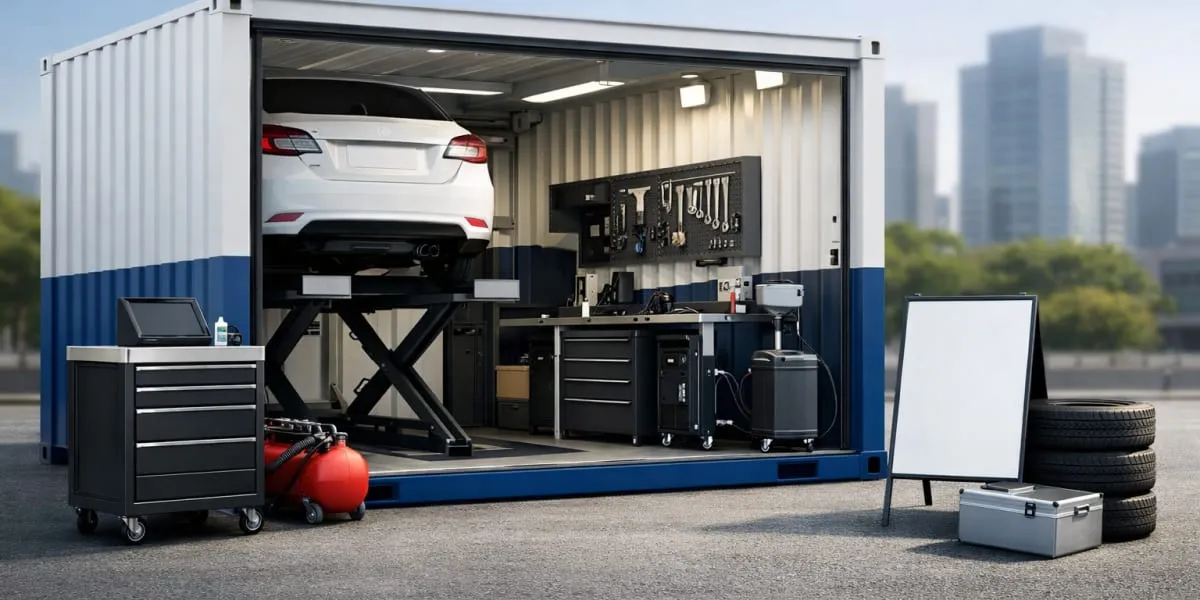
Maruti Suzuki has rolled out container based Quickstop service units across major cities as part of an effort to make basic vehicle maintenance more accessible and faster for customers. The initiative is designed to deliver quick turnaround for routine checks and minor repairs while reducing the need for visits to larger service centres. The company described the units as mobile, compact facilities that can be deployed in high demand neighbourhoods and commercial hubs. The rollout was presented as part of the firm's effort to adapt service delivery to changing urban demand.

Each Quickstop unit is based on a converted container and is fitted with essential tools, diagnostic equipment and digital connectivity to link with the main dealer network. Trained technicians will operate the units and remote support will be available for complex faults, allowing a greater share of minor work to be completed onsite. The format is intended to be modular so units can be scaled or relocated according to demand. Digital scheduling and cashless payments will be integrated to improve customer experience.

The move is expected to cut customer wait times and improve vehicle uptime by providing services closer to where people live and work. It will complement, rather than replace, the authorised service centre network by handling routine maintenance and freeing up larger centres for major repairs. The company anticipates the model will enhance convenience and support customer retention.

Maruti Suzuki plans to roll out the Quickstop units in a phased manner and monitor utilisation to refine locations and services offered. The strategy aligns with broader aims to expand aftermarket presence and to capture recurring service revenue while improving overall ownership experience. Industry observers noted that flexible service delivery formats are increasingly being adopted by manufacturers to meet urban mobility needs. The company will assess feedback to fine tune operations.

"Join industry leaders at RAHSTA Expo, India's premier platform for roads, highways and traffic infrastructure. Register now to explore innovations, network with experts and shape the future of mobility."

Maruti Suzuki has rolled out container based Quickstop service units across major cities as part of an effort to make basic vehicle maintenance more accessible and faster for customers. The initiative is designed to deliver quick turnaround for routine checks and minor repairs while reducing the need for visits to larger service centres. The company described the units as mobile, compact facilities that can be deployed in high demand neighbourhoods and commercial hubs. The rollout was presented as part of the firm's effort to adapt service delivery to changing urban demand. Each Quickstop unit is based on a converted container and is fitted with essential tools, diagnostic equipment and digital connectivity to link with the main dealer network. Trained technicians will operate the units and remote support will be available for complex faults, allowing a greater share of minor work to be completed onsite. The format is intended to be modular so units can be scaled or relocated according to demand. Digital scheduling and cashless payments will be integrated to improve customer experience. The move is expected to cut customer wait times and improve vehicle uptime by providing services closer to where people live and work. It will complement, rather than replace, the authorised service centre network by handling routine maintenance and freeing up larger centres for major repairs. The company anticipates the model will enhance convenience and support customer retention. Maruti Suzuki plans to roll out the Quickstop units in a phased manner and monitor utilisation to refine locations and services offered. The strategy aligns with broader aims to expand aftermarket presence and to capture recurring service revenue while improving overall ownership experience. Industry observers noted that flexible service delivery formats are increasingly being adopted by manufacturers to meet urban mobility needs. The company will assess feedback to fine tune operations.

Next Story
Real Estate

SNN Estates Expands North Bengaluru Housing Project

SNN Estates has announced an expansion of its SNN Estates Felicity residential project in North Bengaluru following strong buyer demand, with 75 per cent of the first-phase inventory sold within three days of launch.The developer will add 76 apartments in the new phase, taking the project's estimated revenue potential to around Rs 1,000 crore upon completion of Phase 2.Spread across 6.5 acres in Rachenahalli, near Manyata Tech Park, the project comprises 604 apartments in 1.5, 2, 2.5, 3 and 4 BHK configurations. The development includes a 50,000-sq-ft clubhouse with amenities such as sports co..

Next Story
Infrastructure Urban

SCG Drives ASEAN Industrial Transformation Strategy

SCG is strengthening its focus on ASEAN as a key growth region by advancing industrial transformation, enhancing competitiveness and building resilient regional value chains. Thammasak Sethaudom, President and Chief Executive Officer, SCG, highlighted the need for industries to continuously develop capabilities, strengthen resilience and deepen regional cooperation to achieve sustainable long-term growth.SCG views ASEAN as an important growth engine alongside China, supported by favourable demographics, trade connectivity and investment flows. With ASEAN’s GDP projected to grow by around 4.7..

Next Story
Products

EUROBOND Expands NABL Accreditation to 51 Testing Parameters

EUROBOND, the flagship brand of Euro Panel Products, has expanded the National Accreditation Board for Testing and Calibration Laboratories (NABL) accreditation of its in-house laboratory from 16 to 51 mechanical and chemical testing parameters, making it the only Indian aluminium composite panel (ACP) manufacturer with accreditation covering such an extensive testing scope.The expanded accreditation enables the company to independently test coils, coatings, cores, aluminium composite panels (ACP) and metal composite panels (MCP) in accordance with international standards, including IS, ASTM, ..

Advertisement

Subscribe to Our Newsletter

Get daily newsletters around different themes from Construction world.

STAY CONNECTED

Advertisement

Advertisement

Advertisement