Network Planning Group Evaluates Infrastructure Projects
ECONOMY & POLICY

Network Planning Group Evaluates Infrastructure Projects

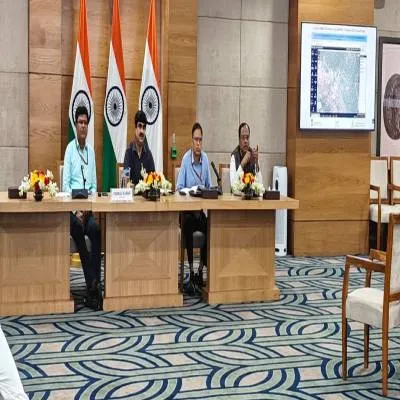
The Department for Promotion of Industry and Internal Trade (DPIIT) convened the 110th meeting of the Network Planning Group in New Delhi to evaluate infrastructure projects under the Prime Minister's GatiShakti National Master Plan (PM GatiShakti).

The meeting assessed proposals that aim to strengthen multimodal connectivity and improve logistics performance across regional networks. Officials emphasised alignment with national strategic objectives and integrated planning. Participants included representatives from central ministries and state departments who reviewed project documentation and implementation frameworks.

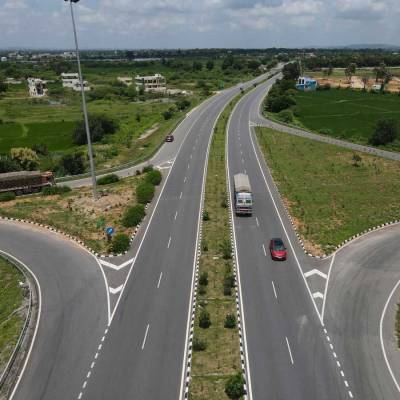
The group evaluated two rail, metro and highway projects for conformity with PM GatiShakti principles of integrated multimodal infrastructure and last-mile connectivity to economic and social nodes. Assessment criteria included interoperability, reduction in transit times and facilitation of freight movement across modes. Technical reviews considered alignment with existing transport corridors and planned logistic hubs. Environmental and social considerations and ease of last mile integration were also part of the technical assessment.

The Ministry of Commerce and Industry (MCI) said the initiatives are expected to boost logistics efficiency, reduce travel times and deliver significant socio-economic benefits to the catchment areas of the projects. Anticipated outcomes include improved access to markets, lower transportation costs and accelerated development of supporting industries. Planners highlighted the potential for enhanced regional competitiveness and strengthened supply chain resilience. The timeframe for realising benefits will depend on statutory approvals and coordination of execution across agencies.

Discussions also covered implementation timelines, coordination among central and state authorities and mechanisms for monitoring project outcomes. The Network Planning Group reiterated the need for stakeholder engagement and data driven prioritisation to ensure timely delivery and optimal utilisation of infrastructure. DPIIT noted that continued reviews would guide subsequent approvals and resource allocation. Monitoring arrangements were noted to require clear performance indicators, timelines and institutional responsibility to track outcomes effectively.

The Department for Promotion of Industry and Internal Trade (DPIIT) convened the 110th meeting of the Network Planning Group in New Delhi to evaluate infrastructure projects under the Prime Minister's GatiShakti National Master Plan (PM GatiShakti). The meeting assessed proposals that aim to strengthen multimodal connectivity and improve logistics performance across regional networks. Officials emphasised alignment with national strategic objectives and integrated planning. Participants included representatives from central ministries and state departments who reviewed project documentation and implementation frameworks. The group evaluated two rail, metro and highway projects for conformity with PM GatiShakti principles of integrated multimodal infrastructure and last-mile connectivity to economic and social nodes. Assessment criteria included interoperability, reduction in transit times and facilitation of freight movement across modes. Technical reviews considered alignment with existing transport corridors and planned logistic hubs. Environmental and social considerations and ease of last mile integration were also part of the technical assessment. The Ministry of Commerce and Industry (MCI) said the initiatives are expected to boost logistics efficiency, reduce travel times and deliver significant socio-economic benefits to the catchment areas of the projects. Anticipated outcomes include improved access to markets, lower transportation costs and accelerated development of supporting industries. Planners highlighted the potential for enhanced regional competitiveness and strengthened supply chain resilience. The timeframe for realising benefits will depend on statutory approvals and coordination of execution across agencies. Discussions also covered implementation timelines, coordination among central and state authorities and mechanisms for monitoring project outcomes. The Network Planning Group reiterated the need for stakeholder engagement and data driven prioritisation to ensure timely delivery and optimal utilisation of infrastructure. DPIIT noted that continued reviews would guide subsequent approvals and resource allocation. Monitoring arrangements were noted to require clear performance indicators, timelines and institutional responsibility to track outcomes effectively.

Next Story
Infrastructure Urban

Urgently Wanted: 2 Million Workers!

Construction, India’s second largest employer by industry, employs about 50 million workers but could additionally absorb another 40 million workers, according to estimates shared by the Construction Skill Development Council of India (CSDCI) in 2023. Within this, citing trade estimates, Rahul Bahl, Managing Director, Krishna Buildestates, says the shortage of trained, skilled workers is currently about 2 million, and is expected to rise to 5 million by 2030.Not only is the construction industry struggling to find workers but construction labour productivity in India significantly trails g..

Next Story
Real Estate

144 Years in the Making!

1. A century-spanning construction storyConstruction began in 1882, making the Sagrada Família one of the longest-running architectural projects in modern history. Today, the project is overseen by the Fundació Junta Constructora del Temple Expiatori de la Sagrada Família, with Chief Architect Jordi Faulí leading its final construction phases.2. The world’s tallest church towerhe Sagrada Família in Barcelona reached its final height of 172.5 m (566 ft) on February 20, 2026, with the installation of the cross atop the Tower of Jesus Christ, making it the tallest church in the world...To ..

Next Story
Infrastructure Transport

Scaling the Skies!

India’s aviation sector is entering a decisive phase – one where ambition is no longer defined by the number of airports being announced but by the system’s ability to deliver, sustain and monetise them.At the Infrastructure Today Airports Conclave held on March 12, 2026, at Courtyard by Marriott in Mumbai, a clear shift emerged: from building airports to building a viable aviation ecosystem. The event was supported by Silver Partner Pidilite, Innovation Partner Piramal Nextgen, Exhibit Partners Rockwool and esri India, and Business Intelligence Partner IMPACCT.Opening the discussion,&nb..

Advertisement

Subscribe to Our Newsletter

Get daily newsletters around different themes from Construction world.

STAY CONNECTED

Advertisement

Advertisement

Advertisement