North East Region Sees Major Connectivity And Development Gains
ECONOMY & POLICY

North East Region Sees Major Connectivity And Development Gains

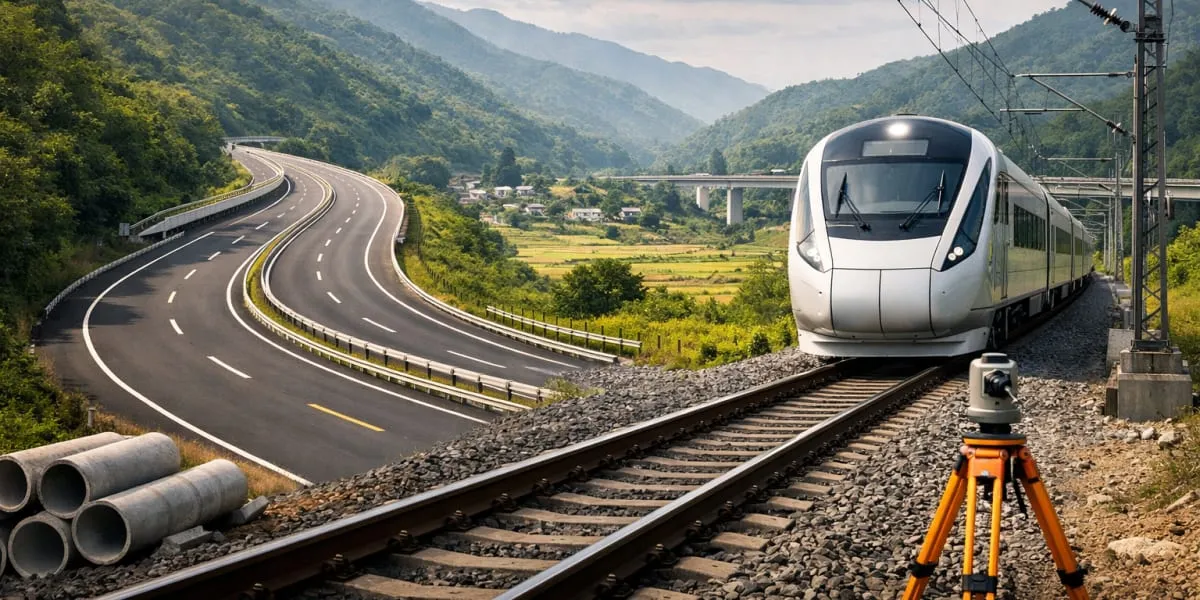
Connectivity in the North East Region has strengthened markedly over the past decade, with National Highways rising from 10,905 km in 2014 to 16,207 km as on 31 March 2025. Under the Pradhan Mantri Gram Sadak Yojana, 46,296 km of rural roads have been constructed in the region at an expenditure of Rs 472,790 mn. These road investments aim to integrate remote areas with markets and services.

Budgetary support for railways has risen sharply, from Rs 21,220 mn per year in the 2009–14 period to Rs 104,400 mn in fiscal 2025–26, supporting several ongoing new line projects. Key rail schemes include Bhairabi–Sairang new line 51 km, Agartala–Sabroom 112 km, Agartala–Akhaura 5 km, Jiribam–Imphal 111 km and Murkongselek–Pasighat 27 km. Enhanced rail connectivity is intended to bolster freight and passenger movement under the Act East Policy.

Telecom infrastructure has expanded, with 6,355 Gram Panchayats made service ready for high speed internet and 3,718 mobile towers commissioned, covering 5,366 villages and locations under government funded projects as of December 2025. Air connectivity under the Regional Connectivity Scheme UDAN, launched on 21 October 2016, has operationalised 90 routes and identified airports and heliports such as Pasighat, Tezu, Hollongi, Jorhat, Lilabari, Rupsi, Tezpur, Dimapur, Shillong and Pakyong. These measures target improved access for commerce and tourism.

A number of hydroelectric projects totalling 5,796 megawatt (MW) of installed capacity have been taken up, including Subansiri Lower 2,000 MW, Dibang Multi?Purpose 2,880 MW and Teesta Stage VI 500 MW. The NER Power System Improvement Project for six States aims to strengthen intra?state transmission and distribution at an estimated cost of Rs 67,000 mn, while a comprehensive scheme for Arunachal Pradesh and Sikkim carries an estimated cost of Rs 91,293.2 mn. The count of National Waterways in the region has risen from one to 20 with Rs 10,400 mn spent on waterways projects, and official evaluation reports link these investments to tangible trade, border infrastructure and export gains. Project sanctioning is reported to incorporate ecological sensitivity and sustainability measures to balance development with community and environmental protection.

Connectivity in the North East Region has strengthened markedly over the past decade, with National Highways rising from 10,905 km in 2014 to 16,207 km as on 31 March 2025. Under the Pradhan Mantri Gram Sadak Yojana, 46,296 km of rural roads have been constructed in the region at an expenditure of Rs 472,790 mn. These road investments aim to integrate remote areas with markets and services. Budgetary support for railways has risen sharply, from Rs 21,220 mn per year in the 2009–14 period to Rs 104,400 mn in fiscal 2025–26, supporting several ongoing new line projects. Key rail schemes include Bhairabi–Sairang new line 51 km, Agartala–Sabroom 112 km, Agartala–Akhaura 5 km, Jiribam–Imphal 111 km and Murkongselek–Pasighat 27 km. Enhanced rail connectivity is intended to bolster freight and passenger movement under the Act East Policy. Telecom infrastructure has expanded, with 6,355 Gram Panchayats made service ready for high speed internet and 3,718 mobile towers commissioned, covering 5,366 villages and locations under government funded projects as of December 2025. Air connectivity under the Regional Connectivity Scheme UDAN, launched on 21 October 2016, has operationalised 90 routes and identified airports and heliports such as Pasighat, Tezu, Hollongi, Jorhat, Lilabari, Rupsi, Tezpur, Dimapur, Shillong and Pakyong. These measures target improved access for commerce and tourism. A number of hydroelectric projects totalling 5,796 megawatt (MW) of installed capacity have been taken up, including Subansiri Lower 2,000 MW, Dibang Multi?Purpose 2,880 MW and Teesta Stage VI 500 MW. The NER Power System Improvement Project for six States aims to strengthen intra?state transmission and distribution at an estimated cost of Rs 67,000 mn, while a comprehensive scheme for Arunachal Pradesh and Sikkim carries an estimated cost of Rs 91,293.2 mn. The count of National Waterways in the region has risen from one to 20 with Rs 10,400 mn spent on waterways projects, and official evaluation reports link these investments to tangible trade, border infrastructure and export gains. Project sanctioning is reported to incorporate ecological sensitivity and sustainability measures to balance development with community and environmental protection.

Next Story
Infrastructure Urban

Centre Disburses Over Rs 24,610 mn in XV Finance Commission Grants

The Union Government has released XV Finance Commission tied grants during the financial year 2025–26 to rural local bodies in Chhattisgarh, Gujarat, Madhya Pradesh, Punjab and Sikkim and has released withheld portions of tied and untied grants to Himachal Pradesh, Odisha and Tripura. The total disbursal exceeded Rs 24,610 mn, with figures expressed in million (mn) thereafter. The releases cover allocations pertaining to different financial years and aim to strengthen rural local governance. State-wise disbursements included Rs 3,324.6 mn for Punjab, Rs 9,432.7 mn for Madhya Pradesh, Rs 3,47..

Next Story
Infrastructure Urban

Centre Releases Over Rs 15 bn as XV FC Grants to Rural Bodies

The Union Government has released over Rs 15 bn in grants recommended by the Fifteenth Finance Commission (XV FC) to strengthen Panchayati Raj Institutions (PRIs) and Rural Local Bodies (RLBs) in six states. The funds comprise tied and untied grants disbursed in FY 2025–26. Telangana received Rs 2.48 bn as the first instalment of untied grants for FY 2025–26, benefitting 12600 Gram Panchayats (GPs). Uttarakhand received Rs 913.1 mn as the second instalment and an additional Rs 18.4 mn of a withheld first instalment was released to a further 216 GPs. Mizoram is included among beneficiary st..

Next Story
Infrastructure Energy

Government Assures Fuel Supplies And Seafarer Safety Amid West Asia Developments

The Government of India has stepped up coordinated measures to maintain stability in critical sectors as developments in West Asia continue to unfold. It has prioritised uninterrupted energy supplies, safeguarded maritime operations and extended consular assistance to nationals. Central authorities are working with State and Union territory administrations to ensure timely information dissemination and operational continuity. Refineries are reported to be operating at high capacity with adequate inventories of petrol and diesel, and domestic LPG production has been increased to support consump..

Advertisement

Subscribe to Our Newsletter

Get daily newsletters around different themes from Construction world.

STAY CONNECTED

Advertisement

Advertisement

Advertisement