Northeast Is India’s Digital Gateway, Says MoS Chandra Shekhar
ECONOMY & POLICY

Northeast Is India’s Digital Gateway, Says MoS Chandra Shekhar

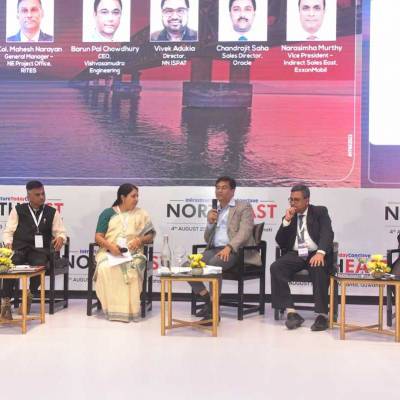
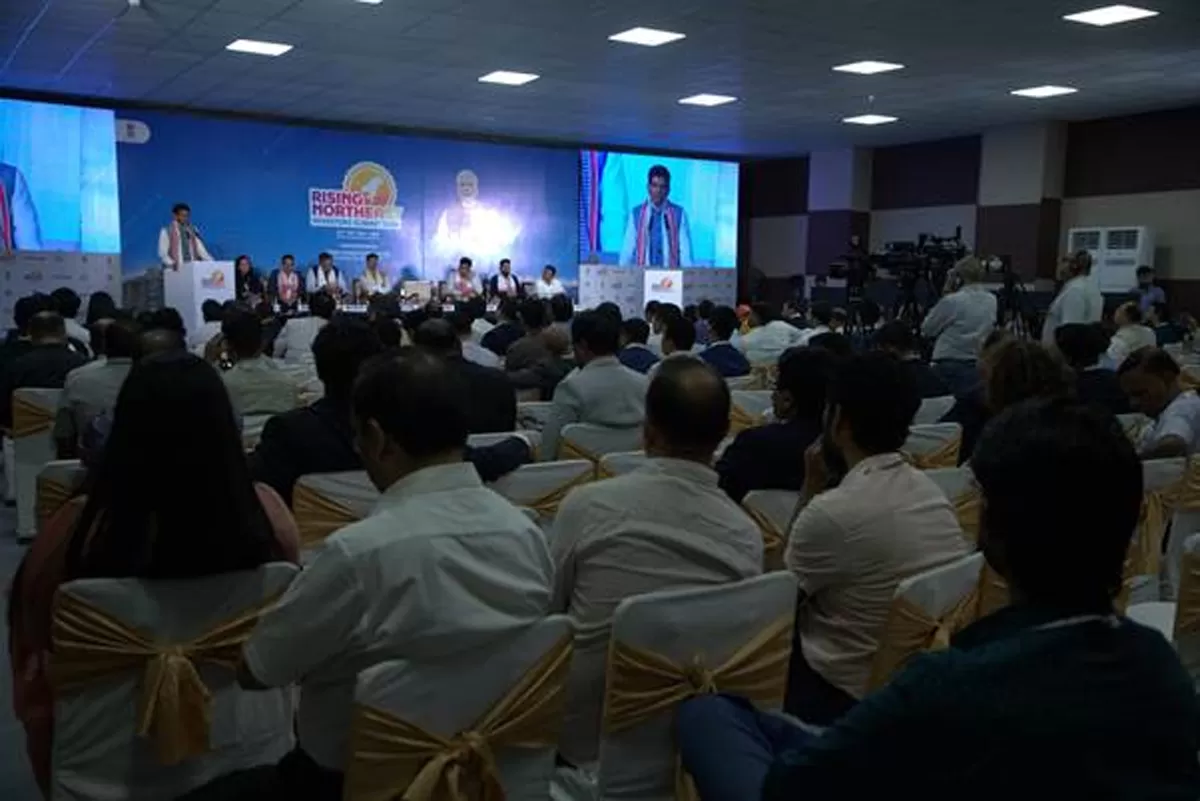
Dr Pemmasani Chandra Shekhar, Minister of State for Communications and Rural Development, has reaffirmed the strategic importance of India’s Northeastern region, calling it the nation’s digital and policy frontier. Speaking at the “IT for Ashtalakshmi – Beyond the Bits and Bytes, into AI and 5G” session during the Rising North East Investors Summit 2025 at Bharat Mandapam, New Delhi, Dr Shekhar said, “The Northeast is where policy meets possibility, nature meets networks, and heritage meets hyper-connectivity.”

Joined by Tripura’s Chief Minister Dr Manik Saha and the Chief Secretary of Manipur, Dr Shekhar detailed how the Northeast, long viewed as a remote periphery, has now been repositioned as a technological and strategic cornerstone under the Union government’s Act East policy. He credited this shift to sustained leadership, particularly that of Shri Jyotiraditya Scindia, Union Minister for Development of North Eastern Region (DoNER).

The Ashtalakshmi—eight Northeastern states—have witnessed transformative growth, with digital infrastructure bridging years of disparity. Dr Shekhar shared that over Rs 1.5 trillion has been invested in digital and physical infrastructure in the region, including Rs 500 billion under BharatNet and the Digital North East Vision. As of 2025, more than 90 per cent of the region is covered by 4G, and 80 per cent of rural homes have optical fibre connectivity.

However, he noted that the real transformation lies not only in infrastructure, but in the region’s young, digital-savvy population. Institutions like IIT Guwahati and NIT Silchar are nurturing cutting-edge talent, and startups like AgSpert are using AI and drone technology to solve both local and global agricultural problems. “The government’s frameworks—Digital India, BharatNet, Startup India, and the National AI Strategy—are catalysts for this innovation,” he said.

Dr Shekhar shared real-world applications of AI and 5G in the region, such as:

11. A 5G-based telemedicine network in Arunachal Pradesh

12. The BHASHINI initiative in Tripura offering AI-powered multilingual translation for better governance

13. Use of augmented reality (AR) to boost tourism in Kaziranga and Sikkim

14. AI platforms to preserve over 200 local languages

15. AI-enabled e-commerce for traditional crafts

16. Smart AI border surveillance systems to enhance security and employment

“These are not abstract ambitions—they are actionable, investible, and impactful opportunities,” he said, inviting industry and academic stakeholders to “come, collaborate, and co-create.”

Positioning the Northeast as India’s natural digital gateway to ASEAN’s USD 5 trillion economy, Dr Shekhar underscored the region’s 98 per cent international border connectivity, abundant green energy, and suitability for climate-resilient data centres.

He concluded with a powerful vision:

“The tea gardens of Assam that once fuelled the British Empire will now power AI algorithms. Our strategic borders will no longer just protect—they will propel India’s leadership in defence tech. The future will not only rise from our metros but from every corner where vision and courage meet action.”


Dr Pemmasani Chandra Shekhar, Minister of State for Communications and Rural Development, has reaffirmed the strategic importance of India’s Northeastern region, calling it the nation’s digital and policy frontier. Speaking at the “IT for Ashtalakshmi – Beyond the Bits and Bytes, into AI and 5G” session during the Rising North East Investors Summit 2025 at Bharat Mandapam, New Delhi, Dr Shekhar said, “The Northeast is where policy meets possibility, nature meets networks, and heritage meets hyper-connectivity.”Joined by Tripura’s Chief Minister Dr Manik Saha and the Chief Secretary of Manipur, Dr Shekhar detailed how the Northeast, long viewed as a remote periphery, has now been repositioned as a technological and strategic cornerstone under the Union government’s Act East policy. He credited this shift to sustained leadership, particularly that of Shri Jyotiraditya Scindia, Union Minister for Development of North Eastern Region (DoNER).The Ashtalakshmi—eight Northeastern states—have witnessed transformative growth, with digital infrastructure bridging years of disparity. Dr Shekhar shared that over Rs 1.5 trillion has been invested in digital and physical infrastructure in the region, including Rs 500 billion under BharatNet and the Digital North East Vision. As of 2025, more than 90 per cent of the region is covered by 4G, and 80 per cent of rural homes have optical fibre connectivity.However, he noted that the real transformation lies not only in infrastructure, but in the region’s young, digital-savvy population. Institutions like IIT Guwahati and NIT Silchar are nurturing cutting-edge talent, and startups like AgSpert are using AI and drone technology to solve both local and global agricultural problems. “The government’s frameworks—Digital India, BharatNet, Startup India, and the National AI Strategy—are catalysts for this innovation,” he said.Dr Shekhar shared real-world applications of AI and 5G in the region, such as:11. A 5G-based telemedicine network in Arunachal Pradesh12. The BHASHINI initiative in Tripura offering AI-powered multilingual translation for better governance13. Use of augmented reality (AR) to boost tourism in Kaziranga and Sikkim14. AI platforms to preserve over 200 local languages15. AI-enabled e-commerce for traditional crafts16. Smart AI border surveillance systems to enhance security and employment“These are not abstract ambitions—they are actionable, investible, and impactful opportunities,” he said, inviting industry and academic stakeholders to “come, collaborate, and co-create.”Positioning the Northeast as India’s natural digital gateway to ASEAN’s USD 5 trillion economy, Dr Shekhar underscored the region’s 98 per cent international border connectivity, abundant green energy, and suitability for climate-resilient data centres.He concluded with a powerful vision:“The tea gardens of Assam that once fuelled the British Empire will now power AI algorithms. Our strategic borders will no longer just protect—they will propel India’s leadership in defence tech. The future will not only rise from our metros but from every corner where vision and courage meet action.”

Next Story
Infrastructure Transport

Kavach 4.0 Commissioned on Delhi–Mumbai and Delhi–Howrah

"Kavach version four has been commissioned on 1,452 route km, covering the high density Delhi–Mumbai and Delhi–Howrah corridors. The rollout included laying 8,570 km of optical fibre, installation of 1,100 telecom towers, deployment of trackside equipment over 6,776 RKm and establishment of 767 station data centres. Trackside implementation has been taken up on 24,427 RKm covering Golden Quadrilateral, Golden Diagonal and High Density Network sections. The programme aims to strengthen signalling and train protection on key routes.Kavach is an indigenously developed automatic train protecti..

Next Story
Infrastructure Transport

Railways Advance Kalyan–Murbad Line And Mumbai Capacity Expansion

"Indian Railways is advancing multiple rail infrastructure projects in Maharashtra, including the sanctioned Kalyan–Murbad new line and sizable investments under the Mumbai Urban Transport Project and the Mumbai–Ahmedabad High Speed Rail project. The Kalyan–Murbad 28 km new line has been sanctioned at Rs 8.36 billion (bn) on a 50:50 cost-sharing basis with the Government of Maharashtra and has been declared a Special Railway Project for land acquisition; proposals covering 214 hectares are at various stages of acquisition. Budgetary outlay for projects falling fully or partly in Maharash..

Next Story
Infrastructure Urban

Parliamentary Panel Flags Funding Gaps in Heavy Industries

"The Department-Related Parliamentary Standing Committee on Industry (Rajya Sabha) presented its 332nd report on the Demands for Grants 2026-27 of the Ministry of Heavy Industries (MHI). Figures converted from crore and lakh are expressed in million (mn). The Budget Estimates 2026-27 for the Ministry stand at Rs 79,399 mn against a projected requirement of Rs 94,843.2 mn, a shortfall of about 16 per cent, with revenue at Rs 79,370.8 mn and capital compressed to Rs 28.2 mn from Rs 5,020 mn.The committee flagged recurring BE-to-RE compression and declining revised estimate utilisation, and calle..

Advertisement

Subscribe to Our Newsletter

Get daily newsletters around different themes from Construction world.

STAY CONNECTED

Advertisement

Advertisement

Advertisement