Odisha Lays Foundation For India’s First Advanced 3D Packaging Unit
ECONOMY & POLICY

Odisha Lays Foundation For India’s First Advanced 3D Packaging Unit

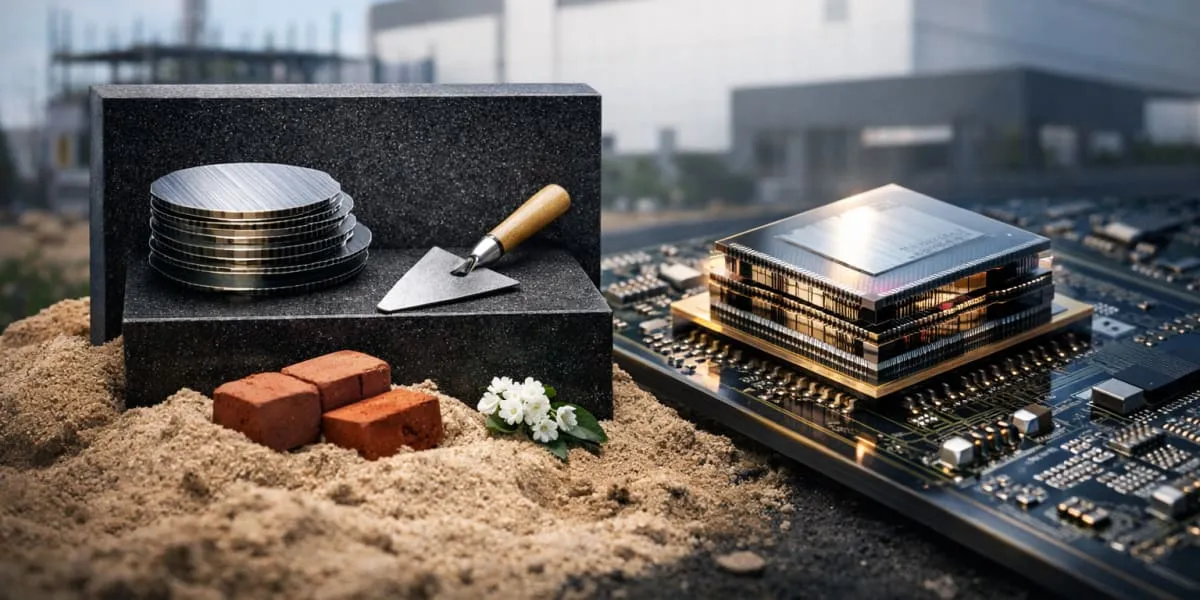
In a defining move for India’s semiconductor ambitions, the foundation stone for the country’s first advanced 3D chip packaging unit was laid at Info Valley, Bhubaneswar. The project, Heterogeneous Integration Packaging Solutions promoted by 3D Glass Solutions, will establish a greenfield, vertically integrated advanced packaging and embedded glass substrate ATMP facility through its Indian subsidiary Heterogeneous Integration Packaging Solutions Pvt. Ltd. The ceremony was attended by Chief Minister Mohan Charan Majhi and Union Minister Ashwini Vaishnaw alongside senior officials.

State leaders described the initiative as a historic milestone that will support sectors such as artificial intelligence, high-performance computing, defence electronics and telecommunications. The company is investing nearly Rs 20 billion (bn) in the project, with total investment recorded at Rs 19.44 bn including approved central fiscal support of Rs 7.99 bn and additional state support of about Rs 3.995 bn. The facility is planned to produce 70,000 glass panels annually, 50 million (mn) assembled units and around 13,000 advanced 3DHI modules.

Officials said the new unit will strengthen the domestic semiconductor value chain and drive Odisha’s transition from a resource-based economy to a technology-led growth centre, creating employment for engineering graduates, diploma holders and ITI students. The government indicated that commercial production is expected to begin by August 2028 and full-scale volume production is targeted by August 2030. Ministers highlighted Odisha’s emergence as a fast-growing IT and semiconductor hub with two projects approved under the India Semiconductor Mission and further proposals under consideration.

Union authorities also outlined concurrent infrastructure plans, noting projects worth over Rs 900 bn in execution and a record railway allocation of Rs 109.28 bn to enhance connectivity and support economic expansion across the state. The expansion of station redevelopment and the planned coastal four-line rail corridor were presented as measures to integrate Odisha with national freight and passenger networks. Officials said the combined push in electronics, skills development and transport infrastructure will position Odisha as a strategic centre for future technologies.

In a defining move for India’s semiconductor ambitions, the foundation stone for the country’s first advanced 3D chip packaging unit was laid at Info Valley, Bhubaneswar. The project, Heterogeneous Integration Packaging Solutions promoted by 3D Glass Solutions, will establish a greenfield, vertically integrated advanced packaging and embedded glass substrate ATMP facility through its Indian subsidiary Heterogeneous Integration Packaging Solutions Pvt. Ltd. The ceremony was attended by Chief Minister Mohan Charan Majhi and Union Minister Ashwini Vaishnaw alongside senior officials. State leaders described the initiative as a historic milestone that will support sectors such as artificial intelligence, high-performance computing, defence electronics and telecommunications. The company is investing nearly Rs 20 billion (bn) in the project, with total investment recorded at Rs 19.44 bn including approved central fiscal support of Rs 7.99 bn and additional state support of about Rs 3.995 bn. The facility is planned to produce 70,000 glass panels annually, 50 million (mn) assembled units and around 13,000 advanced 3DHI modules. Officials said the new unit will strengthen the domestic semiconductor value chain and drive Odisha’s transition from a resource-based economy to a technology-led growth centre, creating employment for engineering graduates, diploma holders and ITI students. The government indicated that commercial production is expected to begin by August 2028 and full-scale volume production is targeted by August 2030. Ministers highlighted Odisha’s emergence as a fast-growing IT and semiconductor hub with two projects approved under the India Semiconductor Mission and further proposals under consideration. Union authorities also outlined concurrent infrastructure plans, noting projects worth over Rs 900 bn in execution and a record railway allocation of Rs 109.28 bn to enhance connectivity and support economic expansion across the state. The expansion of station redevelopment and the planned coastal four-line rail corridor were presented as measures to integrate Odisha with national freight and passenger networks. Officials said the combined push in electronics, skills development and transport infrastructure will position Odisha as a strategic centre for future technologies.

Next Story
Equipment

India CE Industry Ends FY26 on a Steady Recovery Path

India’s construction equipment industry closed FY26 on a stable note, reflecting measured resilience and gradually improving momentum. Total sales in Q4 FY26 rose 4 per cent year on year to 42,906 units, extending the recovery seen over the past two years.Domestic demand for the full year remained under pressure, declining 7 per cent, but exports provided strong support. Overall exports grew 31 per cent, while non-OEM exports increased 13 per cent, highlighting sustained demand from overseas markets.March 2026 further underlined the recovery, with sales rising 6 per cent year on year and 13 ..

Next Story
Infrastructure Urban

Leaders Question FIR Against Anil Agarwal

Several industry and public figures have questioned the FIR filed against Anil Agarwal following the boiler accident in Chhattisgarh, while also expressing condolences over the loss of lives and calling for a thorough investigation.Naveen Jindal said the tragedy was deeply painful and stressed that compensation, livelihood support for affected families and a fair probe were essential. He also questioned naming Agarwal in the FIR before completion of the investigation.Kiran Bedi urged restraint, saying investigations should focus on learning lessons and strengthening systems rather than prematu..

Next Story
Infrastructure Urban

Tier 2, 3 Cities Drive 66% of New D2C Orders

Tier 2 and Tier 3 cities accounted for 66 per cent of new direct-to-consumer (D2C) orders in FY 2026, according to a new analysis by Unicommerce.The report said buyers from smaller cities also contributed 60 per cent of incremental gross merchandise value (GMV) in FY 2026 compared with FY 2025, highlighting rising demand beyond metro markets.Overall, India’s D2C segment recorded strong growth, with order volumes rising 33 per cent and GMV increasing 32 per cent year-on-year. The findings are based on more than 400 million order items processed through brand websites on Unicommerce’s Uniwar..

Advertisement

Subscribe to Our Newsletter

Get daily newsletters around different themes from Construction world.

STAY CONNECTED

Advertisement

Advertisement

Advertisement