Piyush Goyal Chairs Trade Meet on FTAs and SEZ Reforms
ECONOMY & POLICY

Piyush Goyal Chairs Trade Meet on FTAs and SEZ Reforms

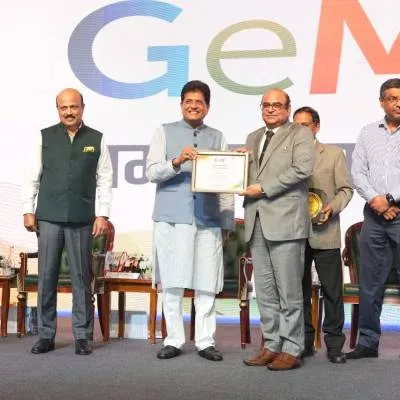
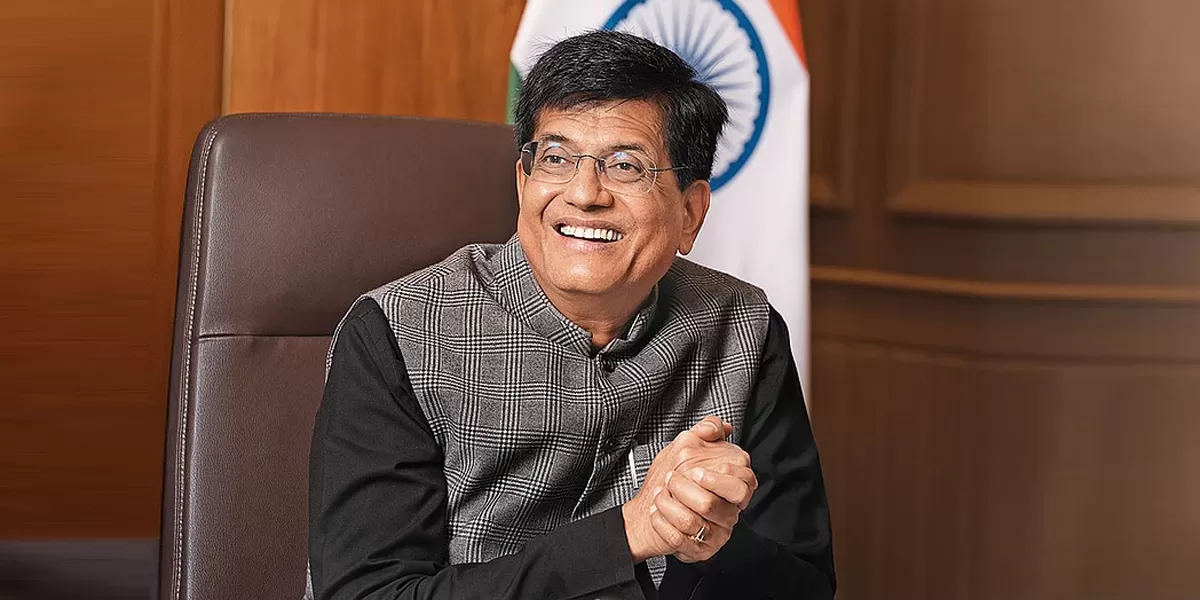
Union Minister of Commerce and Industry, Shri Piyush Goyal, chaired a high-level meeting with Export Promotion Councils (EPCs) and Industry Associations at Vanijya Bhawan in New Delhi. The session included officials from the Department of Commerce and the Department of Revenue, alongside representatives from key trade bodies across various sectors.

The meeting focused on the evaluation of Free Trade Agreements (FTAs) — both concluded and under negotiation — including their utilisation, associated challenges, and potential opportunities for Indian exporters. Participants also provided industry feedback and outlined expectations for ongoing FTA talks.

The Department of Commerce presented insights into the performance of Special Economic Zones (SEZs), highlighting recent reforms and those proposed to further streamline processes. These include simplifying procedures, boosting economies of scale, and utilising idle capacities at SEZs. The ultimate objective is to support India’s ambition of reaching a USD 5 trillion economy by 2027.

Breakout discussions were also held on the implementation of ICEGATE (Indian Customs EDI Gateway) in SEZs, involving officials from the Department of Revenue and trade members.

Industry representatives from a wide range of sectors — including textiles, apparel, engineering, gems and jewellery, medical devices, services, AYUSH, leather, and organisations such as FIEO and Assocham — praised the government’s initiatives to strengthen India’s trade ecosystem and expand global market access.

Shri Piyush Goyal reiterated the Centre’s commitment to fostering a supportive trade environment through regulatory ease, improved infrastructure, and the creation of new opportunities for exporters. He urged the industry to scale up manufacturing, diversify supply chains, and reduce reliance on imports to advance the vision of an Atmanirbhar Bharat.

Union Minister of Commerce and Industry, Shri Piyush Goyal, chaired a high-level meeting with Export Promotion Councils (EPCs) and Industry Associations at Vanijya Bhawan in New Delhi. The session included officials from the Department of Commerce and the Department of Revenue, alongside representatives from key trade bodies across various sectors.The meeting focused on the evaluation of Free Trade Agreements (FTAs) — both concluded and under negotiation — including their utilisation, associated challenges, and potential opportunities for Indian exporters. Participants also provided industry feedback and outlined expectations for ongoing FTA talks.The Department of Commerce presented insights into the performance of Special Economic Zones (SEZs), highlighting recent reforms and those proposed to further streamline processes. These include simplifying procedures, boosting economies of scale, and utilising idle capacities at SEZs. The ultimate objective is to support India’s ambition of reaching a USD 5 trillion economy by 2027.Breakout discussions were also held on the implementation of ICEGATE (Indian Customs EDI Gateway) in SEZs, involving officials from the Department of Revenue and trade members.Industry representatives from a wide range of sectors — including textiles, apparel, engineering, gems and jewellery, medical devices, services, AYUSH, leather, and organisations such as FIEO and Assocham — praised the government’s initiatives to strengthen India’s trade ecosystem and expand global market access.Shri Piyush Goyal reiterated the Centre’s commitment to fostering a supportive trade environment through regulatory ease, improved infrastructure, and the creation of new opportunities for exporters. He urged the industry to scale up manufacturing, diversify supply chains, and reduce reliance on imports to advance the vision of an Atmanirbhar Bharat.

Next Story
Real Estate

AI: The New Recruit

From getting ideas to evaluating designs, presenting concepts to clients and tracking projects, artificial intelligence (AI) is helping architects work better and faster.“AI allows architects to spend more time doing what only they can do: think critically, synthesise complexity and design with intent,” says Dikshu C Kukreja, Managing Principal, CP Kukreja Architects. “Every minute reclaimed from repetitive processes can be invested in creativity, contextual understanding, interdisciplinary collaboration and innovation – the qualities that define meaningful architecture.”To read the ..

Next Story
Real Estate

Redevelopment 2.0

In 2017, Mumbai identified 160,000 ageing buildings due for structural audit. Close to half of these were in the Western Suburbs. Redeveloping the oldest and structurally weakest of these would help unlock new housing, much needed given the city’s growing population density and constant developed area of 437.7 sq km. At 30,600 people per sq km in 2024, Mumbai’s density was almost thrice that of Gurugram, and 60 per cent higher than Bengaluru’s.Essentially, Mumbai’s realty market has demand. It has capital. It has realty development potential.Fast forward to 2026. Mumbai has 1,094 regis..

Next Story
Technology

Cost intelligence will become a strategic contributor to project success

As India's construction industry accelerates its digital transformation, integrated platforms, AI and connected data are becoming essential to improving cost certainty, project efficiency and sustainability. Ravi Kumar, Sales Director – India, RIB Software India, shares how digital workflows are reshaping project planning, commercial management and decision-making across the construction value chain.India's construction sector is embracing digital technologies at an unprecedented pace. From your perspective, what are the biggest shifts driving this transformation and how is RIB Software enab..

Advertisement

Subscribe to Our Newsletter

Get daily newsletters around different themes from Construction world.

STAY CONNECTED

Advertisement

Advertisement

Advertisement