Piyush Goyal unveils revolutionary 'Status Holder' certification system
ECONOMY & POLICY

Piyush Goyal unveils revolutionary 'Status Holder' certification system

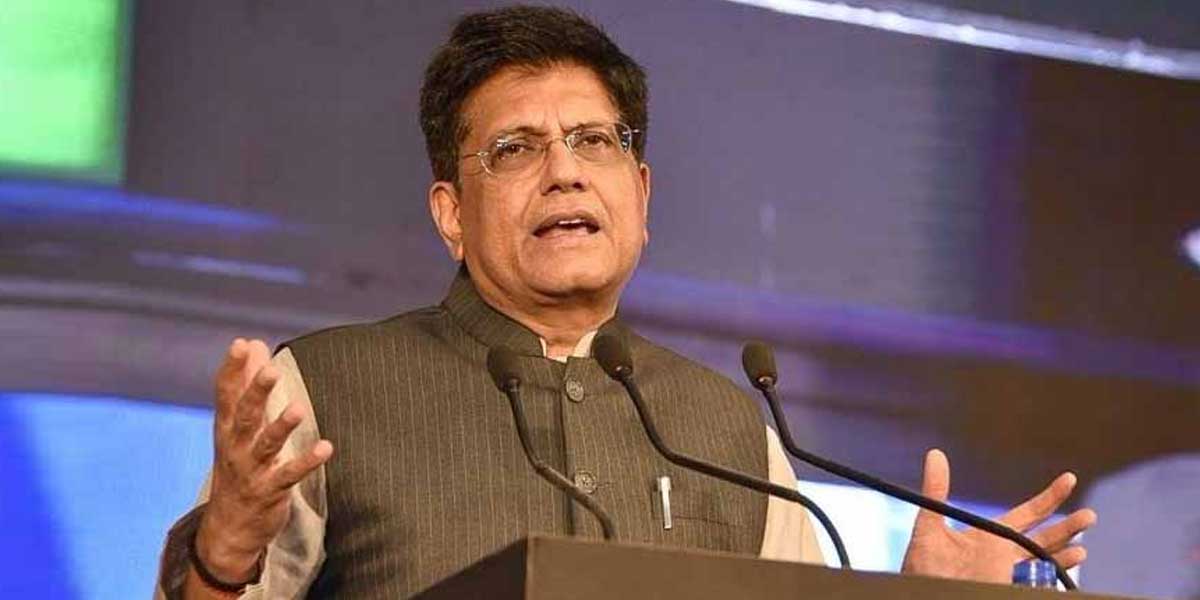
In a meeting with the Export Promotion Councils today, the Union Minister of Commerce & Industry, Consumer Affairs, Food & Public Distribution and Textiles Piyush Goyal unveiled a significant initiative to issue system based automatic ‘Status Holder’ certificates under the Foreign Trade Policy (FTP) 2023. Now the exporter will not be required to apply to the office of Directorate General of Foreign Trade (DGFT) for a Status Certificate and the export recognition will be provided by the IT system based on available Directorate General of Commercial Intelligence and Statistics (DGCIS) merchandise export electronic data and other risk parameters.

This perspective is a paradigm shift in doing things as it not only reduces compliance burden and promotes ease of doing business but also recognises the need and importance of collaboration within the Government. At present, the exporter is required to file an online application along with an export certificate from a Chartered Accountant for grant of Status. The DGFT Regional Offices, as per the laid down timelines are supposed to issue the certificate in 3 days. The new arrangement will lead to a simplified regime where no applications are invited from exporters and the certification is granted every year in August based on annual export figures available with the partner government agency that is DGCIS.

Exporters who are eligible for a higher status based on additional export data relating to services export, deemed exports or double weightage to some entities like MSME etc., which is not getting captured in disaggregated form presently, can apply online for a Status modification also at a later date.

The Status Holder certification program provides credibility to the Indian exporters in the international markets. In addition, it provides certain other privileges including simplified procedures under FTP 2023 and priority custom clearances on self-declaration basis, exemption from compulsory negotiation of documents through banks, exemption from filing Bank Guarantee for FTP schemes etc.

With the launch of this new system, the Department of Commerce, Ministry of Commerce and Industry will be recognising about 20,000 exporters under FTP 2023 as Status Holders which will be a quantum jump from the earlier number of 12,518 exporters. The biggest increase in Status certification is seen in the 1 Star category, which is the lowest category and requires an export performance of at least $3 Million in the last 3 preceding financial years plus the 3 months of the current financial year. This will enable the Government to hand hold a larger number of small exporting entities and create a vibrant export ecosystem and help reach our export target of $2 Trillion by 2030.

In line with digital India ethos, various e-initiatives have already been implemented where no manual examination or processing is required and various permissions/authorisations are issued under FTP 2023 based on a risk management system and self-declarations of the exporter including 24X7 online issue of Importer Exporter Code number (IEC), issue and renewal of Advance Authorisations.

In a meeting with the Export Promotion Councils today, the Union Minister of Commerce & Industry, Consumer Affairs, Food & Public Distribution and Textiles Piyush Goyal unveiled a significant initiative to issue system based automatic ‘Status Holder’ certificates under the Foreign Trade Policy (FTP) 2023. Now the exporter will not be required to apply to the office of Directorate General of Foreign Trade (DGFT) for a Status Certificate and the export recognition will be provided by the IT system based on available Directorate General of Commercial Intelligence and Statistics (DGCIS) merchandise export electronic data and other risk parameters.This perspective is a paradigm shift in doing things as it not only reduces compliance burden and promotes ease of doing business but also recognises the need and importance of collaboration within the Government. At present, the exporter is required to file an online application along with an export certificate from a Chartered Accountant for grant of Status. The DGFT Regional Offices, as per the laid down timelines are supposed to issue the certificate in 3 days. The new arrangement will lead to a simplified regime where no applications are invited from exporters and the certification is granted every year in August based on annual export figures available with the partner government agency that is DGCIS.Exporters who are eligible for a higher status based on additional export data relating to services export, deemed exports or double weightage to some entities like MSME etc., which is not getting captured in disaggregated form presently, can apply online for a Status modification also at a later date.The Status Holder certification program provides credibility to the Indian exporters in the international markets. In addition, it provides certain other privileges including simplified procedures under FTP 2023 and priority custom clearances on self-declaration basis, exemption from compulsory negotiation of documents through banks, exemption from filing Bank Guarantee for FTP schemes etc.With the launch of this new system, the Department of Commerce, Ministry of Commerce and Industry will be recognising about 20,000 exporters under FTP 2023 as Status Holders which will be a quantum jump from the earlier number of 12,518 exporters. The biggest increase in Status certification is seen in the 1 Star category, which is the lowest category and requires an export performance of at least $3 Million in the last 3 preceding financial years plus the 3 months of the current financial year. This will enable the Government to hand hold a larger number of small exporting entities and create a vibrant export ecosystem and help reach our export target of $2 Trillion by 2030.In line with digital India ethos, various e-initiatives have already been implemented where no manual examination or processing is required and various permissions/authorisations are issued under FTP 2023 based on a risk management system and self-declarations of the exporter including 24X7 online issue of Importer Exporter Code number (IEC), issue and renewal of Advance Authorisations.

Next Story
Infrastructure Urban

Implementation Status of Jal Jeevan Mission

Since August 2019 the Government has implemented Jal Jeevan Mission to provide assured potable water through household tap connections in rural India. At the start of the mission only 32.3 million (mn) rural households, representing 16.7 per cent, were reported to have tap water connections. States and union territories have reported that 125.8 mn additional rural households have since been provided with tap connections. As a result, of about 193.6 mn rural households roughly 158.2 mn, or 81.71 per cent, are reported to have tap water supply at home.\n\nThe State, district and village level st..

Next Story
Infrastructure Urban

Jal Jeevan Mission Reaches Eighty One Per Cent Rural Coverage

The Government reported substantial progress under the Jal Jeevan Mission, launched in August 2019 to provide tap water to every rural household. At launch only 32.3 million (mn) rural households had tap connections and states and Union territories reported provision of 125.8 mn additional households by March 2026. Consequently, out of about 193.6 mn rural households around 158.2 mn, or 81.71 per cent, are reported to have tap water at home. The Finance Minister announced extension of the mission until 2028 in the 2025-26 budget speech. The Swachh Bharat Mission Grameen, launched in October 20..

Next Story
Infrastructure Urban

Empowering Local Governance for Sustainable Rural Water Supply

The Ministry of Jal Shakti has aligned the Jal Jeevan Mission (JJM) with the 73rd Amendment to strengthen village level planning and community ownership of water supply. Gram Panchayats, village water and sanitation committees and Pani Samitis are to plan, implement, manage and maintain piped water systems, with gram sabha processes formalising handover and oversight. Implementation support agencies including non government organisations, community based organisations and self help groups have been empanelled to train local committees and promote women participation. Under JJM, the department ..

Advertisement

Subscribe to Our Newsletter

Get daily newsletters around different themes from Construction world.

STAY CONNECTED

Advertisement

Advertisement

Advertisement