



PM Inaugurates Jan Aushadhi Kendra in Kolkata
ECONOMY & POLICY

PM Inaugurates Jan Aushadhi Kendra in Kolkata

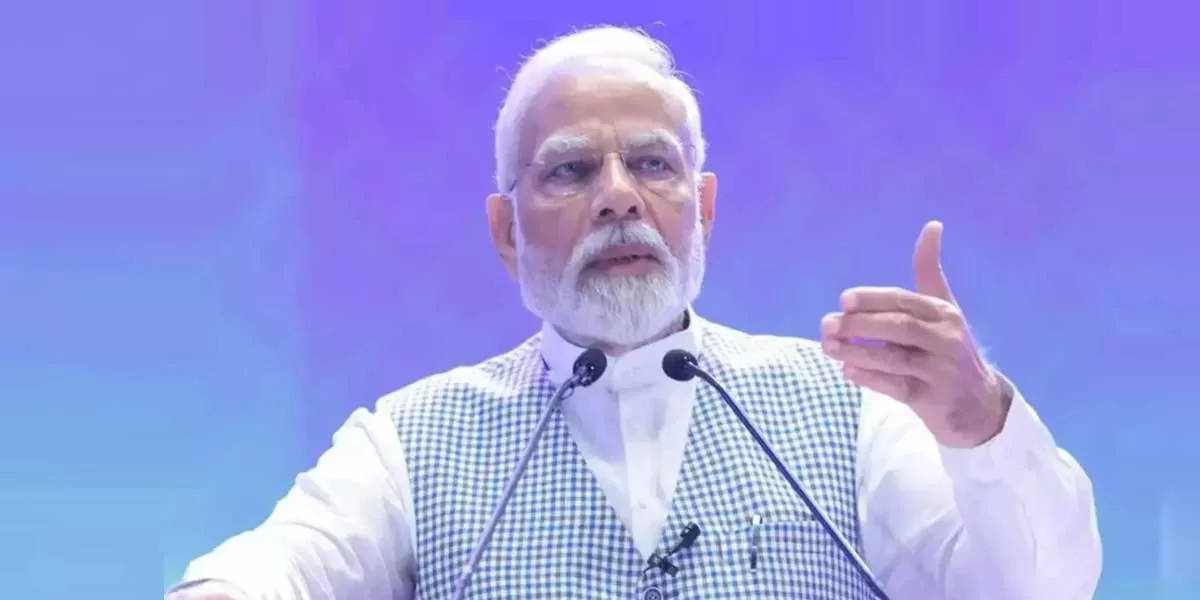
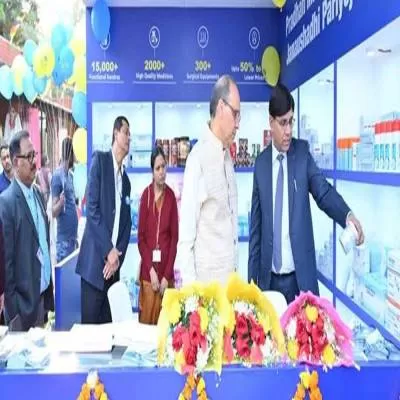
Prime Minister Narendra Modi inaugurated a Jan Aushadhi Kendra at Kolkata’s Sealdah Metro Station via video conferencing, underscoring the government’s focus on making affordable medicines accessible across India. Part of the Pradhan Mantri Bhartiya Janaushadhi Pariyojana (PMBJP), this initiative aims to provide affordable generic medicines, helping reduce healthcare costs for the general public. The Sealdah Metro Jan Aushadhi Kendra will offer quality medicines at discounted prices, directly benefiting daily commuters and nearby residents by making essential medicines more accessible.

The Jan Aushadhi Kendra launch at a metro station is a first in Kolkata, marking a strategic move to integrate essential healthcare services within urban transit systems. This model also aligns with the government's vision of expanding PMBJP reach, which now has more than 10,000 kendras nationwide. These centers focus on affordability and quality, making essential medicines up to 50-90% cheaper than market prices. The metro-based Jan Aushadhi Kendra offers convenience for commuters and locals who can now access medications without having to detour from their daily travel routes.

PM Modi highlighted the importance of the PMBJP scheme, emphasizing how such initiatives ease financial burdens on families. Additionally, he reiterated the government’s commitment to enhancing healthcare accessibility, with Jan Aushadhi Kendras extending to semi-urban and rural areas as well. The opening of this center in Kolkata’s busy transit hub is a step towards achieving this goal, aiming to reach millions of people who rely on the metro for daily commutes.

Prime Minister Narendra Modi inaugurated a Jan Aushadhi Kendra at Kolkata’s Sealdah Metro Station via video conferencing, underscoring the government’s focus on making affordable medicines accessible across India. Part of the Pradhan Mantri Bhartiya Janaushadhi Pariyojana (PMBJP), this initiative aims to provide affordable generic medicines, helping reduce healthcare costs for the general public. The Sealdah Metro Jan Aushadhi Kendra will offer quality medicines at discounted prices, directly benefiting daily commuters and nearby residents by making essential medicines more accessible. The Jan Aushadhi Kendra launch at a metro station is a first in Kolkata, marking a strategic move to integrate essential healthcare services within urban transit systems. This model also aligns with the government's vision of expanding PMBJP reach, which now has more than 10,000 kendras nationwide. These centers focus on affordability and quality, making essential medicines up to 50-90% cheaper than market prices. The metro-based Jan Aushadhi Kendra offers convenience for commuters and locals who can now access medications without having to detour from their daily travel routes. PM Modi highlighted the importance of the PMBJP scheme, emphasizing how such initiatives ease financial burdens on families. Additionally, he reiterated the government’s commitment to enhancing healthcare accessibility, with Jan Aushadhi Kendras extending to semi-urban and rural areas as well. The opening of this center in Kolkata’s busy transit hub is a step towards achieving this goal, aiming to reach millions of people who rely on the metro for daily commutes.

Next Story
Infrastructure Urban

ABB to Invest Rs 6.25 Billion to Expand India Manufacturing

ABB recently announced plans to invest approximately Rs 6.25 billion ($75 million) in India during 2026 to expand its manufacturing footprint and research and development capabilities. The investment follows more than $35 million spent in 2025 and reflects the company’s continued focus on strengthening its ‘local-for-local’ strategy in the country.The investment will support ABB’s Electrification, Motion and Automation businesses and expand manufacturing capacity for infrastructure sectors such as renewable energy, metro rail, data centres and industrial applications. Approximately 300..

Next Story
Equipment

Six WOLFF Cranes Handle 60,000 m³ Concrete for German Hospital

Six WOLFF tower cranes are playing a key role in constructing a new hospital complex in Memmingen, Germany, supporting large-scale material handling for the project. The facility is being built on a 7.7-hectare site and will feature six floors, around 480 beds and a gross floor area exceeding 75,000 sq m.Building shell works began recently in February 2025. One WOLFF 6531.12 Cross crane supported early site preparation before being dismantled in autumn 2025, while five remaining cranes continue operations. Over an average deployment period of 16 months, the cranes are expected to move approxim..

Next Story
Equipment

REC Funds Rs 115.6 Million CSR Support for Bihar Eye Hospital

REC recently committed Rs 115.6 million under its Corporate Social Responsibility (CSR) programme for the procurement of clinical and non-clinical equipment at Sankara Eye Hospital in Saharsa, Bihar. The initiative aims to strengthen healthcare infrastructure and improve access to specialised eye care services in the region.A Memorandum of Agreement (MoA) was recently signed between Pradeep Fellows, Executive Director (CSR), REC Limited, and Wg Cdr V. Shankar (Retd), Trustee and Executive Director of Sankara Eye Hospital, at the REC office in the SCOPE Complex, New Delhi.The support is expecte..

Advertisement

Subscribe to Our Newsletter

Get daily newsletters around different themes from Construction world.

STAY CONNECTED

Advertisement

Advertisement

Advertisement














