



PM Modi Inaugurates Advantage Assam 2.0 Summit 2025
ECONOMY & POLICY

PM Modi Inaugurates Advantage Assam 2.0 Summit 2025

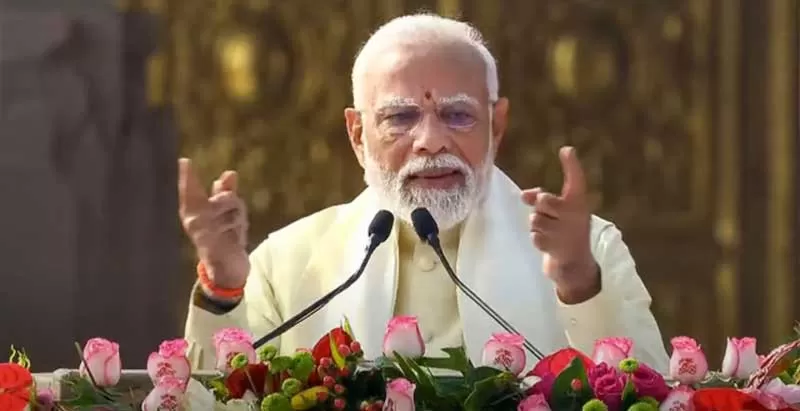
Prime Minister Narendra Modi inaugurated the Advantage Assam 2.0 Investment & Infrastructure Summit 2025 in Guwahati, Assam, emphasising the region’s potential as a driver of India’s economic growth. Welcoming dignitaries, Modi highlighted Assam’s role in India’s prosperity and expressed optimism about East and North East India’s contribution to a developed nation. He recalled his 2013 statement that 'A for Assam' would soon become a recognised norm. 

Despite global uncertainties, Modi noted the world’s confidence in India’s rapid growth, skilled youth, emerging middle class, and stable governance. He stressed India’s commitment to long-term development, strengthening local supply chains, and enhancing global trade relations through initiatives like the India-Middle East-Europe Economic Corridor. 

Modi praised Assam’s economic progress since the first Advantage Assam Summit in 2018, when the state’s economy was valued at Rs 2.75 trillion. Today, Assam’s economy stands at approximately Rs 6 trillion, doubling in just six years due to collaborative efforts between the central and state governments. He credited investments in education, skill development, and improved infrastructure for this growth. 

Highlighting connectivity advancements, Modi cited the construction of four new bridges over the Brahmaputra River since 2014, compared to just three in the previous 70 years. He also noted the significant increase in Assam’s rail budget from Rs 21 billion between 2009-2014 to Rs 100 billion currently, alongside the modernisation of over 60 railway stations and the launch of the region’s first semi high-speed train between Guwahati and New Jalpaiguri. 

Air connectivity has also expanded, with flight routes increasing from seven in 2014 to nearly 30 today, boosting the local economy and job opportunities. Modi highlighted improvements in law and order, peace accords, and resolution of border disputes as key factors driving development. 

Addressing economic reforms, Modi underscored efforts to enhance the Ease of Doing Business and promote innovation through startup policies, PLI schemes, and tax incentives for manufacturing and MSMEs. He pointed to Assam’s ambitious goal of becoming a $150 billion economy by 2030 and the launch of the North East Transformative Industrialisation Scheme, 'Unnati,' aimed at accelerating industry, investment, and tourism. 

Concluding his address, Modi urged industry leaders to capitalise on Assam’s strategic location and rich resources, citing the global success of Assam tea as an example of the state’s potential. He expressed confidence in Assam’s ability to become a gateway between South East Asia and India, driving regional and national growth. 

(PIB)               

Prime Minister Narendra Modi inaugurated the Advantage Assam 2.0 Investment & Infrastructure Summit 2025 in Guwahati, Assam, emphasising the region’s potential as a driver of India’s economic growth. Welcoming dignitaries, Modi highlighted Assam’s role in India’s prosperity and expressed optimism about East and North East India’s contribution to a developed nation. He recalled his 2013 statement that 'A for Assam' would soon become a recognised norm. Despite global uncertainties, Modi noted the world’s confidence in India’s rapid growth, skilled youth, emerging middle class, and stable governance. He stressed India’s commitment to long-term development, strengthening local supply chains, and enhancing global trade relations through initiatives like the India-Middle East-Europe Economic Corridor. Modi praised Assam’s economic progress since the first Advantage Assam Summit in 2018, when the state’s economy was valued at Rs 2.75 trillion. Today, Assam’s economy stands at approximately Rs 6 trillion, doubling in just six years due to collaborative efforts between the central and state governments. He credited investments in education, skill development, and improved infrastructure for this growth. Highlighting connectivity advancements, Modi cited the construction of four new bridges over the Brahmaputra River since 2014, compared to just three in the previous 70 years. He also noted the significant increase in Assam’s rail budget from Rs 21 billion between 2009-2014 to Rs 100 billion currently, alongside the modernisation of over 60 railway stations and the launch of the region’s first semi high-speed train between Guwahati and New Jalpaiguri. Air connectivity has also expanded, with flight routes increasing from seven in 2014 to nearly 30 today, boosting the local economy and job opportunities. Modi highlighted improvements in law and order, peace accords, and resolution of border disputes as key factors driving development. Addressing economic reforms, Modi underscored efforts to enhance the Ease of Doing Business and promote innovation through startup policies, PLI schemes, and tax incentives for manufacturing and MSMEs. He pointed to Assam’s ambitious goal of becoming a $150 billion economy by 2030 and the launch of the North East Transformative Industrialisation Scheme, 'Unnati,' aimed at accelerating industry, investment, and tourism. Concluding his address, Modi urged industry leaders to capitalise on Assam’s strategic location and rich resources, citing the global success of Assam tea as an example of the state’s potential. He expressed confidence in Assam’s ability to become a gateway between South East Asia and India, driving regional and national growth. (PIB)               

Next Story
Real Estate

AI: The New Recruit

From getting ideas to evaluating designs, presenting concepts to clients and tracking projects, artificial intelligence (AI) is helping architects work better and faster.“AI allows architects to spend more time doing what only they can do: think critically, synthesise complexity and design with intent,” says Dikshu C Kukreja, Managing Principal, CP Kukreja Architects. “Every minute reclaimed from repetitive processes can be invested in creativity, contextual understanding, interdisciplinary collaboration and innovation – the qualities that define meaningful architecture.”To read the ..

Next Story
Real Estate

Redevelopment 2.0

In 2017, Mumbai identified 160,000 ageing buildings due for structural audit. Close to half of these were in the Western Suburbs. Redeveloping the oldest and structurally weakest of these would help unlock new housing, much needed given the city’s growing population density and constant developed area of 437.7 sq km. At 30,600 people per sq km in 2024, Mumbai’s density was almost thrice that of Gurugram, and 60 per cent higher than Bengaluru’s.Essentially, Mumbai’s realty market has demand. It has capital. It has realty development potential.Fast forward to 2026. Mumbai has 1,094 regis..

Next Story
Technology

Cost intelligence will become a strategic contributor to project success

As India's construction industry accelerates its digital transformation, integrated platforms, AI and connected data are becoming essential to improving cost certainty, project efficiency and sustainability. Ravi Kumar, Sales Director – India, RIB Software India, shares how digital workflows are reshaping project planning, commercial management and decision-making across the construction value chain.India's construction sector is embracing digital technologies at an unprecedented pace. From your perspective, what are the biggest shifts driving this transformation and how is RIB Software enab..

Advertisement

Subscribe to Our Newsletter

Get daily newsletters around different themes from Construction world.

STAY CONNECTED

Advertisement

Advertisement

Advertisement















