Indore Metro to Go Underground from Khajrana to Bada Ganpati
RAILWAYS & METRO RAIL

Indore Metro to Go Underground from Khajrana to Bada Ganpati

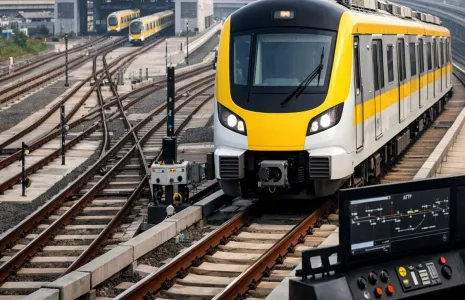
The Indore Metro will now run underground from Khajrana Square, passing through Palasia to Bada Ganpati, as approved in a high-level meeting chaired by Urban Development and Housing Minister Kailash Vijayvargiya.

The decision, finalised after extensive deliberations, marks a major milestone in enhancing traffic management and urban mobility across Indore. The proposal for the underground stretch received unanimous approval from the committee.

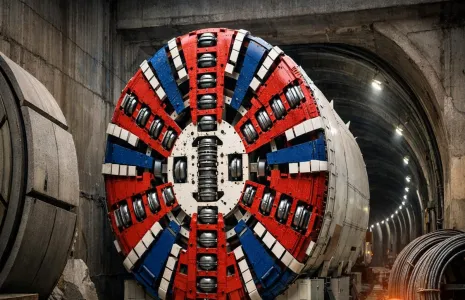
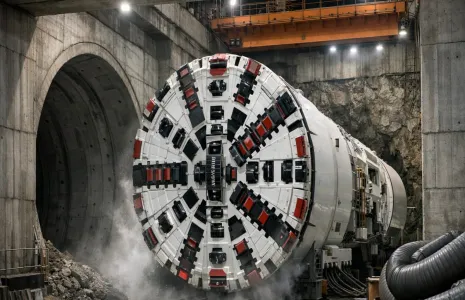
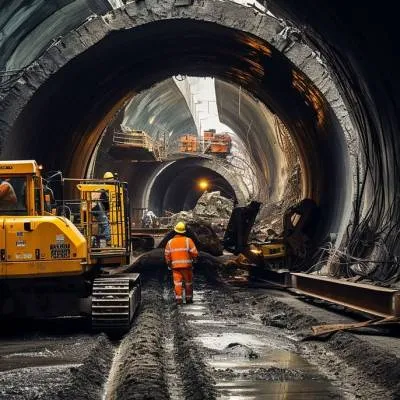
Vijayvargiya announced that a new Malharganj Metro station would be developed, assuring that no houses or shops would be impacted. He added that the tunnelling work would employ advanced boring technology—similar to that used at Chandni Chowk in Delhi—ensuring no surface disruption.

Further route details will be determined once the company redesigns the section for the proposed underground track, following which feasibility and soil testing will commence.

The minister also directed officials to disconnect all illegal water connections associated with under-construction water tanks and distribution lines under the AMRUT scheme.

He emphasised that all road restoration work must be carried out using cutting machines rather than manual digging to ensure technical precision.

Mayor Pushyamitra Bhargav urged that construction under the Pradhan Mantri Awas Yojana be expedited and recommended appointing a traffic engineer to design future mobility systems. He also expressed concern over the delayed progress of the Marathi Kala Sankul project under the Smart City initiative.

The Indore Metro will now run underground from Khajrana Square, passing through Palasia to Bada Ganpati, as approved in a high-level meeting chaired by Urban Development and Housing Minister Kailash Vijayvargiya. The decision, finalised after extensive deliberations, marks a major milestone in enhancing traffic management and urban mobility across Indore. The proposal for the underground stretch received unanimous approval from the committee. Vijayvargiya announced that a new Malharganj Metro station would be developed, assuring that no houses or shops would be impacted. He added that the tunnelling work would employ advanced boring technology—similar to that used at Chandni Chowk in Delhi—ensuring no surface disruption. Further route details will be determined once the company redesigns the section for the proposed underground track, following which feasibility and soil testing will commence. The minister also directed officials to disconnect all illegal water connections associated with under-construction water tanks and distribution lines under the AMRUT scheme. He emphasised that all road restoration work must be carried out using cutting machines rather than manual digging to ensure technical precision. Mayor Pushyamitra Bhargav urged that construction under the Pradhan Mantri Awas Yojana be expedited and recommended appointing a traffic engineer to design future mobility systems. He also expressed concern over the delayed progress of the Marathi Kala Sankul project under the Smart City initiative.

Next Story
Real Estate

RBI Rate Cut Boosts Confidence Across Housing Market

Industry Context and Market DynamicsThe real estate industry has welcomed the RBI’s rate cut as a timely boost to affordability and demand. With home prices having risen steadily across major markets, even a marginal reduction in interest rates meaningfully strengthens purchasing power, especially for first-time and mid-income buyers.Ashish Jerath, President – Sales & Marketing, Smartworld Developers, observes:“The RBI’s 25-basis-point cut, bringing the repo rate down to 5.25%, is a timely boost for the real estate sector. Lower interest rates reduce borrowing costs, enabling homeb..

Next Story
Infrastructure Transport

BMC Resumes Rs 170 Billion Road Works, Targets 80 per cent By Jan 2026

Following the withdrawal of the southwest monsoon in October, the Brihanmumbai Municipal Corporation (BMC) has restarted work on 645 roads—covering 297.49 kilometres—under its large-scale concretisation programme. Data shows that more than 60 per cent of the resumed works are located in the western suburbs. Officials said the civic body aims to complete concretisation on 80 per cent of the roads where fresh work has begun by January 2026. Launched in 2022, the Rs 170 billion project seeks to concretise 700 kilometres of roads across Mumbai. All civil works were halted during the monsoon ..

Next Story
Infrastructure Urban

India Pushes Digital Shift In Urban Land Mapping

The Department of Land Resources (DoLR) under the Ministry of Rural Development has convened a National Symposium on NAKSHA – the National Geospatial Knowledge-based Land Survey of Urban Habitations – to advance India’s transition to modern, technology-driven land mapping. Speaking at the inaugural session, Secretary Manoj Joshi underscored the urgent need to move revenue departments away from outdated, tape-based methods and rough hand-drawn sketches. He stressed that adopting latitude–longitude-based digital mapping and GIS-linked registration systems is essential for economic stabi..

Advertisement

Subscribe to Our Newsletter

Get daily newsletters around different themes from Construction world.

STAY CONNECTED

Advertisement

Advertisement

Advertisement

Advertisement

Open In App