PM Modi Launches UP Trade Show and Rs 1.22 Trillion Projects
ECONOMY & POLICY

PM Modi Launches UP Trade Show and Rs 1.22 Trillion Projects

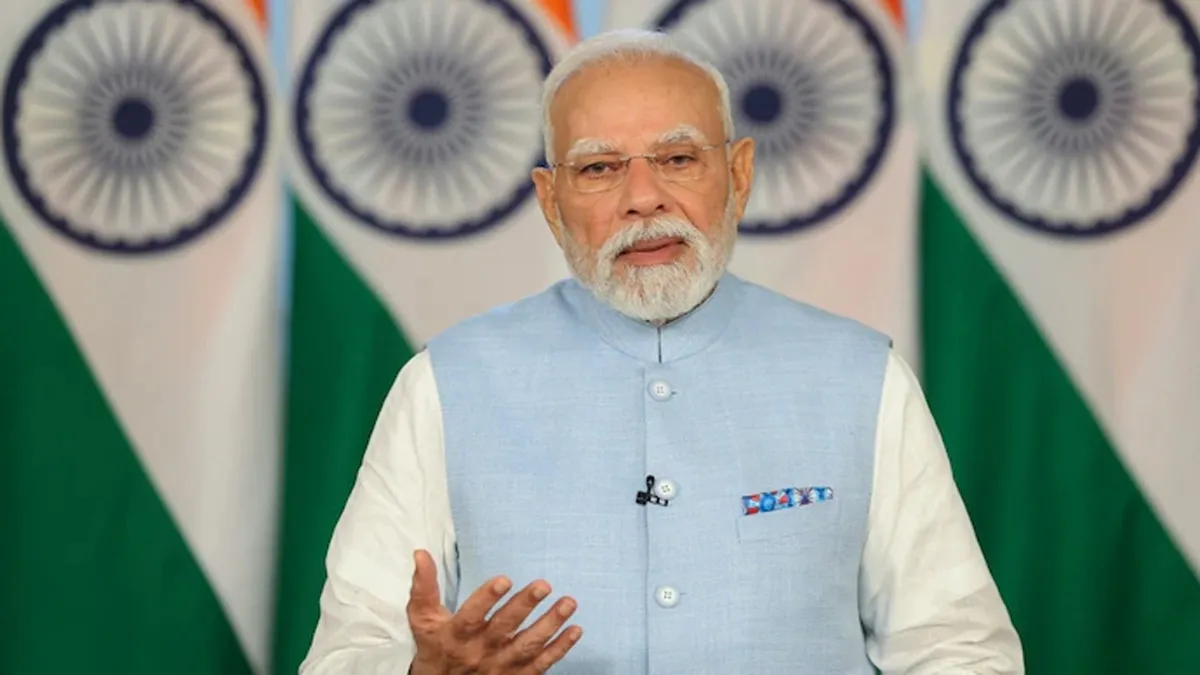
On 25 September 2025, Prime Minister Narendra Modi will inaugurate the Uttar Pradesh International Trade Show-2025 (UPITS-2025) in Greater Noida at around 9:30 AM, before heading to Banswara in Rajasthan to lay foundations and inaugurate development projects worth over Rs 1,22,100 crore.

UPITS-2025, running from 25–29 September under the theme “Ultimate Sourcing Begins Here”, aims to attract international and domestic buyers across B2B and B2C segments. The event expects over 2,400 exhibitors, 125,000 B2B visitors, and 450,000 B2C visitors, covering handicrafts, textiles, leather, agriculture, food processing, IT, and AYUSH. Arts, cuisine, and culture from Uttar Pradesh will be highlighted, with Russia as the partner country fostering trade and technology collaborations.

In Banswara, the Prime Minister will lay the foundation for and launch multiple central and state projects, including:
  • Mahi Banswara Atomic Power Project: 4,700 MW reactors worth Rs 42,000 crore under NPCIL’s “fleet mode” plan.
  • Green energy and solar projects: Rs 19,210 crore in Rajasthan.
  • Renewable Energy Zone transmission projects: Three projects worth Rs 13,180 crore enhancing grid capacity.
  • PM-KUSUM feeder solarisation: 3,517 MW across Rajasthan, Maharashtra, Madhya Pradesh, and Karnataka for Rs 16,050 crore, supporting affordable irrigation power for farmers.
Infrastructure and urban welfare projects:
  • Water projects including dams, reservoirs, feeders, and canals worth Rs 20,830 crore.
  • Drinking water supply schemes under AMRUT 2.0 worth Rs 5,880 crore.
  • Roads, flyovers, Banas River bridge, 116 Atal Pragati Path projects, and highway works worth Rs 2,630 crore to enhance connectivity and safety.
Youth, rail, and public welfare initiatives:
  • Flagging off three new trains, including Vande Bharat Express routes connecting Rajasthan to Delhi and Chandigarh.
  • Distribution of over 15,000 appointment letters for various roles, including animal attendants, junior engineers, and teachers.
  • Public health, sanitation, and e-governance projects, including a 250-bed hospital in Bharatpur, IT and e-governance centre in Jaipur, and sewerage and water supply works in multiple districts.

On 25 September 2025, Prime Minister Narendra Modi will inaugurate the Uttar Pradesh International Trade Show-2025 (UPITS-2025) in Greater Noida at around 9:30 AM, before heading to Banswara in Rajasthan to lay foundations and inaugurate development projects worth over Rs 1,22,100 crore.UPITS-2025, running from 25–29 September under the theme “Ultimate Sourcing Begins Here”, aims to attract international and domestic buyers across B2B and B2C segments. The event expects over 2,400 exhibitors, 125,000 B2B visitors, and 450,000 B2C visitors, covering handicrafts, textiles, leather, agriculture, food processing, IT, and AYUSH. Arts, cuisine, and culture from Uttar Pradesh will be highlighted, with Russia as the partner country fostering trade and technology collaborations.In Banswara, the Prime Minister will lay the foundation for and launch multiple central and state projects, including:Mahi Banswara Atomic Power Project: 4,700 MW reactors worth Rs 42,000 crore under NPCIL’s “fleet mode” plan.Green energy and solar projects: Rs 19,210 crore in Rajasthan.Renewable Energy Zone transmission projects: Three projects worth Rs 13,180 crore enhancing grid capacity.PM-KUSUM feeder solarisation: 3,517 MW across Rajasthan, Maharashtra, Madhya Pradesh, and Karnataka for Rs 16,050 crore, supporting affordable irrigation power for farmers.Infrastructure and urban welfare projects:Water projects including dams, reservoirs, feeders, and canals worth Rs 20,830 crore.Drinking water supply schemes under AMRUT 2.0 worth Rs 5,880 crore.Roads, flyovers, Banas River bridge, 116 Atal Pragati Path projects, and highway works worth Rs 2,630 crore to enhance connectivity and safety.Youth, rail, and public welfare initiatives:Flagging off three new trains, including Vande Bharat Express routes connecting Rajasthan to Delhi and Chandigarh.Distribution of over 15,000 appointment letters for various roles, including animal attendants, junior engineers, and teachers.Public health, sanitation, and e-governance projects, including a 250-bed hospital in Bharatpur, IT and e-governance centre in Jaipur, and sewerage and water supply works in multiple districts.

Next Story
Infrastructure Urban

Implementation Status of Jal Jeevan Mission

Since August 2019 the Government has implemented Jal Jeevan Mission to provide assured potable water through household tap connections in rural India. At the start of the mission only 32.3 million (mn) rural households, representing 16.7 per cent, were reported to have tap water connections. States and union territories have reported that 125.8 mn additional rural households have since been provided with tap connections. As a result, of about 193.6 mn rural households roughly 158.2 mn, or 81.71 per cent, are reported to have tap water supply at home.\n\nThe State, district and village level st..

Next Story
Infrastructure Urban

Jal Jeevan Mission Reaches Eighty One Per Cent Rural Coverage

The Government reported substantial progress under the Jal Jeevan Mission, launched in August 2019 to provide tap water to every rural household. At launch only 32.3 million (mn) rural households had tap connections and states and Union territories reported provision of 125.8 mn additional households by March 2026. Consequently, out of about 193.6 mn rural households around 158.2 mn, or 81.71 per cent, are reported to have tap water at home. The Finance Minister announced extension of the mission until 2028 in the 2025-26 budget speech. The Swachh Bharat Mission Grameen, launched in October 20..

Next Story
Infrastructure Urban

Empowering Local Governance for Sustainable Rural Water Supply

The Ministry of Jal Shakti has aligned the Jal Jeevan Mission (JJM) with the 73rd Amendment to strengthen village level planning and community ownership of water supply. Gram Panchayats, village water and sanitation committees and Pani Samitis are to plan, implement, manage and maintain piped water systems, with gram sabha processes formalising handover and oversight. Implementation support agencies including non government organisations, community based organisations and self help groups have been empanelled to train local committees and promote women participation. Under JJM, the department ..

Advertisement

Subscribe to Our Newsletter

Get daily newsletters around different themes from Construction world.

STAY CONNECTED

Advertisement

Advertisement

Advertisement