



Revamped Tondiarpet Depot Opens With 100 E-Buses
ECONOMY & POLICY

Revamped Tondiarpet Depot Opens With 100 E-Buses

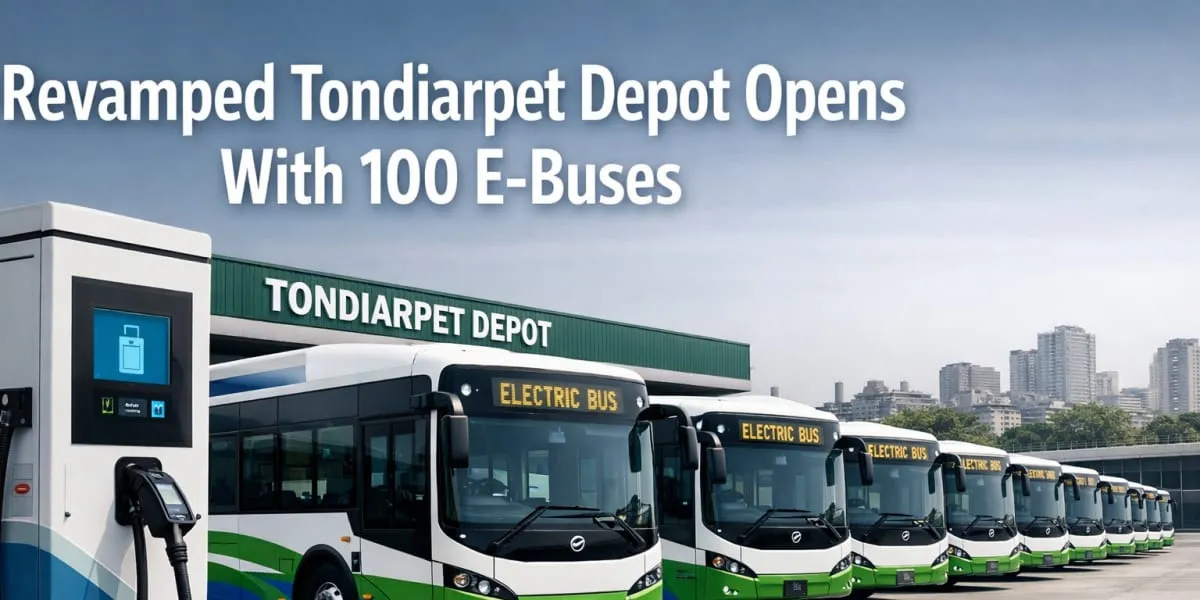
The Metropolitan Transport Corporation (MTC) has inaugurated a revamped depot at Tondiarpet as part of an ongoing expansion of its electric bus fleet. The opening coincided with the roll out of 100 e-buses from the depot, delivering a visible boost to city services. Officials said the move forms part of the Chennai City Partnership programme to modernise urban transport. The project follows earlier procurements aimed at modernising the municipal fleet and enhancing service reliability across the city.

The first phase of the programme is complete and comprises 625 low-floor electric buses in total, including 225 air-conditioned buses and 400 non-air-conditioned buses. The second phase has been announced and will expand the fleet by an additional 750 low-floor electric buses with 500 air-conditioned buses and 250 non-air-conditioned buses. Operators appointed for services include OHM Global Mobility Pvt Ltd and Traveltime Mobility India Pvt.

The enhanced capacity at the Tondiarpet depot is expected to improve route coverage and reduce reliance on fossil fuel vehicles in the metropolitan area. MTC will deploy the new e-buses on high-demand corridors and adjust timetables to optimise utilisation and passenger convenience. Support infrastructure at the depot has been upgraded to handle charging and maintenance requirements for the electric vehicles. The depot upgrades include enhanced electrical distribution and safety systems to support sustained operations and faster turnaround.

City transport planners anticipate that the expanded electric fleet will contribute to lower local emissions and smoother operations while offering passengers more comfortable travel options. The staged approach allows for operational learning and adjustments before further scaling up services across the network. Authorities indicated that future phases will be guided by ridership patterns and performance data to ensure efficient integration. Officials will monitor energy consumption and operational costs to inform subsequent procurement and deployment schedules and assess impacts on travel time.

The Metropolitan Transport Corporation (MTC) has inaugurated a revamped depot at Tondiarpet as part of an ongoing expansion of its electric bus fleet. The opening coincided with the roll out of 100 e-buses from the depot, delivering a visible boost to city services. Officials said the move forms part of the Chennai City Partnership programme to modernise urban transport. The project follows earlier procurements aimed at modernising the municipal fleet and enhancing service reliability across the city. The first phase of the programme is complete and comprises 625 low-floor electric buses in total, including 225 air-conditioned buses and 400 non-air-conditioned buses. The second phase has been announced and will expand the fleet by an additional 750 low-floor electric buses with 500 air-conditioned buses and 250 non-air-conditioned buses. Operators appointed for services include OHM Global Mobility Pvt Ltd and Traveltime Mobility India Pvt. The enhanced capacity at the Tondiarpet depot is expected to improve route coverage and reduce reliance on fossil fuel vehicles in the metropolitan area. MTC will deploy the new e-buses on high-demand corridors and adjust timetables to optimise utilisation and passenger convenience. Support infrastructure at the depot has been upgraded to handle charging and maintenance requirements for the electric vehicles. The depot upgrades include enhanced electrical distribution and safety systems to support sustained operations and faster turnaround. City transport planners anticipate that the expanded electric fleet will contribute to lower local emissions and smoother operations while offering passengers more comfortable travel options. The staged approach allows for operational learning and adjustments before further scaling up services across the network. Authorities indicated that future phases will be guided by ridership patterns and performance data to ensure efficient integration. Officials will monitor energy consumption and operational costs to inform subsequent procurement and deployment schedules and assess impacts on travel time.

Next Story
Equipment

Sanjay Saxena Passes Away, Leaving Behind a Powerful Industry Legacy

The construction equipment industry mourns the untimely demise of Sanjay Saxena, Chief Operating Officer (Sales, Marketing & Customer Support) at Sany India and South Asia, a respected leader whose vision and dedication left a lasting imprint on the sector. He was a seasoned professional with decades of experience across construction, material handling, port, and mining equipment industries. At Sany India, he played a pivotal role in steering the company’s growth, overseeing business operations across all six key verticals—Hoisting, Foundation, Port, Excavators, Road, and Mining. His s..

Next Story
Infrastructure Urban

The Gateway of Guwahati

The Brahmaputra does not behave like an ordinary river. It shifts, swells and retreats with extraordinary force, carrying immense sediment loads from the Himalayas while constantly reshaping its own channel. In Guwahati, seasonal water levels can swing by nearly 10-11 m, transforming calm winter waters into a roaring monsoon current.Building permanent infrastructure in such conditions is notoriously difficult. Conventional river terminals – fixed jetties anchored to the riverbed – struggle to survive in an environment where currents intensify, sediment accumulates rapidly and the river’s..

Next Story
Building Material

Cement Excellence Redefined!

Operational excellence in cement is no longer about producing more – it is about producing smarter, cleaner and more reliably, where cost per tonne meets carbon per tonne.Operational excellence in cement has moved far beyond the old pursuit of ‘more tonne’. The new benchmark is smarter, cleaner, more reliable production, delivered with discipline across process, people and data. In an industry where energy can account for nearly 30 per cent of manufacturing cost, even marginal gains translate into meaningful value. As Dr SB Hegde, Professor, Jain College of Engineering & Technol..

Advertisement

Subscribe to Our Newsletter

Get daily newsletters around different themes from Construction world.

STAY CONNECTED

Advertisement

Advertisement

Advertisement














