



RSETIs Strengthen Rural Livelihoods Through Skills
ECONOMY & POLICY

RSETIs Strengthen Rural Livelihoods Through Skills

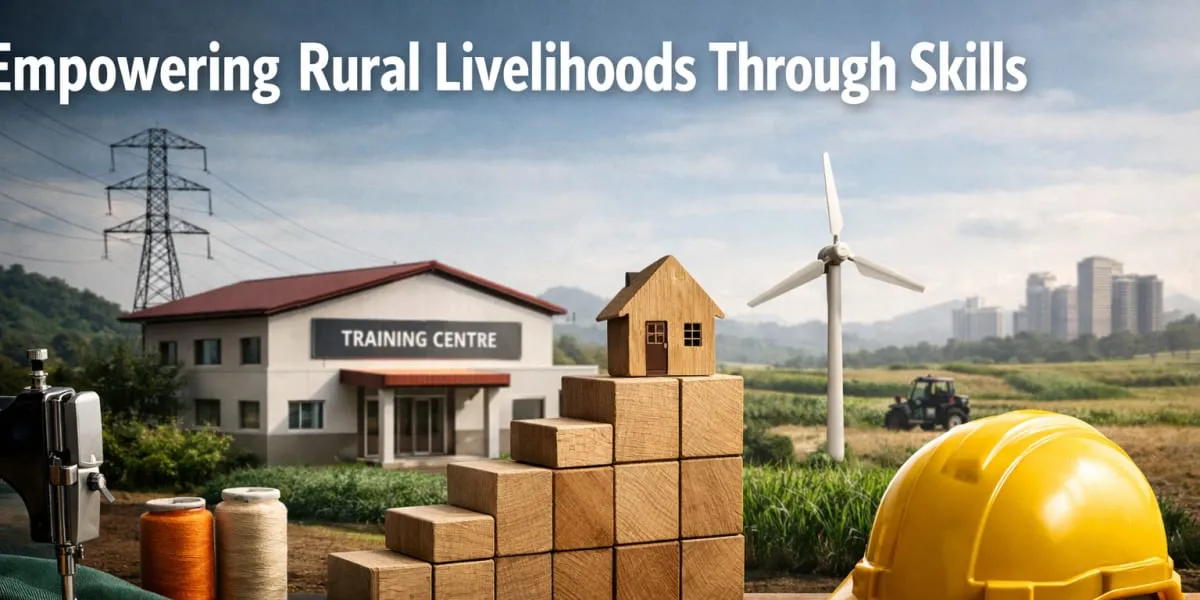
The Minister of State for Rural Development informed the Rajya Sabha in a written reply that Rural Self Employment Training Institutes have been central to rural livelihood promotion by imparting skills and enabling entrepreneurship. The institutes operate a nationwide network that provides free residential training and post-training handholding through a partnership between banks and government. Currently 632 RSETIs are operational across 619 districts in 33 States and Union Territories, sponsored by 25 banks, reflecting wide geographic reach.

RSETIs offer short-duration, practical residential programmes for unemployed rural youth aged 18 to 50 years and the courses are aligned with the National Skills Qualifications Framework. 73 courses span agriculture, manufacturing, services and entrepreneurship development and are designed to equip trainees to set up micro-enterprises. Lead and sponsoring banks are reported to play an active role in facilitating credit linkage and start-up support.

Since 2009 to February 2026 the institutes have delivered substantial outcomes, with a training target of six point zero eight one million (6.081 mn) and six point zero six three million (6.063 mn) candidates trained, while four point three eight nine million (4.389 mn) were recorded as settled and bank finance was facilitated for two point two five two million (2.252 mn) beneficiaries. The year 2024-25 registered the highest annual training achievement of zero point six two one million (0.621 mn) candidates. These figures underline sustained scale and outreach.

Credit linkage remains a cornerstone of the model and progress is reviewed in District Level RSETI Advisory Committee meetings and banking forums to ensure timely loan sanction and effective enterprise establishment support. Institutes have diversified offerings to include new-age courses such as digital services, mobile repair and computer applications, enhancing employability in the evolving rural economy. A dedicated management information system and periodic field visits are used to monitor enterprise sustainability and provide follow up assistance.

The Minister of State for Rural Development informed the Rajya Sabha in a written reply that Rural Self Employment Training Institutes have been central to rural livelihood promotion by imparting skills and enabling entrepreneurship. The institutes operate a nationwide network that provides free residential training and post-training handholding through a partnership between banks and government. Currently 632 RSETIs are operational across 619 districts in 33 States and Union Territories, sponsored by 25 banks, reflecting wide geographic reach. RSETIs offer short-duration, practical residential programmes for unemployed rural youth aged 18 to 50 years and the courses are aligned with the National Skills Qualifications Framework. 73 courses span agriculture, manufacturing, services and entrepreneurship development and are designed to equip trainees to set up micro-enterprises. Lead and sponsoring banks are reported to play an active role in facilitating credit linkage and start-up support. Since 2009 to February 2026 the institutes have delivered substantial outcomes, with a training target of six point zero eight one million (6.081 mn) and six point zero six three million (6.063 mn) candidates trained, while four point three eight nine million (4.389 mn) were recorded as settled and bank finance was facilitated for two point two five two million (2.252 mn) beneficiaries. The year 2024-25 registered the highest annual training achievement of zero point six two one million (0.621 mn) candidates. These figures underline sustained scale and outreach. Credit linkage remains a cornerstone of the model and progress is reviewed in District Level RSETI Advisory Committee meetings and banking forums to ensure timely loan sanction and effective enterprise establishment support. Institutes have diversified offerings to include new-age courses such as digital services, mobile repair and computer applications, enhancing employability in the evolving rural economy. A dedicated management information system and periodic field visits are used to monitor enterprise sustainability and provide follow up assistance.

Next Story
Real Estate

North India Leads Green Building Growth Surge

North India has emerged as a major hub for green building development, with 2,475 projects spanning 2.81 billion sq ft across the National Capital Region (NCR), as highlighted at the IGBC GreenTech Summit 2026 held in New Delhi.Organised by the CII Indian Green Building Council, the summit brought together policymakers, industry leaders and technology experts to accelerate the adoption of climate technologies in the built environment.Uttar Pradesh ranked second nationally with 1,673 IGBC-registered projects covering 1.78 billion sq ft, while Delhi accounted for 794 projects spanning 0.63 billi..

Next Story
Real Estate

Yamuna Expressway Property Prices Jump Sharply in Five Years

The Yamuna Expressway has emerged as one of NCR’s strongest real estate corridors, with sharp price appreciation across both apartments and plots between 2020 and 2025, according to the latest ‘RealX Stats’ report by InvestoXpert Advisors.The report states that average apartment prices along the corridor increased from Rs 3,950 per sq ft in 2020 to Rs 10,200 per sq ft in 2025, reflecting an overall appreciation of 158.2 per cent. In 2025 alone, apartment prices rose 7.37 per cent year on year, indicating sustained end-user demand and continued investor interest.Plots and land parcels rec..

Next Story
Real Estate

Homeland, VRC Acquire Mohali Land for Mixed-Use Projects

Homeland Group, in collaboration with VRC, has acquired two prime mixed land-use parcels in Mohali through a GMADA e-auction, marking some of the highest bids recorded for such developments. A 5.5-acre parcel near the Chandigarh border was acquired at approximately Rs 700 million per acre, generating around Rs 4 billion for the Greater Mohali Area Development Authority. Additionally, a 13-acre site in Sector 62 was secured at about Rs 470 million per acre, with the total deal value exceeding Rs 6 billion. The projects will be developed jointly, featuring premium residential apartments integr..

Advertisement

Subscribe to Our Newsletter

Get daily newsletters around different themes from Construction world.

STAY CONNECTED

Advertisement

Advertisement

Advertisement














