Sidbi, Nabfid and Hudco Raise Nearly Rs 120 bn Via Bonds
ECONOMY & POLICY

Sidbi, Nabfid and Hudco Raise Nearly Rs 120 bn Via Bonds

The Small Industries Development Bank of India (Sidbi), the National Bank for Financing Infrastructure and Development (Nabfid) and the Housing and Urban Development Corporation (Hudco) raised nearly Rs 120 bn from the debt capital markets, against a planned Rs 135 bn, at attractive rates amid improving liquidity and a broad softening of yields. The joint issuances marked a resumption of supply from large public issuers after a relative pause. The funds were raised through bond offerings that attracted healthy investor interest. The pricing reflected improved market depth and better appetite for credit.

National Bank for Agriculture and Rural Development (Nabard) and the state-owned Power Finance Corporation (PFC) are expected to enter the market in the coming days to raise another Rs 100 bn or more through bonds. Market participants noted that the recent issuer pause had supported demand and allowed favourable pricing levels to emerge. The environment enabled these three issuers to secure yields that were perceived as attractive by arrangers. Liquidity conditions were cited as a key factor behind the successful placement.

Participants cautioned that the market remains sensitive to an increase in supply and that absorption capacity among investors is finite. If issuance volumes outstrip investor appetite, pricing could come under pressure, thereby making it more difficult for issuers to maintain favourable yields. The balance between supply and demand will therefore be critical in determining the trajectory of yields. Arrangers and issuers are likely to monitor conditions closely before launching large programmes.

The transactions are seen as an early sign of revival in the corporate bond market and may encourage other public sector borrowers to test market conditions. Continued improvement in liquidity and a gradual easing of rates across the curve could support additional issuance, while any surge in supply may prompt a more cautious approach. The near-term outlook will depend on how other planned placements are absorbed by banks, mutual funds and insurance investors. Issuers are expected to calibrate timing and quantum to avoid undue pressure on pricing.

The Small Industries Development Bank of India (Sidbi), the National Bank for Financing Infrastructure and Development (Nabfid) and the Housing and Urban Development Corporation (Hudco) raised nearly Rs 120 bn from the debt capital markets, against a planned Rs 135 bn, at attractive rates amid improving liquidity and a broad softening of yields. The joint issuances marked a resumption of supply from large public issuers after a relative pause. The funds were raised through bond offerings that attracted healthy investor interest. The pricing reflected improved market depth and better appetite for credit. National Bank for Agriculture and Rural Development (Nabard) and the state-owned Power Finance Corporation (PFC) are expected to enter the market in the coming days to raise another Rs 100 bn or more through bonds. Market participants noted that the recent issuer pause had supported demand and allowed favourable pricing levels to emerge. The environment enabled these three issuers to secure yields that were perceived as attractive by arrangers. Liquidity conditions were cited as a key factor behind the successful placement. Participants cautioned that the market remains sensitive to an increase in supply and that absorption capacity among investors is finite. If issuance volumes outstrip investor appetite, pricing could come under pressure, thereby making it more difficult for issuers to maintain favourable yields. The balance between supply and demand will therefore be critical in determining the trajectory of yields. Arrangers and issuers are likely to monitor conditions closely before launching large programmes. The transactions are seen as an early sign of revival in the corporate bond market and may encourage other public sector borrowers to test market conditions. Continued improvement in liquidity and a gradual easing of rates across the curve could support additional issuance, while any surge in supply may prompt a more cautious approach. The near-term outlook will depend on how other planned placements are absorbed by banks, mutual funds and insurance investors. Issuers are expected to calibrate timing and quantum to avoid undue pressure on pricing.

Related Stories

Gold Stories

Next Story
Real Estate

Adani begins construction of Dharavi rehabilitation homes

Construction of rehabilitation homes for eligible Dharavi residents has commenced at the 22-acre Matunga railway site, following a Bhoomi Poojan ceremony performed by Pranav Adani, Director, Adani Enterprises (AEL). The project, being implemented by Adani Navbharat Developers (ANDPL), envisages 10 towers comprising 10,432 rehabilitation apartments and 1,379 commercial and industrial units.Under the in-situ rehabilitation scheme, eligible residents will receive homes measuring 350 sq ft. Residents from Sectors 6 and 1 will be accommodated at Matunga first, followed by nearly 4,500 apartments fo..

Next Story
Real Estate

Adani begins construction of Dharavi rehabilitation homes

Construction of rehabilitation homes for eligible Dharavi residents has commenced at the 22-acre Matunga railway site, following a Bhoomi Poojan ceremony performed by Pranav Adani, Director, Adani Enterprises (AEL). The project, being implemented by Adani Navbharat Developers (ANDPL), envisages 10 towers comprising 10,432 rehabilitation apartments and 1,379 commercial and industrial units.Under the in-situ rehabilitation scheme, eligible residents will receive homes measuring 350 sq ft. Residents from Sectors 6 and 1 will be accommodated at Matunga first, followed by nearly 4,500 apartments fo..
Next Story
Equipment

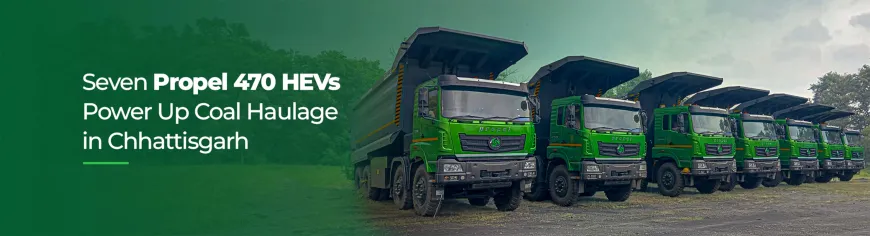
Seven Propel 470 HEV electric tippers go to work on coal haulage in Chhattisgarh

Propel EV, the electric mobility division of Propel Industries and India's No. 1 electric tipper brand, has deployed seven 470 HEV electric trucks with a leading coal-haulage contractor at one of India's largest opencast coal mines in Chhattisgarh. The trucks are in daily operation, moving coal on continuous haul cycles in one of the most demanding applications in Indian mining.Why Electric - and Why CoalCoal haulage runs round the clock: heavy loads, long haul cycles, steep ramps and abrasive dust. It is also where diesel hurts most. Engines run continuously, fuel is the largest single operat..

Advertisement

Subscribe to Our Newsletter

Get daily newsletters around different themes from Construction world.

STAY CONNECTED

Advertisement

SPECIAL OFFER
QR Code