Siddaramaiah Seeks Rs 100 billion for Karnataka’s Urban Infrastructure
ECONOMY & POLICY

Siddaramaiah Seeks Rs 100 billion for Karnataka’s Urban Infrastructure

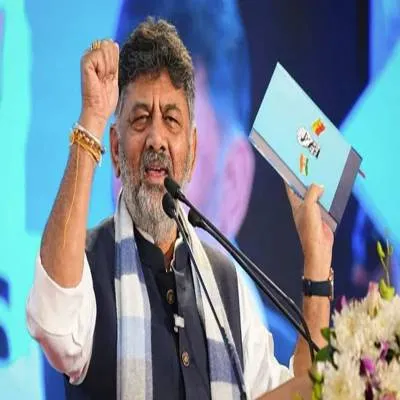
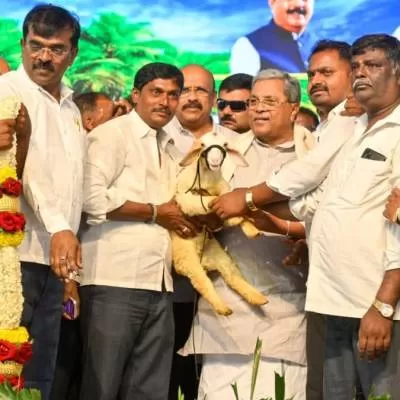
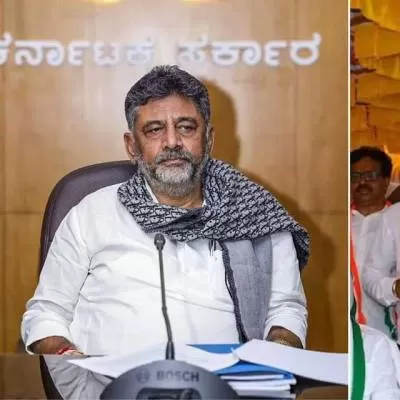
Karnataka Chief Minister Siddaramaiah met with Prime Minister Narendra Modi in New Delhi to request over Rs 210 billion for the state’s development, including Rs 100 billion under the AMRUT scheme for urban infrastructure. Highlighting funding shortfalls, Siddaramaiah called for increased financial support to address critical infrastructure needs and agricultural concerns. At Karnataka Bhavan, Siddaramaiah criticised the 58% reduction in National Bank for Agriculture and Rural Development (Nabard) assistance for 2024-25, which has curtailed subsidised loans for farmers. He explained that the shift to borrowing from commercial banks charging 10% interest has placed a financial strain on farmers, urging Union Finance Minister Nirmala Sitharaman to restore Nabard’s support for interest-free crop loans. The CM also emphasised the pending Rs 53 billion allocation for the Upper Bhadra Project announced in the 2023-24 Union Budget, urging the Centre to expedite the release under the Accelerated Irrigation Benefits Program (AIBP). Siddaramaiah further highlighted the importance of projects like Mekedatu on the Cauvery River and Kalasa-Banduri on the Mahadayi River for agricultural and water management in Karnataka. With Karnataka rapidly urbanising, Siddaramaiah sought additional funding for second-tier cities, pointing out that the state’s Rs 20 billion allocation under the Mahatma Gandhi Nagar Vikas Yojana was insufficient. He appealed for Rs 100 billion under AMRUT or similar schemes to bolster urban infrastructure. Additionally, the CM criticised the 15th Finance Commission’s recommendations, which reduced Karnataka’s tax devolution share by 1%. He called for implementing Rs 54.95 billion in pending funds and an additional Rs 60 billion for projects like the peripheral ring road. Siddaramaiah stressed the need for equitable tax devolution in the upcoming 16th Finance Commission, citing Karnataka’s substantial contribution of over Rs 4 trillion to the central tax pool, while receiving only Rs 500–Rs 600 billion in return. Deputy Chief Minister DK Shivakumar, Urban Development Minister Byrathi Suresh, and Energy Minister KJ George were also present at the meeting. (Business Line)

Karnataka Chief Minister Siddaramaiah met with Prime Minister Narendra Modi in New Delhi to request over Rs 210 billion for the state’s development, including Rs 100 billion under the AMRUT scheme for urban infrastructure. Highlighting funding shortfalls, Siddaramaiah called for increased financial support to address critical infrastructure needs and agricultural concerns. At Karnataka Bhavan, Siddaramaiah criticised the 58% reduction in National Bank for Agriculture and Rural Development (Nabard) assistance for 2024-25, which has curtailed subsidised loans for farmers. He explained that the shift to borrowing from commercial banks charging 10% interest has placed a financial strain on farmers, urging Union Finance Minister Nirmala Sitharaman to restore Nabard’s support for interest-free crop loans. The CM also emphasised the pending Rs 53 billion allocation for the Upper Bhadra Project announced in the 2023-24 Union Budget, urging the Centre to expedite the release under the Accelerated Irrigation Benefits Program (AIBP). Siddaramaiah further highlighted the importance of projects like Mekedatu on the Cauvery River and Kalasa-Banduri on the Mahadayi River for agricultural and water management in Karnataka. With Karnataka rapidly urbanising, Siddaramaiah sought additional funding for second-tier cities, pointing out that the state’s Rs 20 billion allocation under the Mahatma Gandhi Nagar Vikas Yojana was insufficient. He appealed for Rs 100 billion under AMRUT or similar schemes to bolster urban infrastructure. Additionally, the CM criticised the 15th Finance Commission’s recommendations, which reduced Karnataka’s tax devolution share by 1%. He called for implementing Rs 54.95 billion in pending funds and an additional Rs 60 billion for projects like the peripheral ring road. Siddaramaiah stressed the need for equitable tax devolution in the upcoming 16th Finance Commission, citing Karnataka’s substantial contribution of over Rs 4 trillion to the central tax pool, while receiving only Rs 500–Rs 600 billion in return. Deputy Chief Minister DK Shivakumar, Urban Development Minister Byrathi Suresh, and Energy Minister KJ George were also present at the meeting. (Business Line)

Related Stories

Gold Stories

Next Story
Infrastructure Urban

EMO Energy and e-Sprinto to Deploy 8,000 Electric Scooters

EMO Energy has announced a partnership with electric two-wheeler maker e-Sprinto to deploy 8,000 electric scooters across India this financial year. The rollout will include both low-speed and high-speed models and will be phased across several cities. The scooters will be aimed at quick-commerce and last-mile delivery operations where uptime and energy efficiency are prioritised. EMO Energy said the scooters will use its patented ZenPac liquid-cooled battery platform with active thermal management, battery intelligence and energy optimisation to improve reliability and performance. ZenPac con..

Next Story
Infrastructure Energy

Octillion Opens Third EV Battery Plant in India

Octillion Power Systems has opened its third manufacturing facility in Halol, Gujarat, adding production capacity as demand for electric vehicle battery systems grows across passenger, commercial and public transport segments. The facility covers more than 13,000 square metres and was converted from an empty structure into an operational battery manufacturing plant in less than eight months. At full capacity the Gujarat plant will manufacture more than 48,000 battery systems annually, representing over three GWh of energy storage capacity. With the addition of the Halol facility Octillion's co..

Next Story
Real Estate

Land Reforms Could Unlock Urban Affordable Housing

Former cabinet secretary and NITI Aayog member Rajeev Gauba said India’s urban housing shortage could be tackled by unlocking 10 million (mn) vacant homes and using excess unutilised land held by public sector undertakings (PSUs). He said land availability lay at the heart of the problem and estimated that land accounted for as much as 50 to 70 per cent of total project cost. He urged states to waive land?use change fees and exempt stamp duty on land and transactions linked to affordable housing. He noted that urban population was projected to rise from 500 million to nearly 900 million by 2..

Advertisement

Subscribe to Our Newsletter

Get daily newsletters around different themes from Construction world.

STAY CONNECTED

Advertisement