South India Records No Curtailment as India Loses 300 GWh
ECONOMY & POLICY

South India Records No Curtailment as India Loses 300 GWh

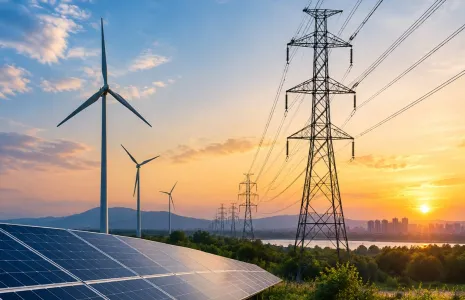
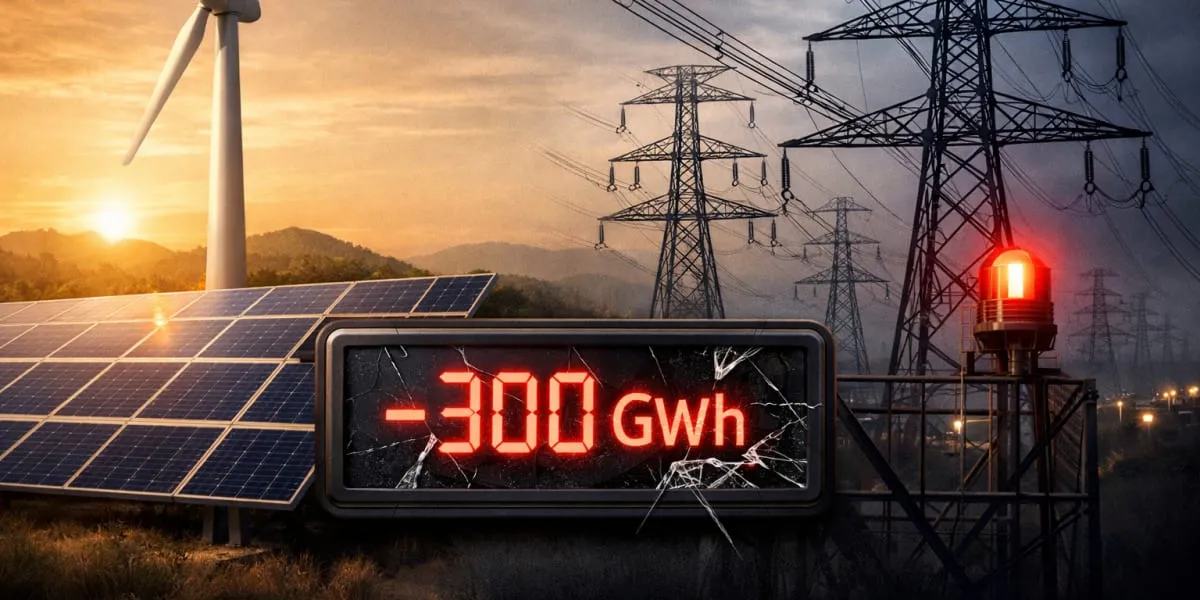
Ember research found that South India recorded no curtailment even as India logged 300 GWh of renewable energy losses in Q1 2026. The study, which measures output in gigawatt-hour (GWh) and capacity in gigawatt (GW), attributed about 470 GWh of inter-state curtailment in Q1 2026 to a mix of transmission constraints and system inflexibility, with roughly 300 GWh linked directly to transmission. The report noted that the Northern and Western regions accounted for the bulk of congestion.

Transmission expansion has consistently trailed targets, with completed additions at about 80 per cent over the past five years, the study said. India requires 61,411 circuit kilometres of additional Inter-State Transmission System (ISTS) capacity by FY2029–30, yet one in four major transmission schemes is delayed by a year or more and nearly 20 GW of renewable capacity faces connectivity delays exceeding four months in FY2026–27. These connectivity shortfalls impose material financial costs because projects under Temporary-General Network Access (T-GNA) do not receive compensation during curtailment and typical project delays can reduce internal rates of return by 100–200 basis points.

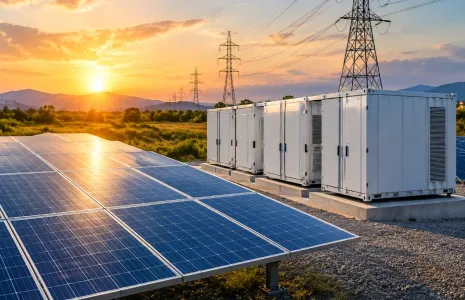
Battery energy storage systems (BESS) at renewable pooling stations were identified as the most credible near-term remedy to ease congestion, but deployment has been hindered by absent regulatory frameworks and weak commercial incentives. Ember proposed an intermediary government-backed entity to aggregate output from T-GNA projects and contract it to BESS developers, which would reduce contracting risk for transient projects. The report also recommended treating BESS as a transmission asset with capacity payments socialised across states in the same manner as transmission charges.

The analysis noted that falling storage costs strengthen the economic case for renewable-plus-storage solutions and that roughly three to four GW of two-hour storage capacity could absorb most curtailed generation. It highlighted nearly 236 GW of plug-and-play BESS connectivity headroom at major pooling stations and reported that the levelised cost of storage has fallen to around Rs 4.0–4.5/kWh while solar generation is near Rs 2.5/kWh, yielding combined delivered costs well below the Rs 10/kWh many states pay for peak procurement. The study urged co-optimised planning of transmission and project siting and recommended mandatory co-location of storage to reduce persistent congestion.

Ember research found that South India recorded no curtailment even as India logged 300 GWh of renewable energy losses in Q1 2026. The study, which measures output in gigawatt-hour (GWh) and capacity in gigawatt (GW), attributed about 470 GWh of inter-state curtailment in Q1 2026 to a mix of transmission constraints and system inflexibility, with roughly 300 GWh linked directly to transmission. The report noted that the Northern and Western regions accounted for the bulk of congestion. Transmission expansion has consistently trailed targets, with completed additions at about 80 per cent over the past five years, the study said. India requires 61,411 circuit kilometres of additional Inter-State Transmission System (ISTS) capacity by FY2029–30, yet one in four major transmission schemes is delayed by a year or more and nearly 20 GW of renewable capacity faces connectivity delays exceeding four months in FY2026–27. These connectivity shortfalls impose material financial costs because projects under Temporary-General Network Access (T-GNA) do not receive compensation during curtailment and typical project delays can reduce internal rates of return by 100–200 basis points. Battery energy storage systems (BESS) at renewable pooling stations were identified as the most credible near-term remedy to ease congestion, but deployment has been hindered by absent regulatory frameworks and weak commercial incentives. Ember proposed an intermediary government-backed entity to aggregate output from T-GNA projects and contract it to BESS developers, which would reduce contracting risk for transient projects. The report also recommended treating BESS as a transmission asset with capacity payments socialised across states in the same manner as transmission charges. The analysis noted that falling storage costs strengthen the economic case for renewable-plus-storage solutions and that roughly three to four GW of two-hour storage capacity could absorb most curtailed generation. It highlighted nearly 236 GW of plug-and-play BESS connectivity headroom at major pooling stations and reported that the levelised cost of storage has fallen to around Rs 4.0–4.5/kWh while solar generation is near Rs 2.5/kWh, yielding combined delivered costs well below the Rs 10/kWh many states pay for peak procurement. The study urged co-optimised planning of transmission and project siting and recommended mandatory co-location of storage to reduce persistent congestion.

Next Story
Infrastructure Urban

Ammann India Launches CPB36 Truck Mounted Boom Pump

Ammann India has commercially launched the CPB36 truck-mountedom pump under the Ammann Elba brand, marking its entry into the concrete boom pump segment. Manufactured in Gujarat, the CPB36 is engineered for Indian conditions, complex concrete mixes, and large-scale construction projects, ncluding metro rail, highways, airports, industrial corridors, and residential developments.The CPB36 combines German engineering with Swiss precision and offers a 35.8 m vertical reach, 32 m horizontal reach, four-arm roll fold boom, and a maximum output of 100 m³/hr. Key features include the 2000 × 230 pum..

Next Story
Infrastructure Urban

TDI Premier League 2026 Set to Kick Off in Kundli

TDI Infrastructure is launching the inaugural TDI Premier League from 23rd May 2026 at Dheer Dhoop Sports Academy, Kundli, Sonipat. The tournament brings together ten competitive teams, including Kingsbury Knights, Espania Royals, TDI Titans, and Kundli Tigers, celebrating cricket, teamwork, and community engagement.The event features league-stage matches, knockout rounds, and a grand finale on 7th June 2026. The winning team will receive a championship trophy recognising performance, dedication, and sportsmanship. Organised as a vibrant sporting initiative, the league aims to foster employee,..

Next Story
Equipment

Transvaal Training Returns as Judges at Forklift Competition

Transvaal Training has been confirmed as the official judging partner for the upcoming Forklift Driver Competition at Electra Mining Africa, following the success of the 2024 edition. Their participation ensures fair, professional, and technically accurate evaluations, reinforcing the competition’s focus on operator excellence, safety, and professional skills development.Organised by Lifting Africa and supported by Platinum Sponsors Acrow Racking & Shelving and Jungheinrich, the competition assesses operators across practical challenges simulating real-world conditions. Judging criteria ..

Advertisement

Subscribe to Our Newsletter

Get daily newsletters around different themes from Construction world.

STAY CONNECTED

Advertisement

Advertisement

Advertisement

-->