States Offer Incentives to Woo Global Shipbuilders
ECONOMY & POLICY

States Offer Incentives to Woo Global Shipbuilders

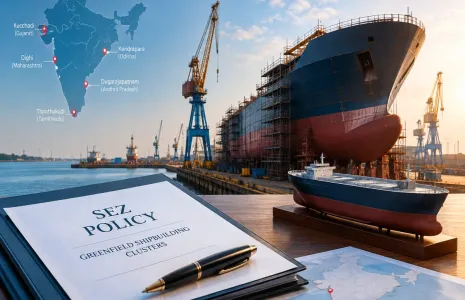
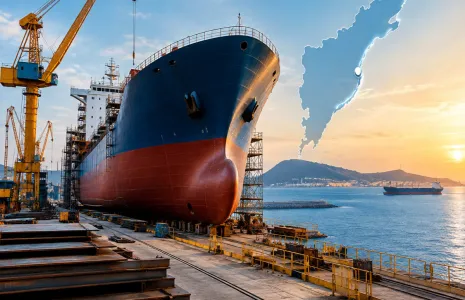
Five Indian states have offered incentives including capital subsidies, duty concessions, industrial support and land facilitation to attract global shipyards, adding to the Centre’s Rs. 697.25 bn shipbuilding package announced last year. The offers were presented at a shipbuilding conclave in New Delhi attended by international companies, investors, banks and equipment manufacturers.

Union Minister for Ports, Shipping and Waterways Sarbananda Sonowal said India represented a $10 bn investment opportunity. The country’s current vessel orderbook stood at $1.7 bn, with export orders accounting for 80 per cent of the total. Executives from 30 international shipyards attended the event.

Andhra Pradesh offered additional fixed-capital incentives and support on power and taxes while seeking exploratory agreements with shipbuilders. The state is also introducing an investment protection Act intended to protect business commitments from political changes. Gujarat, which is developing a shipbuilding cluster in Porbandar, will provide construction assistance, interest support, research and development funding, skills training and dredging assistance.

Gujarat will offer capital assistance of 20 per cent, capped at Rs. 1.5 bn, and cover half the maintenance dredging costs for 10 years. It will also waive electricity and water charges and provide additional support of up to 10 per cent for vessel development. Maharashtra plans to offer 15 per cent of project costs to investors in its Dighi shipbuilding, repair and recycling cluster.

The proposed Dighi shipyard, estimated by Maharashtra at Rs. 210 bn, is expected to generate annual revenue of about Rs. 220 bn after five years and profit of around Rs. 40 bn a year. Odisha is promoting a Kendrapara cluster with a 20 per cent capital subsidy for shipyards and 30 per cent support for ancillary industries, without upper limits, while covering worker training and staff accommodation. Tamil Nadu will provide shipyard subsidies, a 25 per cent research and development subsidy and a 30 per cent payroll subsidy for ship design. South Korean shipbuilder HD KSOE also plans to bring equipment manufacturers to Tamil Nadu’s Tuticorin cluster.

Five Indian states have offered incentives including capital subsidies, duty concessions, industrial support and land facilitation to attract global shipyards, adding to the Centre’s Rs. 697.25 bn shipbuilding package announced last year. The offers were presented at a shipbuilding conclave in New Delhi attended by international companies, investors, banks and equipment manufacturers. Union Minister for Ports, Shipping and Waterways Sarbananda Sonowal said India represented a $10 bn investment opportunity. The country’s current vessel orderbook stood at $1.7 bn, with export orders accounting for 80 per cent of the total. Executives from 30 international shipyards attended the event. Andhra Pradesh offered additional fixed-capital incentives and support on power and taxes while seeking exploratory agreements with shipbuilders. The state is also introducing an investment protection Act intended to protect business commitments from political changes. Gujarat, which is developing a shipbuilding cluster in Porbandar, will provide construction assistance, interest support, research and development funding, skills training and dredging assistance. Gujarat will offer capital assistance of 20 per cent, capped at Rs. 1.5 bn, and cover half the maintenance dredging costs for 10 years. It will also waive electricity and water charges and provide additional support of up to 10 per cent for vessel development. Maharashtra plans to offer 15 per cent of project costs to investors in its Dighi shipbuilding, repair and recycling cluster. The proposed Dighi shipyard, estimated by Maharashtra at Rs. 210 bn, is expected to generate annual revenue of about Rs. 220 bn after five years and profit of around Rs. 40 bn a year. Odisha is promoting a Kendrapara cluster with a 20 per cent capital subsidy for shipyards and 30 per cent support for ancillary industries, without upper limits, while covering worker training and staff accommodation. Tamil Nadu will provide shipyard subsidies, a 25 per cent research and development subsidy and a 30 per cent payroll subsidy for ship design. South Korean shipbuilder HD KSOE also plans to bring equipment manufacturers to Tamil Nadu’s Tuticorin cluster.

Related Stories

Gold Stories
Next Story
Building Material

PureSil Paints Develops Mineral Coatings from Industrial Waste

PureSil Paints, a brand of Relic Coatings LLP, has developed an indigenous mineral-based coating technology aimed at reducing dependence on petrochemical-derived raw materials in the paints and coatings industry. Its proprietary Silicification Technology uses agricultural and industrial by-products to manufacture architectural coatings as an alternative to conventional acrylic paints.Developed in-house by Dr Nikhil Dhote, Founder and Chief Technologist, Relic Coatings LLP, the technology uses silicate binders derived from upcycled rice husk ash and industrial coal fly ash. The formulation is d..
Next Story
Infrastructure Energy

Vedanta Eyes AI to Accelerate Mineral Exploration

Vedanta Group is exploring the use of artificial intelligence (AI) to significantly improve efficiency in mineral exploration, geological analysis and resource modelling. The company aims to reduce exploration processes that traditionally take three to four months to just six to seven days through AI-driven technologies.The proposed approach involves AI-led geological analysis and mineral block modelling to accelerate mineral resource assessment and support faster, more cost-efficient development of domestic mineral reserves. The initiative aligns with India's growing focus on critical mineral..

Next Story
Technology

NXP Launches Unified Robotics Platform for Physical AI

NXP Semiconductors has launched a unified robotics platform designed to accelerate the development and deployment of trusted physical artificial intelligence (AI) systems. Built on the company's neural axis architecture, the platform integrates AI processing, connectivity, motor control, security and energy management within a common hardware and software ecosystem.The platform combines an open-source, modular software development kit (SDK) with pre-validated reference designs, enabling developers to build robotic systems more efficiently. It supports development ranging from individual subsys..

Advertisement

Subscribe to Our Newsletter

Get daily newsletters around different themes from Construction world.

STAY CONNECTED

Advertisement

SPECIAL OFFER
QR Code