Sunkonnect Plans To Cut 15 Per Cent Campus CO2 Emissions
ECONOMY & POLICY

Sunkonnect Plans To Cut 15 Per Cent Campus CO2 Emissions

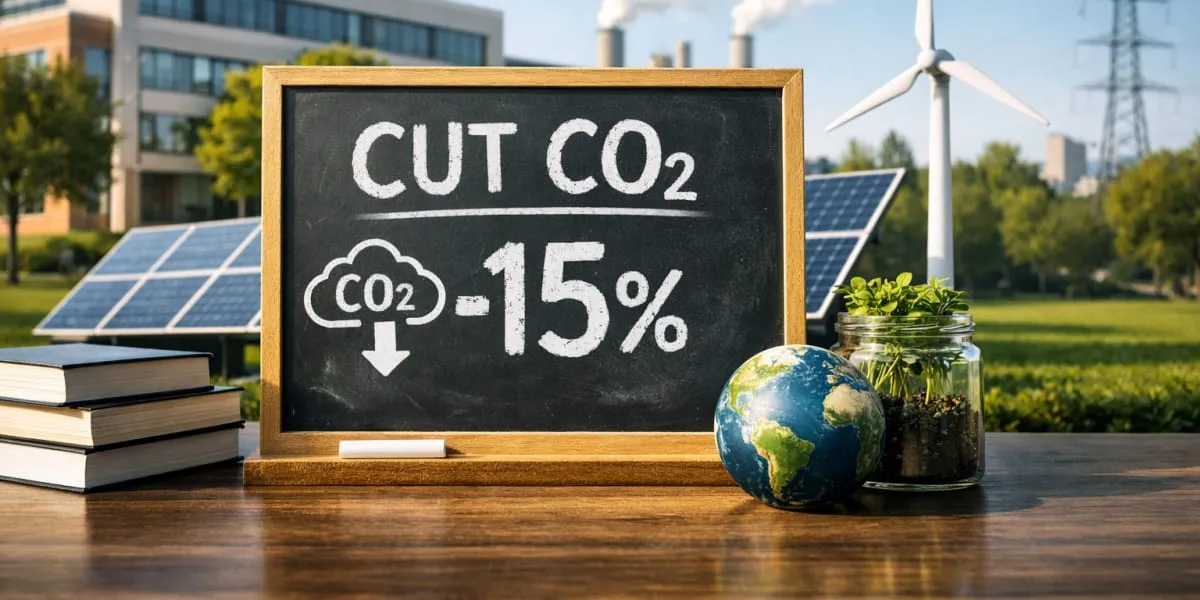
Sunkonnect, a renewable energy management consulting firm, has announced plans to reduce 15 per cent of carbon dioxide emissions from educational institute campuses over the next four years. The target amounts to 34 million (34 mn) tonnes (t) of CO2 and is an unprecedented effort to position the education sector as a frontrunner in national climate action. India’s education network includes 248 mn students, 1.47 mn schools, 43 mn university and college students and 10 mn teachers, highlighting the scale.

Buildings in the sector were estimated to produce 230 mn t of CO2 every year, creating a large operational footprint that the plan seeks to address. The firm indicated that most institutions operate during daylight hours, creating scope for solar deployment and energy efficiency measures across campuses. Through its Sunsol solution the company intends to install solar rooftops on more than 5,000 schools across India over the next seven to 10 years.

The consultancy has begun a partnership with a private university to conduct greenhouse gas footprint assessments and to develop sustainability roadmaps for campuses. This move forms part of a strategic entry into India’s 35 billion (35 bn) dollar education market and reflects rising demand for sustainability standards in academic institutions. Initial measures will include energy audits, retrofits and LED lighting upgrades together with waste segregation and the elimination of single use plastics.

The medium term rollout will prioritise rooftop solar PV installations, rainwater harvesting, electric vehicle charging infrastructure and biogas plants, with monitoring to track reductions in emissions per student and per square foot. Longer term goals encompass net zero pledges, vehicle free zones, biodiversity monitoring and advanced water systems to embed carbon practices into campus operations. The firm noted that electricity accounts for 78 per cent of campus emissions globally and that Indian higher education institutions average 2.67 tonnes of CO2 per student.

The company framed the plan as a decarbonisation strategy combining technology deployment and operational change to deliver measurable reductions. It will aim to establish benchmarks for environmental stewardship in academia.

Sunkonnect, a renewable energy management consulting firm, has announced plans to reduce 15 per cent of carbon dioxide emissions from educational institute campuses over the next four years. The target amounts to 34 million (34 mn) tonnes (t) of CO2 and is an unprecedented effort to position the education sector as a frontrunner in national climate action. India’s education network includes 248 mn students, 1.47 mn schools, 43 mn university and college students and 10 mn teachers, highlighting the scale. Buildings in the sector were estimated to produce 230 mn t of CO2 every year, creating a large operational footprint that the plan seeks to address. The firm indicated that most institutions operate during daylight hours, creating scope for solar deployment and energy efficiency measures across campuses. Through its Sunsol solution the company intends to install solar rooftops on more than 5,000 schools across India over the next seven to 10 years. The consultancy has begun a partnership with a private university to conduct greenhouse gas footprint assessments and to develop sustainability roadmaps for campuses. This move forms part of a strategic entry into India’s 35 billion (35 bn) dollar education market and reflects rising demand for sustainability standards in academic institutions. Initial measures will include energy audits, retrofits and LED lighting upgrades together with waste segregation and the elimination of single use plastics. The medium term rollout will prioritise rooftop solar PV installations, rainwater harvesting, electric vehicle charging infrastructure and biogas plants, with monitoring to track reductions in emissions per student and per square foot. Longer term goals encompass net zero pledges, vehicle free zones, biodiversity monitoring and advanced water systems to embed carbon practices into campus operations. The firm noted that electricity accounts for 78 per cent of campus emissions globally and that Indian higher education institutions average 2.67 tonnes of CO2 per student. The company framed the plan as a decarbonisation strategy combining technology deployment and operational change to deliver measurable reductions. It will aim to establish benchmarks for environmental stewardship in academia.

Next Story
Infrastructure Transport

Civil Aviation Minister Reviews Hub And Spoke Readiness

The Minister of Civil Aviation, Ram Mohan Naidu, chaired a high-level meeting at Delhi Airport to review readiness for hub-and-spoke operations. Senior officials from the Ministry of Home Affairs, Ministry of Civil Aviation, Bureau of Immigration, Bureau of Civil Aviation Security, Customs, Airports Authority of India, Directorate General of Civil Aviation, CISF, DigiYatra, Delhi International Airport Limited and leading airlines attended. He led an on-ground walkthrough of passenger flows and inspected the Security Hold Area at Terminal 3. The ministry noted that the National Civil Aviation P..

Next Story
Infrastructure Energy

BCCL Announces PI Relaxation And Cash Discount For Power Sector

Bharat Coking Coal Limited (BCCL) has announced a scheme providing relaxation in Performance Incentive (PI) and offering a cash discount to power sector consumers for the first quarter of Financial Year 2026–27, covering April to June 2026. The scheme is applicable to all eligible power sector consumers covered under Fuel Supply Agreements (FSA), including those under the Flexi?Linkage arrangement. Incentives will be linked to actual coal offtake through rail, road and rail?cum?road (RCR) modes and implemented on the basis of proportion of offtake against the Quarterly Quantity (QQ) in defin..

Next Story
Technology

Union Minister Concludes Czech Republic Visit To Deepen Economic Ties

Union Minister of State for Commerce and Industry Shri Jitin Prasada concluded an official visit to the Czech Republic from 22 to 23 April 2026 at the invitation of the Czech government. The visit reaffirmed India’s commitment to strengthening strategic and economic engagement with key European partners and to deepening bilateral trade, investment and innovation linkages. The programme focused on identifying practical opportunities for industrial collaboration and technology partnerships. During the visit, the minister held bilateral meetings with senior Czech leaders, including Mr Karel Hav..

Advertisement

Subscribe to Our Newsletter

Get daily newsletters around different themes from Construction world.

STAY CONNECTED

Advertisement

Advertisement

Advertisement