Taural India Drives Sustainability with Green Innovations
ECONOMY & POLICY

Taural India Drives Sustainability with Green Innovations

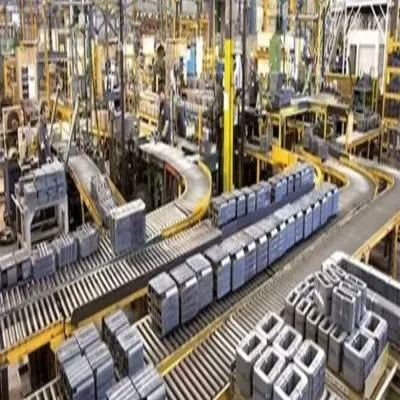
In a decisive step towards sustainable manufacturing, Taural India, one of the country’s leading integrated aluminium foundries, has announced major advancements in its sustainability strategy. The company is adopting Vedanta Aluminium’s low-carbon Restora aluminium and plans to integrate an innovative green sand-casting process at its upcoming Supa, Ahilyanagar facility. These initiatives reinforce Taural India’s long-term vision of fostering indigenisation, import substitution, and creating a globally competitive, sustainable industrial ecosystem.

Commenting on the development, Bharat Gite, Managing Director & CEO of Taural India, said, “At Taural India, sustainability is not just a strategic imperative; it is integral to how we operate. Serving customers across more than 10 countries and multiple critical sectors, we recognise the responsibility that comes with delivering high-performance engineering solutions. By adopting low-carbon aluminium and pioneering green sand casting, we are taking deliberate steps to reduce our environmental footprint while contributing to India’s industrial capabilities and long-term growth.”

As global industries transition to sustainable technologies, aluminium has emerged as a pivotal material — lightweight, durable, and infinitely recyclable — making it essential for energy-efficient applications. Vedanta’s Restora aluminium, produced using renewable energy and advanced cleaner technologies, offers up to 80 per cent lower greenhouse gas emissions than conventional aluminium. This enables industries to meet evolving domestic and international sustainability mandates while supporting India’s vision of industrial self-reliance.

Taural India’s planned green sand-casting process represents a significant innovation in foundry practices. Incorporating natural, biodegradable binders and advanced reclamation systems, the process allows multiple sand reuse cycles with minimal treatment. This not only reduces resource dependency and waste generation but also sets a new benchmark for sustainable manufacturing in the Indian metal sector.

Beyond material and process innovation, Taural India continues to integrate sustainability across its operations. The company utilises energy-efficient technologies such as natural gas-based melting and battery-operated forklifts, alongside comprehensive waste management and water conservation initiatives.

These forward-looking initiatives underscore Taural India’s commitment to reshaping how engineering components are designed, manufactured, and applied across sectors critical to India’s growth — including defence, aerospace, healthcare, and energy. At a time when industries face rising regulatory and market pressure to decarbonise, Taural India’s actions mark a bold step towards a greener, more self-reliant industrial future.

In a decisive step towards sustainable manufacturing, Taural India, one of the country’s leading integrated aluminium foundries, has announced major advancements in its sustainability strategy. The company is adopting Vedanta Aluminium’s low-carbon Restora aluminium and plans to integrate an innovative green sand-casting process at its upcoming Supa, Ahilyanagar facility. These initiatives reinforce Taural India’s long-term vision of fostering indigenisation, import substitution, and creating a globally competitive, sustainable industrial ecosystem.Commenting on the development, Bharat Gite, Managing Director & CEO of Taural India, said, “At Taural India, sustainability is not just a strategic imperative; it is integral to how we operate. Serving customers across more than 10 countries and multiple critical sectors, we recognise the responsibility that comes with delivering high-performance engineering solutions. By adopting low-carbon aluminium and pioneering green sand casting, we are taking deliberate steps to reduce our environmental footprint while contributing to India’s industrial capabilities and long-term growth.”As global industries transition to sustainable technologies, aluminium has emerged as a pivotal material — lightweight, durable, and infinitely recyclable — making it essential for energy-efficient applications. Vedanta’s Restora aluminium, produced using renewable energy and advanced cleaner technologies, offers up to 80 per cent lower greenhouse gas emissions than conventional aluminium. This enables industries to meet evolving domestic and international sustainability mandates while supporting India’s vision of industrial self-reliance.Taural India’s planned green sand-casting process represents a significant innovation in foundry practices. Incorporating natural, biodegradable binders and advanced reclamation systems, the process allows multiple sand reuse cycles with minimal treatment. This not only reduces resource dependency and waste generation but also sets a new benchmark for sustainable manufacturing in the Indian metal sector.Beyond material and process innovation, Taural India continues to integrate sustainability across its operations. The company utilises energy-efficient technologies such as natural gas-based melting and battery-operated forklifts, alongside comprehensive waste management and water conservation initiatives.These forward-looking initiatives underscore Taural India’s commitment to reshaping how engineering components are designed, manufactured, and applied across sectors critical to India’s growth — including defence, aerospace, healthcare, and energy. At a time when industries face rising regulatory and market pressure to decarbonise, Taural India’s actions mark a bold step towards a greener, more self-reliant industrial future.

Next Story
Infrastructure Transport

Pune To Build Nine Km Link Road Between Highways

The Pune Municipal Corporation (PMC) has decided to appoint an expert to plan the development of a nine km long, 60 metre wide road from Khadi Machine chowk to Wadki chowk as an extension to the Katraj-Kondhwa road to link the Mumbai-Satara and Pune-Solapur national highways. The scheme is intended to divert heavy vehicle traffic away from the city and improve access between the two arterial routes. The project has been prioritised by the PMC and forms part of a larger set of schemes in which 19 roads have been identified for development at a combined cost of Rs 9.82 billion (bn) to address c..

Next Story
Infrastructure Transport

Barabanki Bahraich Six Lane Highway Approved in Uttar Pradesh

The Uttar Pradesh government has approved construction of a new six-lane highway linking Barabanki and Bahraich as part of National Highway 927, and the cabinet has cleared the project. The alignment will pass through Mustafabad and Kaiserganj and extend for about 101.5 km, creating a key corridor for local and long-distance movement. The National Highways Authority of India will oversee the work and has signalled the scheme is intended to strengthen regional connectivity and cross-border access to Nepal. The project carries an estimated total cost of Rs 69,690 million, equivalent to Rs 69.69..

Next Story
Infrastructure Transport

Toll At Kharegaon Likely As Highway Upgrade Nears Completion

A section of the highway at Kharegaon has undergone an upgrade and is approaching completion, and authorities have indicated plans for a toll to be introduced once works finish. The project has focused on strengthening the carriageway, improving drainage and upgrading intersections to enhance safety and capacity. Officials have said the toll will be used to recover construction costs and fund ongoing maintenance. The upgrade included resurfacing of the pavement, widening of certain stretches and installation of modern signage and lighting to reduce accident risk. Contractors completed most ma..

Advertisement

Subscribe to Our Newsletter

Get daily newsletters around different themes from Construction world.

STAY CONNECTED

Advertisement

Advertisement

Advertisement