




THDCIL Surpasses Challenges to Achieve 4351 MW
ECONOMY & POLICY

THDCIL Surpasses Challenges to Achieve 4351 MW

THDC India Limited (THDCIL) has reached a significant milestone by becoming a 4351 MW entity, overcoming numerous challenges along the way. CMD R.K. Vishnoi highlighted the company?s journey and the strategic initiatives that enabled this achievement.

THDCIL faced a series of hurdles, including geographical constraints, environmental regulations, and financial challenges. Despite these obstacles, the company?s relentless focus on innovation, efficient project management, and stakeholder collaboration played a pivotal role in its success. The use of advanced technologies and sustainable practices ensured that THDCIL not only met but also exceeded its energy generation targets.

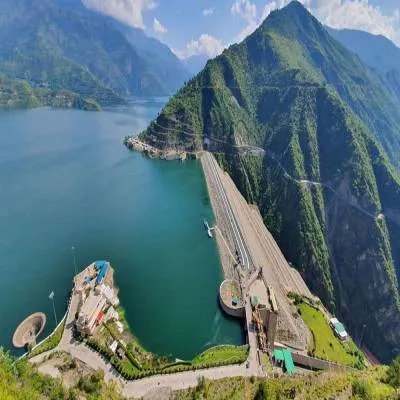
The journey to 4351 MW was marked by the development and commissioning of several key projects. These projects spanned across hydro, wind, and solar energy sectors, reflecting THDCIL?s commitment to diversifying its energy portfolio and contributing to India?s renewable energy goals. The company?s ability to navigate complex regulatory landscapes and secure necessary approvals was crucial in maintaining project timelines and ensuring seamless execution.

CMD R.K. Vishnoi emphasized the importance of the company?s workforce and their dedication in achieving this milestone. Continuous training, capacity building, and fostering a culture of excellence were integral to the team?s performance. Additionally, THDCIL?s focus on community engagement and environmental sustainability underscored its broader commitment to social responsibility and sustainable development.

Looking ahead, THDCIL aims to further expand its energy capacity and continue its pursuit of excellence in the renewable energy sector. The company?s strategic roadmap includes exploring new technologies, enhancing operational efficiencies, and contributing to national and global energy transition goals.

THDC India Limited (THDCIL) has reached a significant milestone by becoming a 4351 MW entity, overcoming numerous challenges along the way. CMD R.K. Vishnoi highlighted the company?s journey and the strategic initiatives that enabled this achievement. THDCIL faced a series of hurdles, including geographical constraints, environmental regulations, and financial challenges. Despite these obstacles, the company?s relentless focus on innovation, efficient project management, and stakeholder collaboration played a pivotal role in its success. The use of advanced technologies and sustainable practices ensured that THDCIL not only met but also exceeded its energy generation targets. The journey to 4351 MW was marked by the development and commissioning of several key projects. These projects spanned across hydro, wind, and solar energy sectors, reflecting THDCIL?s commitment to diversifying its energy portfolio and contributing to India?s renewable energy goals. The company?s ability to navigate complex regulatory landscapes and secure necessary approvals was crucial in maintaining project timelines and ensuring seamless execution. CMD R.K. Vishnoi emphasized the importance of the company?s workforce and their dedication in achieving this milestone. Continuous training, capacity building, and fostering a culture of excellence were integral to the team?s performance. Additionally, THDCIL?s focus on community engagement and environmental sustainability underscored its broader commitment to social responsibility and sustainable development. Looking ahead, THDCIL aims to further expand its energy capacity and continue its pursuit of excellence in the renewable energy sector. The company?s strategic roadmap includes exploring new technologies, enhancing operational efficiencies, and contributing to national and global energy transition goals.

Next Story
Infrastructure Urban

Implementation Status of Jal Jeevan Mission

Since August 2019 the Government has implemented Jal Jeevan Mission to provide assured potable water through household tap connections in rural India. At the start of the mission only 32.3 million (mn) rural households, representing 16.7 per cent, were reported to have tap water connections. States and union territories have reported that 125.8 mn additional rural households have since been provided with tap connections. As a result, of about 193.6 mn rural households roughly 158.2 mn, or 81.71 per cent, are reported to have tap water supply at home.\n\nThe State, district and village level st..

Next Story
Infrastructure Urban

Jal Jeevan Mission Reaches Eighty One Per Cent Rural Coverage

The Government reported substantial progress under the Jal Jeevan Mission, launched in August 2019 to provide tap water to every rural household. At launch only 32.3 million (mn) rural households had tap connections and states and Union territories reported provision of 125.8 mn additional households by March 2026. Consequently, out of about 193.6 mn rural households around 158.2 mn, or 81.71 per cent, are reported to have tap water at home. The Finance Minister announced extension of the mission until 2028 in the 2025-26 budget speech. The Swachh Bharat Mission Grameen, launched in October 20..

Next Story
Infrastructure Urban

Empowering Local Governance for Sustainable Rural Water Supply

The Ministry of Jal Shakti has aligned the Jal Jeevan Mission (JJM) with the 73rd Amendment to strengthen village level planning and community ownership of water supply. Gram Panchayats, village water and sanitation committees and Pani Samitis are to plan, implement, manage and maintain piped water systems, with gram sabha processes formalising handover and oversight. Implementation support agencies including non government organisations, community based organisations and self help groups have been empanelled to train local committees and promote women participation. Under JJM, the department ..

Advertisement

Subscribe to Our Newsletter

Get daily newsletters around different themes from Construction world.

STAY CONNECTED

Advertisement

Advertisement

Advertisement















