Transport Department Plans Integrated Dwarka ISBT With Housing
ECONOMY & POLICY

Transport Department Plans Integrated Dwarka ISBT With Housing

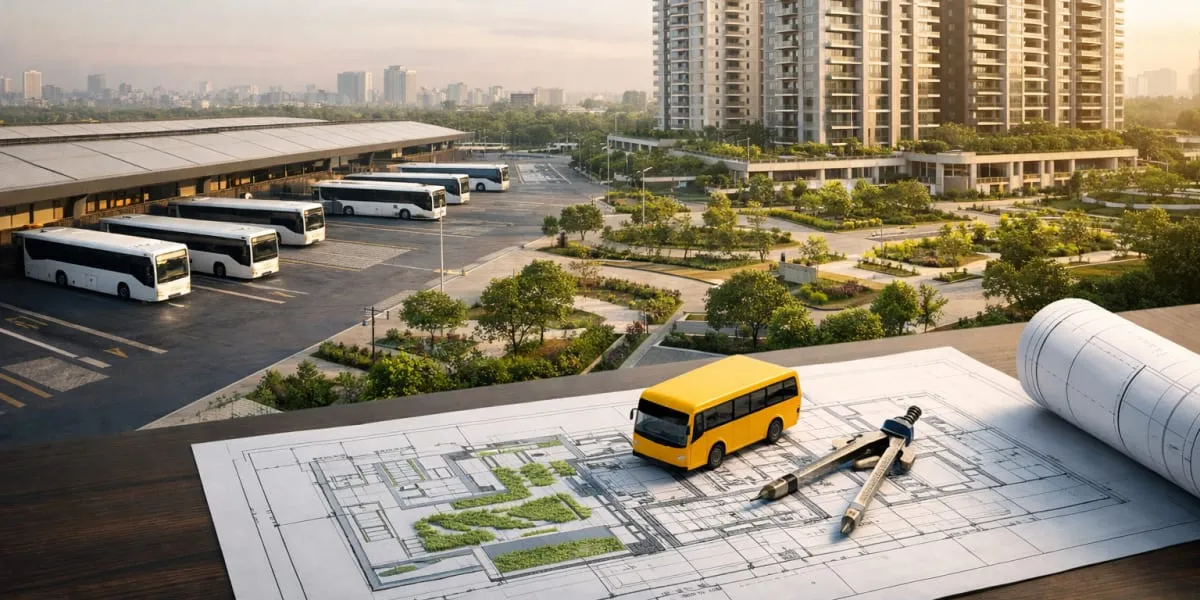
The Transport Department has prepared a redevelopment plan for the Dwarka Inter State Bus Terminal (ISBT) that integrates housing and public spaces. It says the proposal envisages redevelopment of the existing bus terminal to include residential units, community amenities and landscaped open areas. It aims to optimise land use and improve commuter experience while addressing urban housing needs. The plan follows consultations with civic agencies and urban planners.

The proposal would replace the current terminal with a mixed-use complex combining bus operations with residential blocks and civic facilities. The design is expected to separate private and public circulation, provide accessible transit links and create pedestrian-friendly public realms around the terminal. It envisages dedicated pick-up and drop-off zones, improved passenger amenities and better last-mile connectivity. The department anticipates integrating green spaces and community areas into the podium levels.

Officials have assessed site constraints and infrastructure requirements and prepared a phased implementation strategy to maintain uninterrupted bus services during construction. The plan proposes staged redevelopment, temporary relocation of select services and coordinated working with transit operators and municipal bodies. It envisages modernising ticketing and passenger information systems and upgrading utilities to meet projected demand. The emphasis is on multimodal integration and sustainable construction practices.

The Transport Department will next seek statutory approvals and detailed project reports prior to tendering for redevelopment contracts. Stakeholder engagement will continue to refine layouts and housing allocations, with a focus on ensuring adequate public spaces and commuter convenience. The department indicated timelines will be finalised after approval of detailed designs and financing arrangements. The proposal forms part of broader urban renewal efforts to reimagine transport hubs as integrated civic precincts.

The Transport Department has prepared a redevelopment plan for the Dwarka Inter State Bus Terminal (ISBT) that integrates housing and public spaces. It says the proposal envisages redevelopment of the existing bus terminal to include residential units, community amenities and landscaped open areas. It aims to optimise land use and improve commuter experience while addressing urban housing needs. The plan follows consultations with civic agencies and urban planners. The proposal would replace the current terminal with a mixed-use complex combining bus operations with residential blocks and civic facilities. The design is expected to separate private and public circulation, provide accessible transit links and create pedestrian-friendly public realms around the terminal. It envisages dedicated pick-up and drop-off zones, improved passenger amenities and better last-mile connectivity. The department anticipates integrating green spaces and community areas into the podium levels. Officials have assessed site constraints and infrastructure requirements and prepared a phased implementation strategy to maintain uninterrupted bus services during construction. The plan proposes staged redevelopment, temporary relocation of select services and coordinated working with transit operators and municipal bodies. It envisages modernising ticketing and passenger information systems and upgrading utilities to meet projected demand. The emphasis is on multimodal integration and sustainable construction practices. The Transport Department will next seek statutory approvals and detailed project reports prior to tendering for redevelopment contracts. Stakeholder engagement will continue to refine layouts and housing allocations, with a focus on ensuring adequate public spaces and commuter convenience. The department indicated timelines will be finalised after approval of detailed designs and financing arrangements. The proposal forms part of broader urban renewal efforts to reimagine transport hubs as integrated civic precincts.

Next Story
Technology

India Data Centre Market to Cross USD 22 Bn by 2030: Vestian

India’s data centre market is projected to more than double from around USD 10 billion in 2025 to USD 22 billion by 2030, according to a latest report by Vestian. The growth is expected to be driven by rising cloud adoption, expanding AI workloads and increasing demand for data-intensive digital services.Vestian noted that the global data centre sector is witnessing rapid expansion, with current installed capacity estimated at 40–50 GW and projections exceeding 100 GW by 2030. Within this evolving landscape, India is emerging as a strategic hub in the Asia-Pacific region, supported by its ..

Next Story
Real Estate

Retail Leasing Hits 4.3 Mn Sq Ft in H2 2025: ANAROCK RELEAP 2026

India’s retail real estate market recorded a total retail absorption of around 4.3 million sq ft across the top seven cities in H2 2025, reflecting steady leasing activity despite a dynamic market environment, according to ANAROCK Retail’s flagship report, RELEAP 2026.The report highlights a structural shift in the sector as organised retail moves beyond transactional formats toward experience-led spaces that combine shopping, entertainment and dining. Apparel emerged as the leading category driving leasing demand during the period, followed by entertainment, hypermarkets/supermarkets, and..

Next Story
Building Material

Berger Paints Launches ‘Garmi Gone, Thandak On’ Cooling Range

Berger Paints India has launched its Home Cooling Paints Range along with a nationwide campaign titled ‘Garmi Gone, Thandak On’, as rising temperatures continue to pose growing challenges for households across India.The company said the campaign promotes smarter and energy-efficient cooling solutions by focusing on preventing heat from entering homes rather than relying solely on air conditioning. Berger Paints stated that a significant amount of heat enters homes through walls, rooftops and structural openings, making surface protection an important factor in reducing indoor discomfort du..

Advertisement

Subscribe to Our Newsletter

Get daily newsletters around different themes from Construction world.

STAY CONNECTED

Advertisement

Advertisement

Advertisement