TVS Mobility and Palfinger to Set Up Rs 3.5 bn Plant in Pune
ECONOMY & POLICY

TVS Mobility and Palfinger to Set Up Rs 3.5 bn Plant in Pune

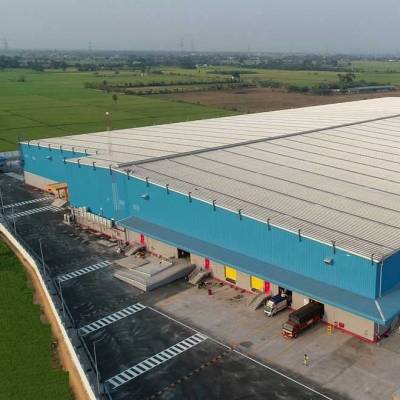
Palfinger, the Austrian lifting solutions major, has formed a strategic partnership with TVS Mobility Group to establish a manufacturing facility in Pune. The agreement involves an initial investment of €30 million and about Rs 3.5 billion (Rs 3.5 bn), with the plant expected to be operational by end-2027. The move represents Palfinger's most significant localisation step in India since it entered the market in 2007.

Under the arrangement TVS Mobility Group will act as Palfinger's end-to-end mobility partner in India, providing integrated support across supply chain, logistics, sales, service, spare parts distribution and aftermarket operations. The collaboration is intended to go beyond a conventional distributor model, with emphasis on uptime, service responsiveness and operating solutions tailored for customers in remote and infrastructure-heavy locations. TVS Mobility Group's role is expected to span the entire lifecycle of Palfinger's products in the country, including installation, warehousing and time-critical spare parts delivery.

The Pune facility will have an initial annual capacity of over 1,000 units, mainly truck-mounted cranes, together with key steel components for domestic demand and export markets across the Asia-Pacific region and beyond. The first phase of the project is projected to generate employment for around 200 people, with provisions for future capacity expansion built into the site. Currently most Palfinger equipment sold in India is imported and only assembled locally; localisation is expected to change the supply chain dynamics substantially.

The company anticipates cost savings of up to 30 per cent through localisation, which is likely to broaden adoption of advanced lifting solutions across sectors. Palfinger reported global revenues of about €2.5 billion and anticipates that India will eventually contribute a double-digit share of its global revenues under its Strategy 2030 plus. Alongside manufacturing, Palfinger has established a global engineering centre in Pune in partnership with L&T Technology Services to support product development for global markets. The exclusive partnership for products manufactured in India carries no fixed end date and, despite the absence of equity participation, has been described as strategic and central to Palfinger's India growth plans.

Palfinger, the Austrian lifting solutions major, has formed a strategic partnership with TVS Mobility Group to establish a manufacturing facility in Pune. The agreement involves an initial investment of €30 million and about Rs 3.5 billion (Rs 3.5 bn), with the plant expected to be operational by end-2027. The move represents Palfinger's most significant localisation step in India since it entered the market in 2007. Under the arrangement TVS Mobility Group will act as Palfinger's end-to-end mobility partner in India, providing integrated support across supply chain, logistics, sales, service, spare parts distribution and aftermarket operations. The collaboration is intended to go beyond a conventional distributor model, with emphasis on uptime, service responsiveness and operating solutions tailored for customers in remote and infrastructure-heavy locations. TVS Mobility Group's role is expected to span the entire lifecycle of Palfinger's products in the country, including installation, warehousing and time-critical spare parts delivery. The Pune facility will have an initial annual capacity of over 1,000 units, mainly truck-mounted cranes, together with key steel components for domestic demand and export markets across the Asia-Pacific region and beyond. The first phase of the project is projected to generate employment for around 200 people, with provisions for future capacity expansion built into the site. Currently most Palfinger equipment sold in India is imported and only assembled locally; localisation is expected to change the supply chain dynamics substantially. The company anticipates cost savings of up to 30 per cent through localisation, which is likely to broaden adoption of advanced lifting solutions across sectors. Palfinger reported global revenues of about €2.5 billion and anticipates that India will eventually contribute a double-digit share of its global revenues under its Strategy 2030 plus. Alongside manufacturing, Palfinger has established a global engineering centre in Pune in partnership with L&T Technology Services to support product development for global markets. The exclusive partnership for products manufactured in India carries no fixed end date and, despite the absence of equity participation, has been described as strategic and central to Palfinger's India growth plans.

Next Story
Real Estate

AI: The New Recruit

From getting ideas to evaluating designs, presenting concepts to clients and tracking projects, artificial intelligence (AI) is helping architects work better and faster.“AI allows architects to spend more time doing what only they can do: think critically, synthesise complexity and design with intent,” says Dikshu C Kukreja, Managing Principal, CP Kukreja Architects. “Every minute reclaimed from repetitive processes can be invested in creativity, contextual understanding, interdisciplinary collaboration and innovation – the qualities that define meaningful architecture.”To read the ..

Next Story
Real Estate

Redevelopment 2.0

In 2017, Mumbai identified 160,000 ageing buildings due for structural audit. Close to half of these were in the Western Suburbs. Redeveloping the oldest and structurally weakest of these would help unlock new housing, much needed given the city’s growing population density and constant developed area of 437.7 sq km. At 30,600 people per sq km in 2024, Mumbai’s density was almost thrice that of Gurugram, and 60 per cent higher than Bengaluru’s.Essentially, Mumbai’s realty market has demand. It has capital. It has realty development potential.Fast forward to 2026. Mumbai has 1,094 regis..

Next Story
Technology

Cost intelligence will become a strategic contributor to project success

As India's construction industry accelerates its digital transformation, integrated platforms, AI and connected data are becoming essential to improving cost certainty, project efficiency and sustainability. Ravi Kumar, Sales Director – India, RIB Software India, shares how digital workflows are reshaping project planning, commercial management and decision-making across the construction value chain.India's construction sector is embracing digital technologies at an unprecedented pace. From your perspective, what are the biggest shifts driving this transformation and how is RIB Software enab..

Advertisement

Subscribe to Our Newsletter

Get daily newsletters around different themes from Construction world.

STAY CONNECTED

Advertisement

Advertisement

Advertisement