India’s Iron Ore Imports Hit Six-Year High In 2025
Steel

India’s Iron Ore Imports Hit Six-Year High In 2025

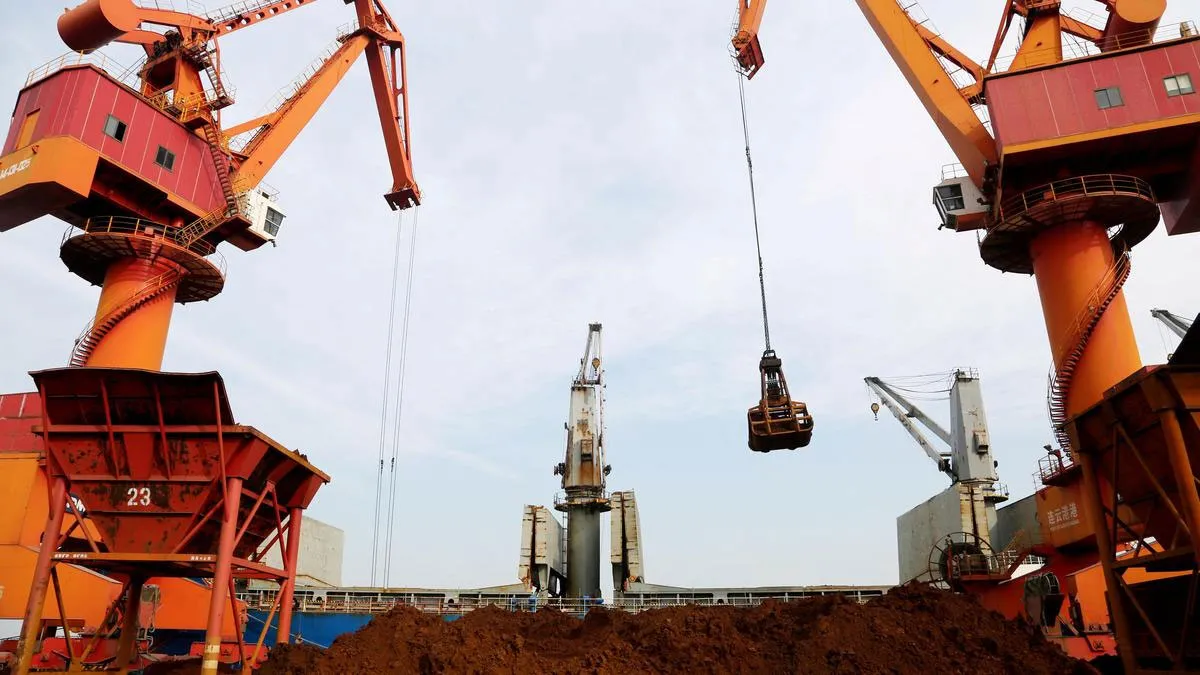
India’s iron ore imports have climbed to a six-year high as steelmakers increased overseas purchases to offset shortages of high-grade ore and benefit from softer global prices, according to analysts and trade officials.

Imports more than doubled to over 10 million tonnes in the first 10 months of 2025 compared with the same period last year, Lalit Ladkat, senior analyst at London-based CRU Group, told Reuters. Between January and October, JSW Steel — India’s largest steel producer by capacity — emerged as the country’s top importer, analysts said.

Average annual imports between 2019 and 2024 stood at 4.3 million tonnes. In 2025, demand outpaced domestic production, and shortages of higher-grade ore became a significant concern. Ladkat noted that delays in commencing operations at auctioned mines contributed to sluggish supply growth.

This contrasts with recent assurances from the Ministry of Steel, whose top civil servant last month dismissed concerns about domestic shortages.

Lower import prices, along with the logistical advantage for coastal steel plants such as JSW Steel’s Maharashtra unit, also boosted overseas shipments, analysts and officials said. India has been sourcing most of its imported ore from Brazil, Oman and Australia.

Brazilian miner Vale is preparing to meet India’s rising demand, anticipating that the country could double its steel production by the end of the decade, CEO Gustavo Pimenta told Reuters.

Heavy rainfall in Odisha — which accounts for nearly 55 per cent of India’s iron ore output — curbed production this year, commodities consultancy BigMint said. It expects imports to exceed 11–12 million tonnes in FY26 and remain elevated unless domestic output or captive sourcing improves.

India, the world’s second-largest crude steel producer, saw iron ore production rise to 289 million tonnes in FY25 from 277 million tonnes the previous year, government data showed. Earlier this year, the Government urged steelmakers to acquire iron ore mines overseas amid concerns over slow progress in greenfield mine development.

India’s iron ore imports have climbed to a six-year high as steelmakers increased overseas purchases to offset shortages of high-grade ore and benefit from softer global prices, according to analysts and trade officials. Imports more than doubled to over 10 million tonnes in the first 10 months of 2025 compared with the same period last year, Lalit Ladkat, senior analyst at London-based CRU Group, told Reuters. Between January and October, JSW Steel — India’s largest steel producer by capacity — emerged as the country’s top importer, analysts said. Average annual imports between 2019 and 2024 stood at 4.3 million tonnes. In 2025, demand outpaced domestic production, and shortages of higher-grade ore became a significant concern. Ladkat noted that delays in commencing operations at auctioned mines contributed to sluggish supply growth. This contrasts with recent assurances from the Ministry of Steel, whose top civil servant last month dismissed concerns about domestic shortages. Lower import prices, along with the logistical advantage for coastal steel plants such as JSW Steel’s Maharashtra unit, also boosted overseas shipments, analysts and officials said. India has been sourcing most of its imported ore from Brazil, Oman and Australia. Brazilian miner Vale is preparing to meet India’s rising demand, anticipating that the country could double its steel production by the end of the decade, CEO Gustavo Pimenta told Reuters. Heavy rainfall in Odisha — which accounts for nearly 55 per cent of India’s iron ore output — curbed production this year, commodities consultancy BigMint said. It expects imports to exceed 11–12 million tonnes in FY26 and remain elevated unless domestic output or captive sourcing improves. India, the world’s second-largest crude steel producer, saw iron ore production rise to 289 million tonnes in FY25 from 277 million tonnes the previous year, government data showed. Earlier this year, the Government urged steelmakers to acquire iron ore mines overseas amid concerns over slow progress in greenfield mine development.

Next Story
Infrastructure Urban

Rosatom Delivers Nuclear Fuel for Kudankulam Unit 3

Rosatom has recently supplied nuclear fuel for the initial loading of the VVER-1000 reactor core at Unit 3 of the Kudankulam Nuclear Power Plant, marking a key milestone in the second stage of the Russian-designed nuclear power project in southern India.The fuel was supplied by Rosatom’s Nuclear Fuel Division, managed by TVEL, and manufactured at the Novosibirsk Chemical Concentrates Plant. The delivery includes the initial reactor load along with reserve fuel assemblies and is part of a long-term contract covering the entire operational life of Units 3 and 4.Building on operational experien..

Next Story
Infrastructure Transport

CBL International Enables First LNG Bunkering at Xiaomo Port

CBL International recently completed the first-ever LNG bunkering operation at Xiaomo Port, supplying liquefied natural gas to vessels operated by BYD in support of its maritime decarbonisation strategy. The operation was facilitated through a physical supplier in collaboration with China National Offshore Oil Corporation (CNOOC), which supported the port’s inaugural LNG bunkering activity. The milestone represents a strategic expansion of CBL International's sustainable fuel offerings beyond biofuels, while also diversifying revenue streams. As global shipping intensifies efforts to cut em..

Next Story
Infrastructure Urban

Aimtron, Aurassure Partner for IoT Weather Systems

Aimtron Electronics has recently entered into an OEM manufacturing engagement with Aurassure to produce new-age, IoT-enabled weather and environmental monitoring systems in India. The collaboration supports the growing demand for real-time environmental intelligence across urban, industrial and infrastructure applications. The engagement comes as global focus on climate-risk management and data-driven planning accelerates. The global weather monitoring systems market, valued at around USD 2.1 billion in 2024, is projected to reach nearly USD 4.8 billion by 2034, driven by the rapid adoption o..

Advertisement

Subscribe to Our Newsletter

Get daily newsletters around different themes from Construction world.

STAY CONNECTED

Advertisement

Advertisement

Advertisement

Advertisement

Open In App