Industry Welcomes Infra Push In Maharashtra Budget 2026
ECONOMY & POLICY

Industry Welcomes Infra Push In Maharashtra Budget 2026

The Maharashtra State Budget 2026, presented by Devendra Fadnavis, has received a positive response from the real estate sector, with industry leaders highlighting its strong focus on housing, infrastructure expansion and urban development.

The budget outlines the completion of 3.57 lakh houses under Pradhan Mantri Awas Yojana with rooftop solar incentives, alongside significant investments in metro corridors, highways and digitised urban services. It also includes development plans for Pune, Nashik and Nagpur, with the broader aim of strengthening Maharashtra’s economic growth and urban infrastructure.

According to Sukhraj Nahar, President, CREDAI-MCHI, the budget underscores the government’s infrastructure-led growth strategy.

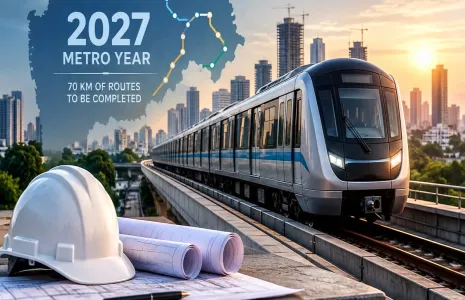
“The Maharashtra Budget 2026–27 reinforces the government’s strong commitment towards infrastructure-led growth, which remains a key catalyst for the real estate sector, particularly in the Mumbai Metropolitan Region (MMR). Major investments in transformative infrastructure such as Mumbai Metro Line 11 (₹23,487 crore) connecting Wadala to Gateway of India and Metro Line 8 (₹22,862 crore) linking Mumbai to the Navi Mumbai International Airport will significantly strengthen regional connectivity. Improved metro connectivity plays a crucial role in shaping real estate growth by reducing travel time, improving access to employment hubs, and opening up new residential and commercial development corridors along transit routes, thereby increasing housing demand and encouraging planned development across emerging micro-markets.

Such large-scale infrastructure initiatives will not only enhance urban mobility but also drive housing demand, support transit-oriented development, and accelerate balanced urban expansion across MMR. With Maharashtra’s economy projected to grow at 7.9 per cent, the continued focus on infrastructure development will further boost investor confidence and reinforce MMR’s position as one of India’s most dynamic real estate markets.”

Prashant Sharma, President, NAREDCO Maharashtra, said the budget presents a forward-looking roadmap for housing and infrastructure.

“The Maharashtra State Budget 2026 presented by Chief Minister Devendra Fadnavis outlines a strong and forward-looking vision for the state’s housing and infrastructure sectors. The announcement on housing under the Pradhan Mantri Awas Yojana, with accelerated completions and rooftop solar subsidies, is particularly encouraging for the residential segment as it will enhance affordability while promoting sustainability. The increased focus on infrastructure investment, metro expansion, and digitised urban management also aligns well with key real estate growth corridors. Together, these measures will help energise demand, strengthen investor confidence, and generate employment across the housing value chain in the state.”

Kaushal Agarwal, Chairman, The Guardians Real Estate Advisory, noted that the emphasis on metro corridors and connectivity projects will play a major role in reshaping Mumbai’s urban mobility.

“The Maharashtra Budget’s strong focus on expanding metro corridors, coastal roads and signal-free connectivity reflects a long-term vision to ease Mumbai’s chronic congestion and strengthen intra-city mobility. Projects such as the Wadala–Gateway of India underground metro, the airport-to-airport metro link and key east–west road connectors are particularly significant as they will improve access to South Mumbai while better integrating emerging corridors across the city. From a real estate perspective, improved connectivity typically acts as a major catalyst for development, enhancing the attractiveness of several micro-markets and supporting more balanced urban growth across Mumbai.”

Echoing similar views, Shraddha Kedia-Agarwal, Director, Transcon Developers, highlighted the benefits of housing completion and digital governance.

“The state budget’s focus on housing completion and digitised urban services directly supports developer and consumer priorities. Enhanced infrastructure from coastal roads to underground traffic solutions will significantly improve liveability. With targeted development plans for key cities and support for innovation hubs, Maharashtra is creating a conducive ecosystem for sustainable urban expansion and real estate investment.”

Kamlesh Thakur, Co-Founder & Managing Director, Srishti Group, emphasised the broader urbanisation roadmap outlined in the budget.

“The 2026 State budget takes a comprehensive approach to urbanisation and connectivity, with ambitious targets including 70 per cent urban population by 2047, extensive metro expansions, and nearly 6,000 km of expressways. Key projects such as the Goregaon–Mulund Link Road, Versova–Bhayander Coastal Road, and underground subways in congestion-prone areas will significantly improve urban mobility across Mumbai. Combined with a focus on job creation, affordable housing completion, and digitised urban services, these initiatives enhance transparency, efficiency, and make Maharashtra an attractive destination for both buyers and developers.”

The Maharashtra State Budget 2026, presented by Devendra Fadnavis, has received a positive response from the real estate sector, with industry leaders highlighting its strong focus on housing, infrastructure expansion and urban development. The budget outlines the completion of 3.57 lakh houses under Pradhan Mantri Awas Yojana with rooftop solar incentives, alongside significant investments in metro corridors, highways and digitised urban services. It also includes development plans for Pune, Nashik and Nagpur, with the broader aim of strengthening Maharashtra’s economic growth and urban infrastructure. According to Sukhraj Nahar, President, CREDAI-MCHI, the budget underscores the government’s infrastructure-led growth strategy. “The Maharashtra Budget 2026–27 reinforces the government’s strong commitment towards infrastructure-led growth, which remains a key catalyst for the real estate sector, particularly in the Mumbai Metropolitan Region (MMR). Major investments in transformative infrastructure such as Mumbai Metro Line 11 (₹23,487 crore) connecting Wadala to Gateway of India and Metro Line 8 (₹22,862 crore) linking Mumbai to the Navi Mumbai International Airport will significantly strengthen regional connectivity. Improved metro connectivity plays a crucial role in shaping real estate growth by reducing travel time, improving access to employment hubs, and opening up new residential and commercial development corridors along transit routes, thereby increasing housing demand and encouraging planned development across emerging micro-markets. Such large-scale infrastructure initiatives will not only enhance urban mobility but also drive housing demand, support transit-oriented development, and accelerate balanced urban expansion across MMR. With Maharashtra’s economy projected to grow at 7.9 per cent, the continued focus on infrastructure development will further boost investor confidence and reinforce MMR’s position as one of India’s most dynamic real estate markets.” Prashant Sharma, President, NAREDCO Maharashtra, said the budget presents a forward-looking roadmap for housing and infrastructure. “The Maharashtra State Budget 2026 presented by Chief Minister Devendra Fadnavis outlines a strong and forward-looking vision for the state’s housing and infrastructure sectors. The announcement on housing under the Pradhan Mantri Awas Yojana, with accelerated completions and rooftop solar subsidies, is particularly encouraging for the residential segment as it will enhance affordability while promoting sustainability. The increased focus on infrastructure investment, metro expansion, and digitised urban management also aligns well with key real estate growth corridors. Together, these measures will help energise demand, strengthen investor confidence, and generate employment across the housing value chain in the state.” Kaushal Agarwal, Chairman, The Guardians Real Estate Advisory, noted that the emphasis on metro corridors and connectivity projects will play a major role in reshaping Mumbai’s urban mobility. “The Maharashtra Budget’s strong focus on expanding metro corridors, coastal roads and signal-free connectivity reflects a long-term vision to ease Mumbai’s chronic congestion and strengthen intra-city mobility. Projects such as the Wadala–Gateway of India underground metro, the airport-to-airport metro link and key east–west road connectors are particularly significant as they will improve access to South Mumbai while better integrating emerging corridors across the city. From a real estate perspective, improved connectivity typically acts as a major catalyst for development, enhancing the attractiveness of several micro-markets and supporting more balanced urban growth across Mumbai.” Echoing similar views, Shraddha Kedia-Agarwal, Director, Transcon Developers, highlighted the benefits of housing completion and digital governance. “The state budget’s focus on housing completion and digitised urban services directly supports developer and consumer priorities. Enhanced infrastructure from coastal roads to underground traffic solutions will significantly improve liveability. With targeted development plans for key cities and support for innovation hubs, Maharashtra is creating a conducive ecosystem for sustainable urban expansion and real estate investment.” Kamlesh Thakur, Co-Founder & Managing Director, Srishti Group, emphasised the broader urbanisation roadmap outlined in the budget. “The 2026 State budget takes a comprehensive approach to urbanisation and connectivity, with ambitious targets including 70 per cent urban population by 2047, extensive metro expansions, and nearly 6,000 km of expressways. Key projects such as the Goregaon–Mulund Link Road, Versova–Bhayander Coastal Road, and underground subways in congestion-prone areas will significantly improve urban mobility across Mumbai. Combined with a focus on job creation, affordable housing completion, and digitised urban services, these initiatives enhance transparency, efficiency, and make Maharashtra an attractive destination for both buyers and developers.”

Next Story
Infrastructure Urban

Centre Disburses Over Rs 24,610 mn in XV Finance Commission Grants

The Union Government has released XV Finance Commission tied grants during the financial year 2025–26 to rural local bodies in Chhattisgarh, Gujarat, Madhya Pradesh, Punjab and Sikkim and has released withheld portions of tied and untied grants to Himachal Pradesh, Odisha and Tripura. The total disbursal exceeded Rs 24,610 mn, with figures expressed in million (mn) thereafter. The releases cover allocations pertaining to different financial years and aim to strengthen rural local governance. State-wise disbursements included Rs 3,324.6 mn for Punjab, Rs 9,432.7 mn for Madhya Pradesh, Rs 3,47..

Next Story
Infrastructure Urban

Centre Releases Over Rs 15 bn as XV FC Grants to Rural Bodies

The Union Government has released over Rs 15 bn in grants recommended by the Fifteenth Finance Commission (XV FC) to strengthen Panchayati Raj Institutions (PRIs) and Rural Local Bodies (RLBs) in six states. The funds comprise tied and untied grants disbursed in FY 2025–26. Telangana received Rs 2.48 bn as the first instalment of untied grants for FY 2025–26, benefitting 12600 Gram Panchayats (GPs). Uttarakhand received Rs 913.1 mn as the second instalment and an additional Rs 18.4 mn of a withheld first instalment was released to a further 216 GPs. Mizoram is included among beneficiary st..

Next Story
Infrastructure Energy

Government Assures Fuel Supplies And Seafarer Safety Amid West Asia Developments

The Government of India has stepped up coordinated measures to maintain stability in critical sectors as developments in West Asia continue to unfold. It has prioritised uninterrupted energy supplies, safeguarded maritime operations and extended consular assistance to nationals. Central authorities are working with State and Union territory administrations to ensure timely information dissemination and operational continuity. Refineries are reported to be operating at high capacity with adequate inventories of petrol and diesel, and domestic LPG production has been increased to support consump..

Advertisement

Subscribe to Our Newsletter

Get daily newsletters around different themes from Construction world.

STAY CONNECTED

Advertisement

Advertisement

Advertisement