
India’s first private jet terminal inaugurated
AVIATION & AIRPORTS

India’s first private jet terminal inaugurated

Image courtesy: Deccan Herald

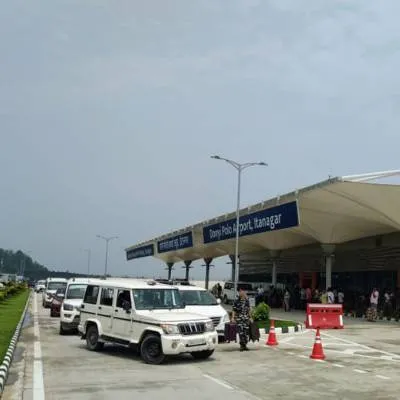
Union Civil Aviation Minister Hardeep Singh Puri inaugurated India’s first and exclusive terminal for private jets at Delhi’s Indira Gandhi International Airport on 17 September 2020. The terminal built over a period of one and a half years at the cost of Rs 1.50 billion is expected to result in faster movement of business jets and chartered aircrafts. 

The new terminal had been ready for use since July this year but a final green signal by the Bureau of Civil Aviation Security (BCAS) was awaited. The operations on the new terminal will begin from Sunday.

The terminal was built by Bird ExecuJet Airport Services which is a joint venture between Bird Group and ExecuJet Aviation Group. Reportedly, nothing was imported for the construction of the terminal and it is purely India made.

Features and amenities
  • Spanning over an area of 8 lakh sq ft it has 57 dedicated chartered aircraft parking bays and can handle 150 private jet flights per day and 50 passengers every hour.
  • The terminal building consists of spacious passenger lounges, food and beverage sections, 24x7 personal concierge services and common processing area.
  • The terminal has an immigration and customs area. Facilities for crew members and staff such as restrooms and briefing area are available in this new terminal.
  • Approximately 40 Central Industrial Security Force (CISF) officers will be securing the premises by carrying out frisking of passengers etc. to ensure high standards of security at the terminal. Additionally, the terminal will have an access control system; Wi-Fi enabled services, and an integrated perimeter security control system to bolster security.

Earlier the private flights were boarded along with the flights of commercial passengers and had a similar process for boarding as that of non-premium price payers. The terminal now introduces exclusivity for premium price payers and will help them fly in no time. It will also help in using business jets as air ambulance to fly to remote areas. Although, private aircraft will still have to compete for take-off and landing slots with commercial flights. 

It is anticipated that the inauguration of this terminal will boost general aviation as operations of private jets fall under the general aviation category.

Image courtesy: Deccan HeraldUnion Civil Aviation Minister Hardeep Singh Puri inaugurated India’s first and exclusive terminal for private jets at Delhi’s Indira Gandhi International Airport on 17 September 2020. The terminal built over a period of one and a half years at the cost of Rs 1.50 billion is expected to result in faster movement of business jets and chartered aircrafts. The new terminal had been ready for use since July this year but a final green signal by the Bureau of Civil Aviation Security (BCAS) was awaited. The operations on the new terminal will begin from Sunday.The terminal was built by Bird ExecuJet Airport Services which is a joint venture between Bird Group and ExecuJet Aviation Group. Reportedly, nothing was imported for the construction of the terminal and it is purely India made.Features and amenitiesSpanning over an area of 8 lakh sq ft it has 57 dedicated chartered aircraft parking bays and can handle 150 private jet flights per day and 50 passengers every hour. The terminal building consists of spacious passenger lounges, food and beverage sections, 24x7 personal concierge services and common processing area.The terminal has an immigration and customs area. Facilities for crew members and staff such as restrooms and briefing area are available in this new terminal.Approximately 40 Central Industrial Security Force (CISF) officers will be securing the premises by carrying out frisking of passengers etc. to ensure high standards of security at the terminal. Additionally, the terminal will have an access control system; Wi-Fi enabled services, and an integrated perimeter security control system to bolster security.Earlier the private flights were boarded along with the flights of commercial passengers and had a similar process for boarding as that of non-premium price payers. The terminal now introduces exclusivity for premium price payers and will help them fly in no time. It will also help in using business jets as air ambulance to fly to remote areas. Although, private aircraft will still have to compete for take-off and landing slots with commercial flights. It is anticipated that the inauguration of this terminal will boost general aviation as operations of private jets fall under the general aviation category.

Related Stories

Gold Stories

Next Story
Real Estate

WSB Real Estate Partners Exits Six Housing Investments

WSB Real Estate Partners recently announced the successful exit of six residential investments across Bengaluru, Mumbai Metropolitan Region (MMR) and National Capital Region (NCR), delivering an average internal rate of return (IRR) of 19–21 per cent and an overall investment return of 1.4 times.The real estate-focused investment firm invested approximately Rs 7 billion across six mid-affordable housing projects over the past four years. All six investments were fully repaid between April and November 2026, several months ahead of their original investment tenures.WSB collaborated with sever..

Next Story
Infrastructure Transport

Aluminium Industry Seeks Policy Support for Rs 4 Trillion Investment

The Aluminium Association of India (AAI) has recently urged the government to introduce supportive policy measures to safeguard the sector’s proposed Rs 4 trillion investment pipeline. The association highlighted the need for a predictable policy framework to strengthen domestic manufacturing, expand production capacity and reduce import dependence.AAI submitted its recommendations for the Union Budget 2027-28 to the Ministries of Finance, Commerce and Industry, and Mines, along with the Department for Promotion of Industry and Internal Trade (DPIIT).India’s aluminium demand is projected t..
Next Story
Technology

ABB Unveils Intelligent Motor to Accelerate Industrial AI Adoption

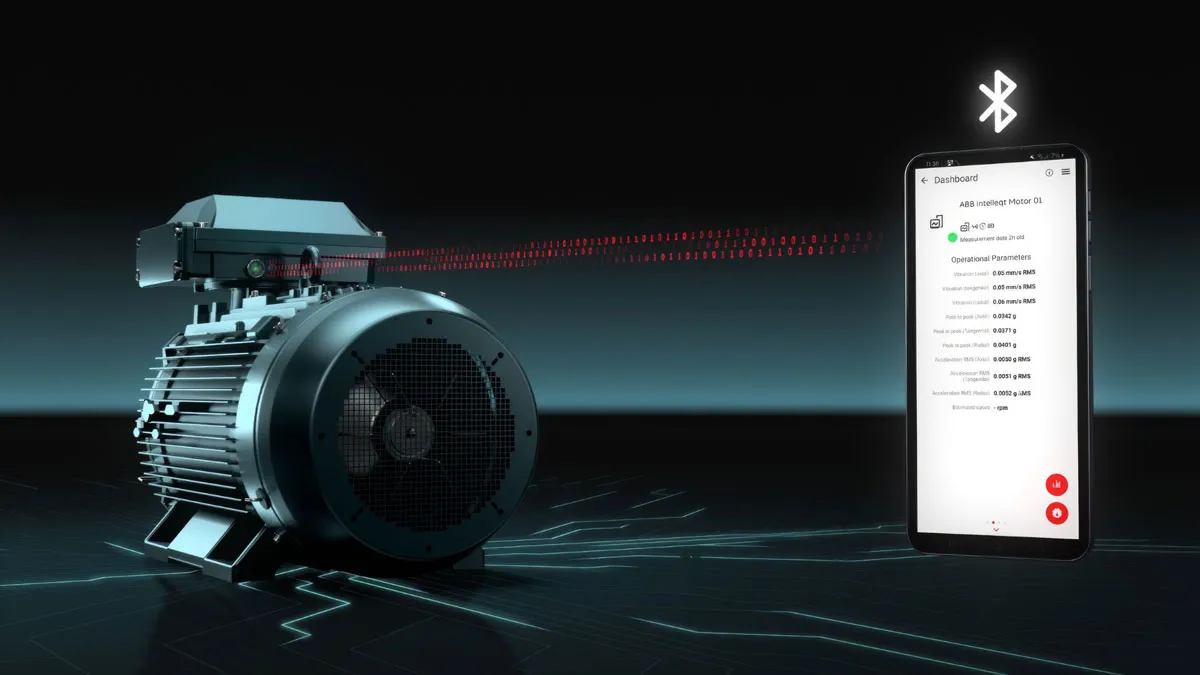
ABB recently launched Intelleqt, which it describes as the world’s first low-voltage motor with factory-integrated intelligence, at the SPS trade fair in Germany. Designed to deliver real-time operational insights from its first rotation, the motor enables industrial operators to integrate equipment-level data into existing digital platforms while retaining full ownership of their data.The launch addresses growing challenges in scaling artificial intelligence (AI) across industrial operations, particularly data quality and availability. According to Deloitte, while 84 per cent of manufacture..

Subscribe to Our Newsletter

Get daily newsletters around different themes from Construction world.

STAY CONNECTED

Advertisement

SPECIAL OFFER
QR Code