Navi Mumbai airport ahead of schedule, confident for Dec 2024 launch
AVIATION & AIRPORTS

Navi Mumbai airport ahead of schedule, confident for Dec 2024 launch

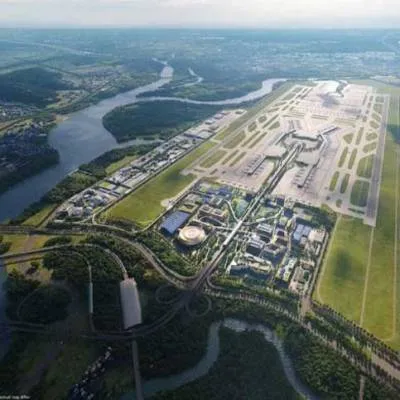
"We're ahead of schedule at the airfield, with just a small hill left," stated a representative from Navi Mumbai International Airport Ltd (NMIAL). The airfield, comprising a runway, taxiway, apron, and more, is 60 per cent complete, with the runway reaching 70 per cent. The hill's demolition involves joint efforts by MIAL and Cidco, with Cidco's part expected to be completed by mid-January, overcoming earlier delays. NMIAL, a subsidiary with MIAL holding 74 per cent, is confident about meeting the December 2024 timeline for commercial operations, targeting an initial capacity of 20 million passengers. Despite delays reported by Capa India, NMIAL remains optimistic, with ongoing talks with airlines for operations and plans for future phases.

The spokesperson highlighted the importance of completing the initial phase before financial closure for subsequent phases and addressed concerns about connectivity, stating that delays in infrastructural projects like the Ulwe Coastal Road won't hinder connectivity but acknowledged it won't be "ideal." The Navi Mumbai Airport aims to alleviate congestion at Mumbai's international airport, targeting a capacity of 60 million passengers in the next few years. The airport is set to be ready for DGCA inspections from September onwards and plans to start operations in the winter schedule of 2024. In contrast to Mumbai International Airport's second terminal, the under-construction Navi airport may differ with a lotus-themed interior, increased space for private jets, higher parking fees for fossil-fuel-based vehicles, and a focus on digital art, as emphasised by the spokesperson.

We're ahead of schedule at the airfield, with just a small hill left, stated a representative from Navi Mumbai International Airport Ltd (NMIAL). The airfield, comprising a runway, taxiway, apron, and more, is 60 per cent complete, with the runway reaching 70 per cent. The hill's demolition involves joint efforts by MIAL and Cidco, with Cidco's part expected to be completed by mid-January, overcoming earlier delays. NMIAL, a subsidiary with MIAL holding 74 per cent, is confident about meeting the December 2024 timeline for commercial operations, targeting an initial capacity of 20 million passengers. Despite delays reported by Capa India, NMIAL remains optimistic, with ongoing talks with airlines for operations and plans for future phases. The spokesperson highlighted the importance of completing the initial phase before financial closure for subsequent phases and addressed concerns about connectivity, stating that delays in infrastructural projects like the Ulwe Coastal Road won't hinder connectivity but acknowledged it won't be ideal. The Navi Mumbai Airport aims to alleviate congestion at Mumbai's international airport, targeting a capacity of 60 million passengers in the next few years. The airport is set to be ready for DGCA inspections from September onwards and plans to start operations in the winter schedule of 2024. In contrast to Mumbai International Airport's second terminal, the under-construction Navi airport may differ with a lotus-themed interior, increased space for private jets, higher parking fees for fossil-fuel-based vehicles, and a focus on digital art, as emphasised by the spokesperson.

Next Story
Infrastructure Urban

Implementation Status of Jal Jeevan Mission

Since August 2019 the Government has implemented Jal Jeevan Mission to provide assured potable water through household tap connections in rural India. At the start of the mission only 32.3 million (mn) rural households, representing 16.7 per cent, were reported to have tap water connections. States and union territories have reported that 125.8 mn additional rural households have since been provided with tap connections. As a result, of about 193.6 mn rural households roughly 158.2 mn, or 81.71 per cent, are reported to have tap water supply at home.\n\nThe State, district and village level st..

Next Story
Infrastructure Urban

Jal Jeevan Mission Reaches Eighty One Per Cent Rural Coverage

The Government reported substantial progress under the Jal Jeevan Mission, launched in August 2019 to provide tap water to every rural household. At launch only 32.3 million (mn) rural households had tap connections and states and Union territories reported provision of 125.8 mn additional households by March 2026. Consequently, out of about 193.6 mn rural households around 158.2 mn, or 81.71 per cent, are reported to have tap water at home. The Finance Minister announced extension of the mission until 2028 in the 2025-26 budget speech. The Swachh Bharat Mission Grameen, launched in October 20..

Next Story
Infrastructure Urban

Empowering Local Governance for Sustainable Rural Water Supply

The Ministry of Jal Shakti has aligned the Jal Jeevan Mission (JJM) with the 73rd Amendment to strengthen village level planning and community ownership of water supply. Gram Panchayats, village water and sanitation committees and Pani Samitis are to plan, implement, manage and maintain piped water systems, with gram sabha processes formalising handover and oversight. Implementation support agencies including non government organisations, community based organisations and self help groups have been empanelled to train local committees and promote women participation. Under JJM, the department ..

Advertisement

Subscribe to Our Newsletter

Get daily newsletters around different themes from Construction world.

STAY CONNECTED

Advertisement

Advertisement

Advertisement