UP Cabinet Approves Renaming Jewar Airport After PM Modi
AVIATION & AIRPORTS

UP Cabinet Approves Renaming Jewar Airport After PM Modi

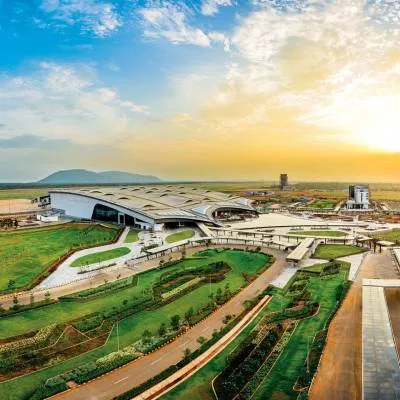
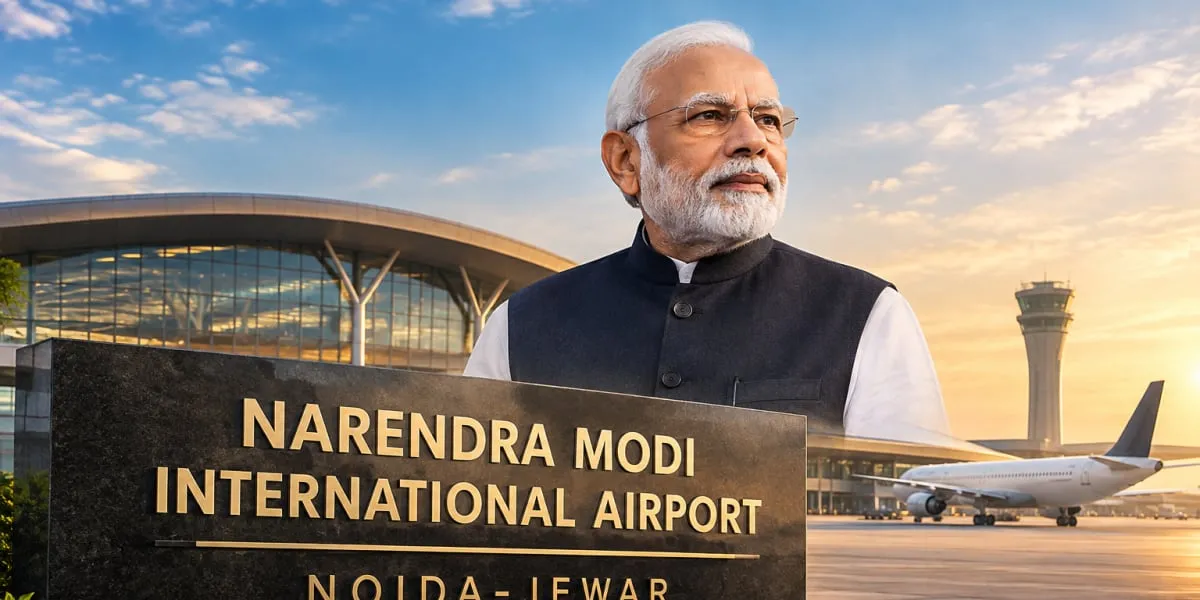
The Uttar Pradesh Cabinet has approved a proposal to rename Noida International Airport at Jewar as Narendra Modi International Airport, Noida-Jewar. Chief Minister Yogi Adityanath announced the decision after a Cabinet meeting, saying the airport represented a major contribution to the state and would become Uttar Pradesh’s largest airport and a significant aviation hub.

The greenfield airport’s foundation stone was laid by Prime Minister Narendra Modi on November 25, 2021. He inaugurated Phase 1 on March 28, 2026, and commercial flights began on June 15. The facility is being developed as the second international airport serving the Delhi-NCR region through a public-private partnership between the Uttar Pradesh government and Zurich Airport International AG.

The project initially covers approximately 1,334 hectares, or more than 3,300 acres, in Phase 1. Expansion plans envisage a footprint exceeding 5,000 hectares, which would make it India’s largest airport when fully completed. The airport is also expected to strengthen regional logistics and connectivity, alongside freight corridors and other transport infrastructure.

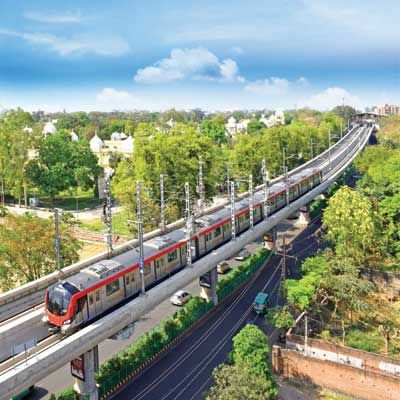
The Cabinet also approved a resolution congratulating Modi on completing 25 years of continuous public service as a head of government. Adityanath linked the state’s development to coordination between the Centre and Uttar Pradesh, citing 42 national highways covering 2,483 km and built at a cost of about Rs. 600 bn. He also referred to the Delhi-Saharanpur-Dehradun, Delhi-Meerut and Kanpur-Lucknow expressways, the Namo Bharat rapid rail system and metro expansion.

The chief minister cited welfare measures including more than Rs. 1 tn distributed to 30 mn farmers under the PM-Kisan Samman Nidhi. Other figures included loan waivers for 8.6 mn farmers, Rs. 3.3 tn in sugarcane payments, housing for 6.5 mn poor families, free foodgrains for nearly 150 mn people and tap-water connections for 24.6 mn rural households. He also mentioned 60 mn Ayushman cards, 18.6 mn free LPG connections, 6.2 mn smartphones and tablets, more than 950,000 government jobs and 6.5 mn private-sector employment opportunities.

The Uttar Pradesh Cabinet has approved a proposal to rename Noida International Airport at Jewar as Narendra Modi International Airport, Noida-Jewar. Chief Minister Yogi Adityanath announced the decision after a Cabinet meeting, saying the airport represented a major contribution to the state and would become Uttar Pradesh’s largest airport and a significant aviation hub. The greenfield airport’s foundation stone was laid by Prime Minister Narendra Modi on November 25, 2021. He inaugurated Phase 1 on March 28, 2026, and commercial flights began on June 15. The facility is being developed as the second international airport serving the Delhi-NCR region through a public-private partnership between the Uttar Pradesh government and Zurich Airport International AG. The project initially covers approximately 1,334 hectares, or more than 3,300 acres, in Phase 1. Expansion plans envisage a footprint exceeding 5,000 hectares, which would make it India’s largest airport when fully completed. The airport is also expected to strengthen regional logistics and connectivity, alongside freight corridors and other transport infrastructure. The Cabinet also approved a resolution congratulating Modi on completing 25 years of continuous public service as a head of government. Adityanath linked the state’s development to coordination between the Centre and Uttar Pradesh, citing 42 national highways covering 2,483 km and built at a cost of about Rs. 600 bn. He also referred to the Delhi-Saharanpur-Dehradun, Delhi-Meerut and Kanpur-Lucknow expressways, the Namo Bharat rapid rail system and metro expansion. The chief minister cited welfare measures including more than Rs. 1 tn distributed to 30 mn farmers under the PM-Kisan Samman Nidhi. Other figures included loan waivers for 8.6 mn farmers, Rs. 3.3 tn in sugarcane payments, housing for 6.5 mn poor families, free foodgrains for nearly 150 mn people and tap-water connections for 24.6 mn rural households. He also mentioned 60 mn Ayushman cards, 18.6 mn free LPG connections, 6.2 mn smartphones and tablets, more than 950,000 government jobs and 6.5 mn private-sector employment opportunities.

Related Stories

Gold Stories

Next Story
Infrastructure Transport

Surat–Bilimora bullet train section electrified

The Mumbai–Ahmedabad Bullet Train project achieved a significant milestone with the successful energisation of the Overhead Equipment (OHE) system on the Surat–Bilimora section on 20 November 2026.The approximately 50-km elevated section, covering both Up and Down lines, has progressed towards further testing activities. Energisation will be undertaken progressively across smaller sections under technical supervision to ensure operational safety and compliance.The 508-km high-speed rail corridor incorporates an advanced 2 × 25 kV overhead traction system designed for high-speed railway op..

Next Story
Infrastructure Energy

Hindustan Zinc ranks fourth globally at LACP Awards 2026

Hindustan Zinc Limited, the world's largest integrated zinc producer and among the top ten silver producers globally, has secured fourth place worldwide at the League of American Communications Professionals (LACP) Spotlight Awards 2026 for its Integrated Annual Report (IAR) FY26.The company improved its global ranking from sixth place last year and retained its No. 1 position in India for the second consecutive year. Its report also emerged as the highest-ranked Integrated Annual Report globally, marking the first time an Indian Integrated Annual Report has entered the global top five.Hindust..
Next Story
Infrastructure Urban

Sinoboom produces 1,000th high-reach boom lift at Changsha plant

Sinoboom has achieved a significant manufacturing milestone with the production of its 1,000th high-reach boom lift at the Phase VI facility of its Intelligent Manufacturing Park in Changsha, China. The milestone was marked on 21 November 2026 in the presence of customers, government officials and media representatives.Spanning approximately 95,000 sq m, the Phase VI facility has an annual production capacity of 4,000 units. Construction began in November 2024, with operations commencing in the second half of 2026.The facility integrates highly automated manufacturing processes, including mate..

Advertisement

Subscribe to Our Newsletter

Get daily newsletters around different themes from Construction world.

STAY CONNECTED

Advertisement

SPECIAL OFFER
QR Code