3,468 Km of National Highways Built, Upgraded in FY26
ROADS & HIGHWAYS

3,468 Km of National Highways Built, Upgraded in FY26

The Centre has constructed and upgraded about 3,468 km of national highways across India during the ongoing FY26 up to October, the Ministry of Road Transport and Highways informed Parliament on Wednesday.

In a written reply to the Rajya Sabha, Union Road Transport and Highways Minister Nitin Jairam Gadkari said the total length of national highways constructed and upgraded during the current financial year stood at around 3,468 km as of October 2025.

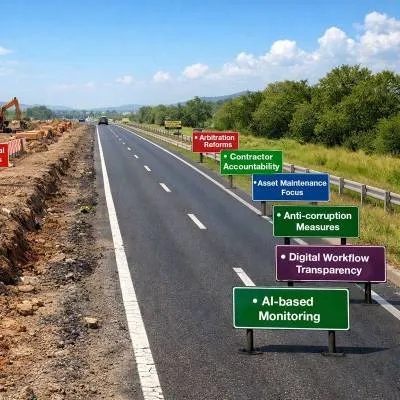
The minister said the government has strengthened road safety by issuing guidelines for regular safety audits at the design, construction and pre-opening stages of highway projects, as well as on existing corridors. To further reduce accidents and improve response times, Advanced Traffic Management Systems are being deployed on national highways.

These systems include AI-based video incident detection and enforcement, automatic number plate recognition cameras, pan-tilt-zoom surveillance cameras and real-time electronic monitoring to enable faster intervention during incidents.

Gadkari also highlighted the government’s push for sustainable infrastructure under the Green Highways Policy, 2015, which focuses on plantation, transplantation, beautification and maintenance along national highway corridors. Tree plantation is being carried out along highway rights-of-way in line with policy guidelines.

In addition, the use of waste materials such as plastic waste, fly ash and construction debris is being promoted in highway construction, subject to feasibility and availability. Waste plastic is being incorporated into bituminous mixes, while other materials are being used in embankments, pavement layers and concrete works to support environmentally sustainable and cost-effective highway development.

The Centre has constructed and upgraded about 3,468 km of national highways across India during the ongoing FY26 up to October, the Ministry of Road Transport and Highways informed Parliament on Wednesday. In a written reply to the Rajya Sabha, Union Road Transport and Highways Minister Nitin Jairam Gadkari said the total length of national highways constructed and upgraded during the current financial year stood at around 3,468 km as of October 2025. The minister said the government has strengthened road safety by issuing guidelines for regular safety audits at the design, construction and pre-opening stages of highway projects, as well as on existing corridors. To further reduce accidents and improve response times, Advanced Traffic Management Systems are being deployed on national highways. These systems include AI-based video incident detection and enforcement, automatic number plate recognition cameras, pan-tilt-zoom surveillance cameras and real-time electronic monitoring to enable faster intervention during incidents. Gadkari also highlighted the government’s push for sustainable infrastructure under the Green Highways Policy, 2015, which focuses on plantation, transplantation, beautification and maintenance along national highway corridors. Tree plantation is being carried out along highway rights-of-way in line with policy guidelines. In addition, the use of waste materials such as plastic waste, fly ash and construction debris is being promoted in highway construction, subject to feasibility and availability. Waste plastic is being incorporated into bituminous mixes, while other materials are being used in embankments, pavement layers and concrete works to support environmentally sustainable and cost-effective highway development.

Next Story
Infrastructure Urban

Study Highlights Freshwater Sponges’ Role in Fighting Metal Pollution

Scientists have identified freshwater sponges and their associated microbial communities as powerful natural allies in tackling toxic metal pollution, offering new hope for sustainable water quality management. A recent study has revealed that these sponges can act both as bioindicators and effective absorbents of harmful metals such as arsenic, lead and cadmium.The findings come from a study published in Microbiology Spectrum by researchers from Bose Institute, an autonomous institute under the Department of Science and Technology, Government of India. The research focused on freshwater spong..

Next Story
Infrastructure Transport

79% of Indian Railways Track now Supports Speeds of 110 Kmph+

Indian Railways has significantly enhanced the speed potential of its track network over the past decade, with 79 per cent of tracks now capable of supporting speeds of 110 kmph and above, compared with just 40 per cent in 2014. The improvement reflects sustained investment in track modernisation and maintenance aimed at faster and safer train operations.According to official data, large-scale upgradation works have been undertaken over the last 11 years to improve track quality and performance. Key measures include the use of heavier 60 kg rails, wider-base concrete sleepers, thick web switch..

Next Story
Infrastructure Transport

Indian Railways Clocks 80% Punctuality Nationwide from Dec 8–14

Indian Railways has reported strong operational performance, achieving an overall punctuality of 80 per cent across the network during the period from December 8 to December 14. The achievement reflects sustained efforts by railway divisions to enhance efficiency and ensure reliable and timely services for passengers and freight users.According to official data, 37 railway divisions recorded punctuality levels exceeding 80 per cent during the review period. Notably, 22 divisions achieved punctuality above 90 per cent, while 10 divisions went a step further by crossing the 95 per cent mark, hig..

Advertisement

Subscribe to Our Newsletter

Get daily newsletters around different themes from Construction world.

STAY CONNECTED

Advertisement

Advertisement

Advertisement

Advertisement

Open In App