+
Bengaluru Elevated Corridors over 10 Km to Be Tolled
ROADS & HIGHWAYS

Bengaluru Elevated Corridors over 10 Km to Be Tolled

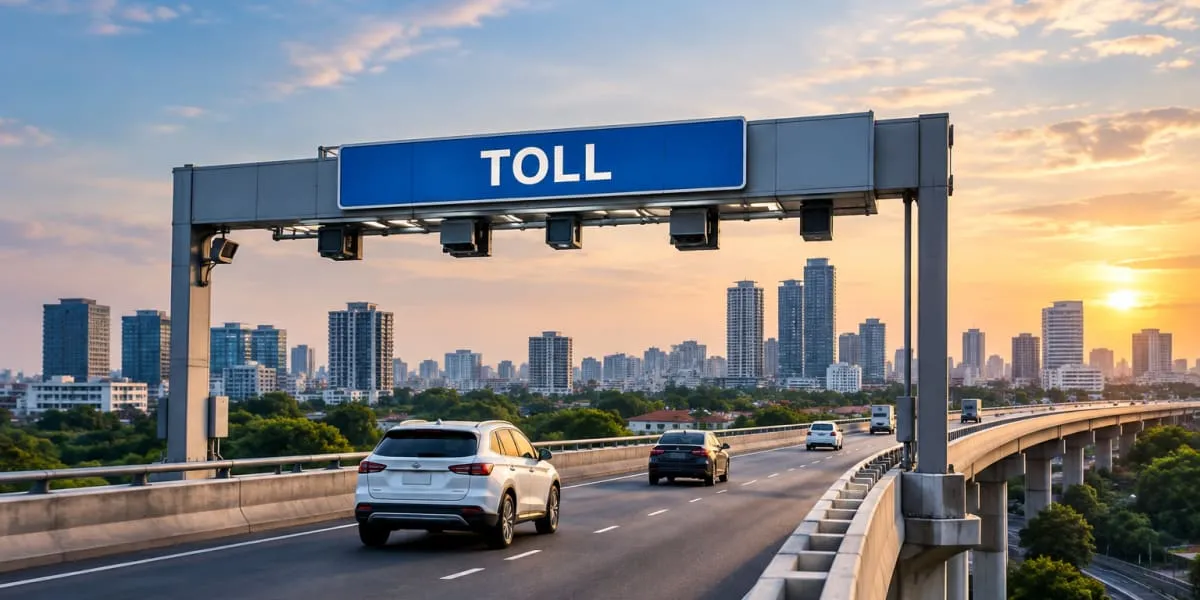
Motorists using new elevated corridors longer than 10 km in Bengaluru will have to pay user fees, with the Karnataka government approving a toll-based development model for two projects. Bengaluru Smart Infrastructure (B-SMILE) has invited tenders for the corridors under a Build-Own-Operate-Transfer (BOOT) arrangement, with the state providing 40 per cent viability gap funding (VGF).

The two projects cover a combined 46.5 km and have an estimated cost of Rs. 58.2 bn, excluding land acquisition and utility-shifting expenses. Both corridors are classified as Category C projects, allowing the selected concessionaire to build, operate and maintain the infrastructure before recovering its investment through toll collections during the concession period.

The first corridor will extend 18.5 km from Marenahalli Main Road at Ragigudda Junction to Kanakapura Main Road, passing through BWSSB Pipeline Road and Thalaghattapura Junction. It has an estimated cost of Rs. 22.83 bn, of which the government will provide up to Rs. 9.13 bn as VGF.

The second project will cover 28 km between Yeshwanthpur at Mattikere Cross and Tin Factory Junction in KR Puram. Its route will pass through IISc, Mehkri Circle, Jayamahal, St John's Church Road and Ulsoor Lake. The estimated cost is Rs. 35.37 bn, with VGF of about Rs. 14.15 bn, equivalent to 40 per cent of the project cost.

Tender documents state that the user fee will be levied, collected and revised under the Karnataka Road User Fee (Determination of Rates and Collection) Rules, 2014, and applicable state toll notifications. Base rates will be revised annually through an increase of 3 per cent plus 40 per cent of the movement in the Wholesale Price Index. A separate proposed elevated corridor of about 7 km has not yet been assigned a toll policy.

The state Cabinet approved the wider plan in April 2026 to develop 120 km of flyovers and grade separators. Eleven elevated corridors and flyovers spanning 75.6 km have received approval at an estimated cost of Rs. 132.63 bn, with nine projects relying on direct government funding and the two longer corridors being implemented through the BOOT model.

Motorists using new elevated corridors longer than 10 km in Bengaluru will have to pay user fees, with the Karnataka government approving a toll-based development model for two projects. Bengaluru Smart Infrastructure (B-SMILE) has invited tenders for the corridors under a Build-Own-Operate-Transfer (BOOT) arrangement, with the state providing 40 per cent viability gap funding (VGF). The two projects cover a combined 46.5 km and have an estimated cost of Rs. 58.2 bn, excluding land acquisition and utility-shifting expenses. Both corridors are classified as Category C projects, allowing the selected concessionaire to build, operate and maintain the infrastructure before recovering its investment through toll collections during the concession period. The first corridor will extend 18.5 km from Marenahalli Main Road at Ragigudda Junction to Kanakapura Main Road, passing through BWSSB Pipeline Road and Thalaghattapura Junction. It has an estimated cost of Rs. 22.83 bn, of which the government will provide up to Rs. 9.13 bn as VGF. The second project will cover 28 km between Yeshwanthpur at Mattikere Cross and Tin Factory Junction in KR Puram. Its route will pass through IISc, Mehkri Circle, Jayamahal, St John's Church Road and Ulsoor Lake. The estimated cost is Rs. 35.37 bn, with VGF of about Rs. 14.15 bn, equivalent to 40 per cent of the project cost. Tender documents state that the user fee will be levied, collected and revised under the Karnataka Road User Fee (Determination of Rates and Collection) Rules, 2014, and applicable state toll notifications. Base rates will be revised annually through an increase of 3 per cent plus 40 per cent of the movement in the Wholesale Price Index. A separate proposed elevated corridor of about 7 km has not yet been assigned a toll policy. The state Cabinet approved the wider plan in April 2026 to develop 120 km of flyovers and grade separators. Eleven elevated corridors and flyovers spanning 75.6 km have received approval at an estimated cost of Rs. 132.63 bn, with nine projects relying on direct government funding and the two longer corridors being implemented through the BOOT model.

Related Stories

Gold Stories

Next Story
Infrastructure Urban

CAFE-III Gives Auto Industry Investment Clarity

The government’s new Corporate Average Fuel Economy (CAFE-III) norms have provided the automobile industry with a clearer framework for technology investments, according to industry representatives. The framework seeks to balance environmental objectives with flexibility for manufacturers while encouraging the adoption of flex-fuel vehicles and biofuels. Society of Indian Automobile Manufacturers (SIAM) President Shenu Agarwal said the five-year framework would give automakers greater predictability to plan investments and accelerate innovation. He said the regulation established annual targ..

Next Story
Infrastructure Energy

Mines Ministry to Auction Two Offshore Mineral Blocks in Andaman Sea

The Ministry of Mines will launch an auction of two offshore mineral blocks in the Andaman Sea on Thursday, seeking to unlock India’s offshore mineral potential and strengthen long-term mineral resource security. The blocks will be offered under a composite licence, which permits exploration and development activities in accordance with the applicable regulatory framework. The ministry said the auction was intended to encourage systematic exploration, attract investment and promote the use of advanced technologies for offshore mineral exploration and development. The initiative is also aimed..

Next Story
Infrastructure Energy

India Invites Global Mining Community to India Mining Week 2026

India has invited the global mining community to participate in India Mining Week 2026, seeking international collaboration, expertise and investment to support the development of the country’s mining and minerals sector. The event is scheduled to be held from November 15 to 17, 2026, at Yashobhoomi in New Delhi. Coal Additional Secretary Rupinder Brar extended the invitation while addressing India Mining: Global Connect, an international outreach interaction involving representatives from diplomatic missions in 19 countries. The meeting focused on opportunities for greater international par..

Advertisement

Subscribe to Our Newsletter

Get daily newsletters around different themes from Construction world.

STAY CONNECTED

Advertisement

SPECIAL OFFER
QR Code