BMC Begins Work On Rs 180 Billion Versova–Dahisar Coastal Road
ROADS & HIGHWAYS

BMC Begins Work On Rs 180 Billion Versova–Dahisar Coastal Road

The Brihanmumbai Municipal Corporation (BMC) has commenced work on the northern section of the Mumbai Coastal Road Project, which will extend from Versova to Dahisar and later to Bhayander. As part of the development, a total of 1,244 trees in the Goregaon–Malad area will be impacted — with 254 marked for cutting and 990 set for replantation.

The ongoing work is located outside the Coastal Regulation Zone (CRZ), though stricter environmental clearances will be required for portions of the project falling within the CRZ. The BMC has submitted a proposal to the Tree Authority for the removal of affected trees and issued a public notice inviting citizen objections and suggestions, which will be heard on 17 October.

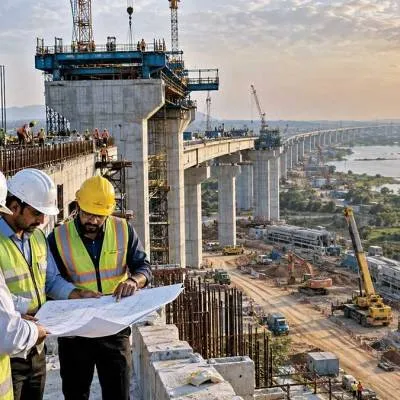
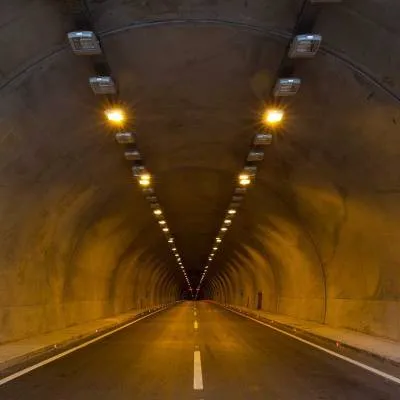
According to reports, the Versova–Dahisar coastal corridor will stretch 18.47 km and be divided into six construction packages, featuring elevated roads, cable-stayed bridges, and tunnels. The initiative is designed to ease congestion in western suburbs including Dahisar, Borivali, Kandivali, and Malad, while improving connectivity between southern Mumbai and the northern suburbs.

The estimated project cost ranges from Rs 166.2 billion to Rs 180 billion, depending on land acquisition and construction requirements. The plan also includes replantation drives across about 60 plots in western Mumbai and the demolition of the Veer Savarkar Bridge in Goregaon to accommodate new infrastructure.

While residents — particularly in Charkop — have raised concerns about the loss of greenery, blocked sea views, and environmental impact, civic officials have assured that compensatory green cover measures will be implemented.

With the necessary approvals progressing, the BMC aims to complete the Versova–Dahisar stretch by late 2028, marking another milestone in Mumbai’s push to modernise its urban transport infrastructure and decongest its western suburbs.

The Brihanmumbai Municipal Corporation (BMC) has commenced work on the northern section of the Mumbai Coastal Road Project, which will extend from Versova to Dahisar and later to Bhayander. As part of the development, a total of 1,244 trees in the Goregaon–Malad area will be impacted — with 254 marked for cutting and 990 set for replantation. The ongoing work is located outside the Coastal Regulation Zone (CRZ), though stricter environmental clearances will be required for portions of the project falling within the CRZ. The BMC has submitted a proposal to the Tree Authority for the removal of affected trees and issued a public notice inviting citizen objections and suggestions, which will be heard on 17 October. According to reports, the Versova–Dahisar coastal corridor will stretch 18.47 km and be divided into six construction packages, featuring elevated roads, cable-stayed bridges, and tunnels. The initiative is designed to ease congestion in western suburbs including Dahisar, Borivali, Kandivali, and Malad, while improving connectivity between southern Mumbai and the northern suburbs. The estimated project cost ranges from Rs 166.2 billion to Rs 180 billion, depending on land acquisition and construction requirements. The plan also includes replantation drives across about 60 plots in western Mumbai and the demolition of the Veer Savarkar Bridge in Goregaon to accommodate new infrastructure. While residents — particularly in Charkop — have raised concerns about the loss of greenery, blocked sea views, and environmental impact, civic officials have assured that compensatory green cover measures will be implemented. With the necessary approvals progressing, the BMC aims to complete the Versova–Dahisar stretch by late 2028, marking another milestone in Mumbai’s push to modernise its urban transport infrastructure and decongest its western suburbs.

Next Story
Real Estate

Integrated Waterproofing Strategies

Waterproofing buildings used to be an annual pre-monsoon affair but the evolution of real-estate development has changed that approach. In new developments, developers are weaving waterproofing solutions into both the design and construction phases, an approach that Nikhil Madan, Managing Director, Mahima Group, says, “is all about ensuring lasting durability [of the building] and keeping lifecycle risks including water seepage and extensive maintenance to a minimum.”Watertight by designAluminium formwork systems aren’t commonly thought of as a waterproofing tool but at the Mahima Group,..

Next Story
Infrastructure Urban

GROHE Showcases Water-Led Design At Milan

GROHE unveiled its GROHE SPA Aqua Sanctuary at Milan Design Week 2026, transforming Piccolo Teatro Studio Melato into an immersive showcase of water, design and wellbeing. Built on the philosophy of ‘Wellbeing Through Water’, the installation reimagined bathrooms as holistic spaces for relaxation, rejuvenation and self-care.The Aqua Sanctuary was presented through three interconnected sanctums. The first showcased the 3D-printed GROHE SPA AquaTree shower and faucet, highlighting bespoke innovation and biophilic design. The second featured the Atrio Private Collection and GROHE SPA x Buster..

Next Story
Infrastructure Transport

Rahee Group Expands Rail Manufacturing Capacity

Rahee Group has outlined a multi-year investment roadmap to expand its operational footprint and strengthen manufacturing capabilities for India’s growing railway and urban transit sector. The Group is expanding in Odisha with a new Track Component Casting Unit, for which the groundbreaking ceremony was held on 8 April 2026 in the presence of Odisha Chief Minister Mohan Charan Majhi.The Group’s flagship EPC arm, Rahee Infratech Ltd, continues to focus on complex rail infrastructure projects, including track systems, bridges, viaducts and ballastless infrastructure. Its wholly owned subsidi..

Advertisement

Subscribe to Our Newsletter

Get daily newsletters around different themes from Construction world.

STAY CONNECTED

Advertisement

Advertisement

Advertisement