+
Centre Sanctions Rs 42,230 Million for Goa Roads
ROADS & HIGHWAYS

Centre Sanctions Rs 42,230 Million for Goa Roads

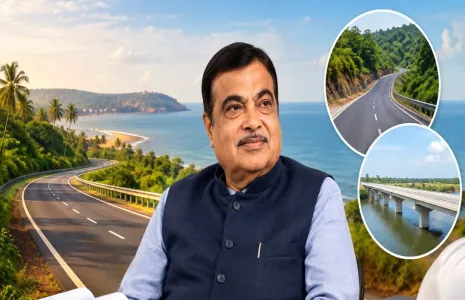
Union Minister Nitin Gadkari informed in a written reply to the Rajya Sabha that the Centre sanctioned Rs 42,230 million (Rs 42,230 mn) over the past five years for road infrastructure projects in Goa. The sanction covered highway expansion, ring roads, bypasses and flyovers across the state. The disclosure followed a query raised by MP Sadanand Shet Tanavade.

Data in the reply showed that Rs 31,050 million (Rs 31,050 mn) has already been spent on various initiatives aimed at improving connectivity. The allocations were made across multiple schemes and are intended to address long standing bottlenecks in regional transport. Officials described the expenditure as part of a sustained investment drive.

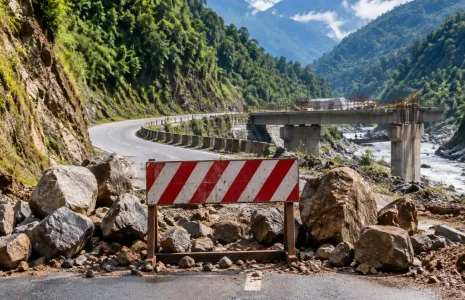
Despite the allocation and recorded expenditure, concerns have been raised about delays and a slow pace of execution on several projects. Residents and stakeholders have pointed to incomplete works and sluggish progress at numerous sites, prompting calls for clearer timelines. The situation has prompted scrutiny of project management and accountability mechanisms.

Authorities have been urged to expedite ongoing works to ensure timely completion and to fully realise the benefits of central investment. Further examination of project schedules and contractor performance is expected as infrastructure development remains a policy priority. Observers have suggested that improved coordination between state and central agencies could accelerate outcomes.

Local representatives emphasised the importance of transparency in contract awards and the enforcement of milestone based penalties to deter delays. They underlined that sustained monitoring and regular public reporting on progress would help rebuild confidence among commuters and investors. Timely delivery is pivotal to maximise economic returns and to reduce congestion and travel time for residents across the state.

Union Minister Nitin Gadkari informed in a written reply to the Rajya Sabha that the Centre sanctioned Rs 42,230 million (Rs 42,230 mn) over the past five years for road infrastructure projects in Goa. The sanction covered highway expansion, ring roads, bypasses and flyovers across the state. The disclosure followed a query raised by MP Sadanand Shet Tanavade. Data in the reply showed that Rs 31,050 million (Rs 31,050 mn) has already been spent on various initiatives aimed at improving connectivity. The allocations were made across multiple schemes and are intended to address long standing bottlenecks in regional transport. Officials described the expenditure as part of a sustained investment drive. Despite the allocation and recorded expenditure, concerns have been raised about delays and a slow pace of execution on several projects. Residents and stakeholders have pointed to incomplete works and sluggish progress at numerous sites, prompting calls for clearer timelines. The situation has prompted scrutiny of project management and accountability mechanisms. Authorities have been urged to expedite ongoing works to ensure timely completion and to fully realise the benefits of central investment. Further examination of project schedules and contractor performance is expected as infrastructure development remains a policy priority. Observers have suggested that improved coordination between state and central agencies could accelerate outcomes. Local representatives emphasised the importance of transparency in contract awards and the enforcement of milestone based penalties to deter delays. They underlined that sustained monitoring and regular public reporting on progress would help rebuild confidence among commuters and investors. Timely delivery is pivotal to maximise economic returns and to reduce congestion and travel time for residents across the state.

Related Stories

Gold Stories

Next Story
Infrastructure Urban

Insurance is not a cost; it is protection for the balance sheet

As infrastructure projects grow larger and more complex, their risk profiles are evolving beyond physical damage. Underinsurance, business interruption, supply-chain disruptions, climate volatility, surety and transactional exposures can all have significant financial consequences. Mohan Agrawal, Director and Business Lead - Construction, Infra & Warehousing, EDME Insurance Brokers, discusses these emerging risks and the gaps in conventional insurance practices in a conversation with KAVITA PARAB, CW. He explains why infrastructure players need to view insurance not merely as a cost, but a..

Next Story
Equipment

Optimising Earthmoving

Constituting India’s biggest fleet of construction equipment by type, earthmovers positively impact project outcomes and company bottomlines if best practices are adopted. Here’s a guide from CW.Select the right machineOne of the biggest challenges in using earthmovers isn’t machine failure but using the wrong machine configuration for the application, according to Chaitanya Bhagde, P&M Head, SHC Projects. “Unless equipment is deployed after considering the soil type, excavation depth, haul distance and production target, the application will face low productivity, longer time depl..

Next Story
Real Estate

We engineer the way architecture gets built

DALBIR SINGH, Founder, HAACE, on the company’s bespoke approach to translating ambitious architecture into precisely engineered and executed structures.What does bespoke construction mean to HAACE, and how is it different from conventional contracting?For HAACE, bespoke construction means choosing the construction methodology around the design rather than forcing the design into a standard template. Every project is studied around its architectural intent, structural requirements and execution challenges. We deliberately take on a limited number of projects because this approach demands atte..

Advertisement

Subscribe to Our Newsletter

Get daily newsletters around different themes from Construction world.

STAY CONNECTED

Advertisement

SPECIAL OFFER
QR Code