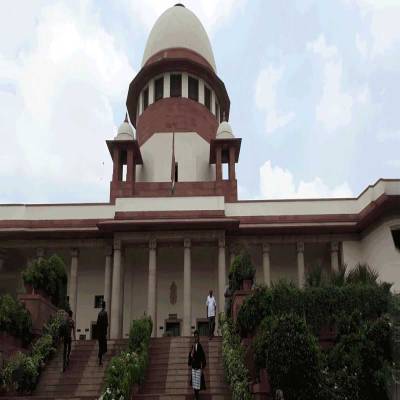





High Court Extends Tree Felling Curbs To Haryana
ROADS & HIGHWAYS

High Court Extends Tree Felling Curbs To Haryana

The Punjab and Haryana High Court extended a prior direction requiring judicial permission before tree felling to include Haryana and stayed the cutting of around 5,000 trees proposed for a National Highway project. The bench of Chief Justice Sheel Nagu and Justice Sanjiv Berry heard a public interest litigation filed by senior advocate Anand Chhibbar and flagged environmental concerns, ordering that no trees be felled until further orders. The court directed the National Highways Authority of India to place on record all realignment proposals considered by its technical team.

The petition alleged that the NH-205A alignment would cause large scale felling of mature trees across Punjab and Haryana, cutting through green belts, farms and forest areas, and estimated about 5,500 trees could be affected including roughly 2,500 in Punjab and nearly 3,000 in Panchkula. The petitioner said the tender had been awarded in haste and warned that the loss of mature trees would be irreversible. The court sought details on compensatory afforestation and whether suitable land existed near the project for planting.

Counsel for the National Highways Authority of India said the project had received necessary approvals and formed part of a ring road plan intended to decongest Zirakpur and surrounding areas and to facilitate defence movement. He stated about 5,000 trees would be affected and maintained that mitigation measures were in place, with funds deposited and land identified for afforestation, though much of the land cited lay over 300 kilometres away in Ferozepur. The authority also said substantial stretches would be elevated on single pillars to minimise damage and that plantation was planned beneath elevated sections.

The bench noted the low forest cover in the two states, recording Haryana at about 3.65 per cent and Punjab at about 3.67 per cent, and questioned whether realignment options had been adequately explored given the environmental cost. It restrained any work leading to tree felling and extended requirement of prior judicial permission to Haryana, warning that contravention would invite contempt proceedings. The matter was listed for hearing after two weeks.

The Punjab and Haryana High Court extended a prior direction requiring judicial permission before tree felling to include Haryana and stayed the cutting of around 5,000 trees proposed for a National Highway project. The bench of Chief Justice Sheel Nagu and Justice Sanjiv Berry heard a public interest litigation filed by senior advocate Anand Chhibbar and flagged environmental concerns, ordering that no trees be felled until further orders. The court directed the National Highways Authority of India to place on record all realignment proposals considered by its technical team. The petition alleged that the NH-205A alignment would cause large scale felling of mature trees across Punjab and Haryana, cutting through green belts, farms and forest areas, and estimated about 5,500 trees could be affected including roughly 2,500 in Punjab and nearly 3,000 in Panchkula. The petitioner said the tender had been awarded in haste and warned that the loss of mature trees would be irreversible. The court sought details on compensatory afforestation and whether suitable land existed near the project for planting. Counsel for the National Highways Authority of India said the project had received necessary approvals and formed part of a ring road plan intended to decongest Zirakpur and surrounding areas and to facilitate defence movement. He stated about 5,000 trees would be affected and maintained that mitigation measures were in place, with funds deposited and land identified for afforestation, though much of the land cited lay over 300 kilometres away in Ferozepur. The authority also said substantial stretches would be elevated on single pillars to minimise damage and that plantation was planned beneath elevated sections. The bench noted the low forest cover in the two states, recording Haryana at about 3.65 per cent and Punjab at about 3.67 per cent, and questioned whether realignment options had been adequately explored given the environmental cost. It restrained any work leading to tree felling and extended requirement of prior judicial permission to Haryana, warning that contravention would invite contempt proceedings. The matter was listed for hearing after two weeks.

Next Story
Infrastructure Transport

Tunnelling Begins for Thane, Borivali twin tunnel project

Tunnelling work has commenced for the 11.84-km Thane–Borivali Twin Tunnel, set to be India’s longest urban road tunnel, marking a key milestone in Mumbai’s infrastructure development.As per a post shared by Mumbai Metropolitan Region Development Authority on social media platform X, the tunnel boring machine (TBM) ‘Nayak’—the country’s largest single-shield hard rock TBM for an urban tunnel—was launched by Devendra Fadnavis on Tuesday. The event was attended by Eknath Shinde and Sunetra Pawar, among other dignitaries. A second TBM, ‘Arjuna’, is expected to be launched so..

Next Story
Infrastructure Transport

Large Format Store Planned At M G Road Metro Station

M G Road station in Bengaluru is set to host the city’s first large-format commercial and experience space, with planning led by Bangalore Metro Rail Corporation Limited. BMRCL has invited proposals to develop and operate a central business district destination at the Purple?Pink Line interchange. The plan positions the station as a commercial hub designed to serve a broad commuter base across the city. The proposal is part of a broader effort to activate transit nodes commercially. Tender documents set a minimum monthly rental of Rs 0.944 million (mn), inclusive of GST, for the large-format..

Next Story
Infrastructure Energy

Government Cancels Auction Of Eleven Critical Mineral Blocks

The government has cancelled the auction of 11 critical and strategic mineral blocks after receiving a poor investor response and failing to attract a sufficient number of qualified bidders. The decision represents a setback to plans to ramp up domestic exploration and production of critical minerals amid global supply chain disruptions and rising demand for materials used in clean energy and advanced technologies. The mines ministry issued an annulment notice setting out the reasons for the cancellations. The annulment notice indicated that the auction process for five mineral blocks was canc..

Advertisement

Subscribe to Our Newsletter

Get daily newsletters around different themes from Construction world.

STAY CONNECTED

Advertisement

Advertisement

Advertisement