+
India’s Infra Push Cuts Travel Time Across Key Routes
ROADS & HIGHWAYS

India’s Infra Push Cuts Travel Time Across Key Routes

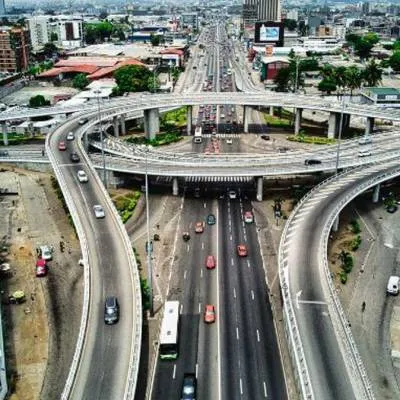
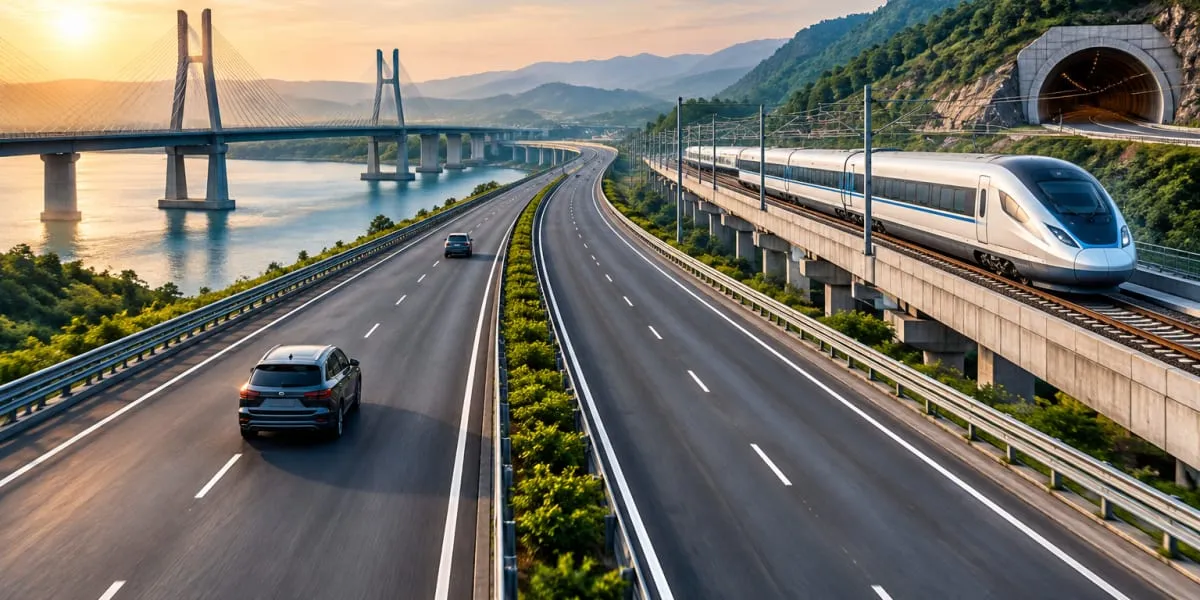
India’s expanding network of expressways, bridges, tunnels and faster trains is reducing travel time across major routes, according to a factsheet highlighted by the Press Information Bureau. The projects are replacing longer routes, difficult terrain and river crossings with more direct connections, improving links between cities and remote regions.

The Delhi-Mumbai Expressway is being developed to reduce the road journey between the two cities to about 12 hours from roughly 33 hours. The Delhi-Meerut Expressway has cut travel time from around 2.5 hours to about 50 minutes, while the Bengaluru-Mysuru Expressway has reduced the journey from nearly three hours to about 75 minutes. The Delhi-Dehradun Economic Corridor has brought its journey down from more than six hours to around 2.5 hours.

Other projects have produced similar gains. The Delhi-Amritsar-Katra Expressway has reduced travel from Delhi to Amritsar from eight hours to four hours and the Delhi-Katra journey from 14 hours to six hours. In the Northeast, the Bhupen Hazarika Setu reduced travel between Assam and Arunachal Pradesh from six hours to one hour, while the Bogibeel Bridge brought some journeys down from almost a day to one or two hours.

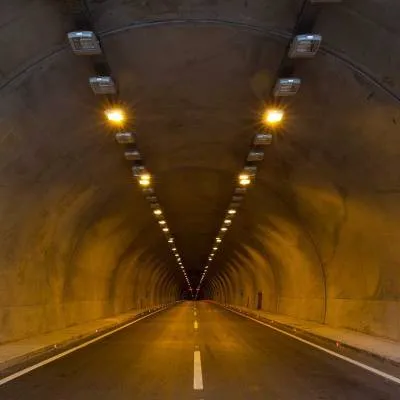
Tunnels have improved all-weather access through mountainous areas. The 9.02-km Atal Tunnel saves four to five hours on the Manali-Sarchu route, while the Dr Syama Prasad Mookerjee Tunnel and the Banihal-Qazigund twin-tube tunnel have reduced travel on the Jammu-Srinagar route. The Sela Tunnel has cut more than an hour from the Tezpur-Tawang journey.

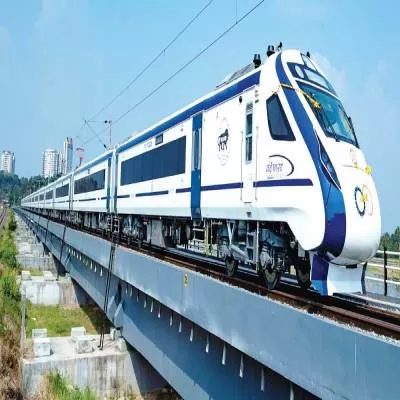
Rail services are also becoming faster. The 2026 timetable accelerated 549 trains, while Vande Bharat services have reduced travel on routes including Katra-Srinagar, Banaras-Khajuraho and Ernakulam-Bengaluru. The Mumbai-Ahmedabad High-Speed Rail Corridor is targeted for August 2027 and is designed to cut the journey to about 1 hour 58 minutes. Seven further corridors announced in the Union Budget would span nearly 4,000 km, with estimated investment of Rs. 1.6 tn.

India’s expanding network of expressways, bridges, tunnels and faster trains is reducing travel time across major routes, according to a factsheet highlighted by the Press Information Bureau. The projects are replacing longer routes, difficult terrain and river crossings with more direct connections, improving links between cities and remote regions. The Delhi-Mumbai Expressway is being developed to reduce the road journey between the two cities to about 12 hours from roughly 33 hours. The Delhi-Meerut Expressway has cut travel time from around 2.5 hours to about 50 minutes, while the Bengaluru-Mysuru Expressway has reduced the journey from nearly three hours to about 75 minutes. The Delhi-Dehradun Economic Corridor has brought its journey down from more than six hours to around 2.5 hours. Other projects have produced similar gains. The Delhi-Amritsar-Katra Expressway has reduced travel from Delhi to Amritsar from eight hours to four hours and the Delhi-Katra journey from 14 hours to six hours. In the Northeast, the Bhupen Hazarika Setu reduced travel between Assam and Arunachal Pradesh from six hours to one hour, while the Bogibeel Bridge brought some journeys down from almost a day to one or two hours. Tunnels have improved all-weather access through mountainous areas. The 9.02-km Atal Tunnel saves four to five hours on the Manali-Sarchu route, while the Dr Syama Prasad Mookerjee Tunnel and the Banihal-Qazigund twin-tube tunnel have reduced travel on the Jammu-Srinagar route. The Sela Tunnel has cut more than an hour from the Tezpur-Tawang journey. Rail services are also becoming faster. The 2026 timetable accelerated 549 trains, while Vande Bharat services have reduced travel on routes including Katra-Srinagar, Banaras-Khajuraho and Ernakulam-Bengaluru. The Mumbai-Ahmedabad High-Speed Rail Corridor is targeted for August 2027 and is designed to cut the journey to about 1 hour 58 minutes. Seven further corridors announced in the Union Budget would span nearly 4,000 km, with estimated investment of Rs. 1.6 tn.

Related Stories

Gold Stories
Next Story
Real Estate

Ajyal Holding Acquires 25% Stake in Sterling Ark

Sterling Ark, an independent integrated real estate advisory and project delivery firm, has announced a strategic alliance with Abu Dhabi-headquartered Ajyal Holding. Under the agreement, Ajyal Holding has acquired a 25 per cent stake in Sterling Ark.The alliance is expected to provide Sterling Ark with a broader platform to pursue opportunities and expand its presence across the region. Ajyal Holding operates across real estate, contracting, fit-out, building materials and technology, among other sectors.Sterling Ark provides end-to-end advisory and project delivery capabilities across real e..

Next Story
Infrastructure Urban

YEIDA Allots Land for Five Projects Worth Rs 4.69 bn

A significant step towards converting industrial investment proposals into on-ground projects was taken at the inauguration of the Uttar Pradesh International Trade Show (UPITS) 2026. Union Home and Cooperation Minister Amit Shah presented Letters of Allotment to representatives of five companies investing in the Yamuna Expressway Industrial Development Authority (YEIDA) region.The five projects have been allotted a total of 71,190 sq m of land and involve a proposed investment of Rs 4.69 bn, with the potential to generate 4,625 employment opportunities.C&R Textiles Private Limited has bee..

Next Story
Infrastructure Energy

Hindustan Zinc Restores 1,105 Hectares of Land

Hindustan Zinc Limited has restored 1,105 hectares of land as part of its efforts to integrate ecological restoration with responsible mining. The rehabilitated area, equivalent to more than 1,500 football fields, covers mining and operational landscapes restored through reclamation, plantation, biodiversity enhancement and sustainable land-use practices.The initiatives form part of Hindustan Zinc’s Sustainability Goals 2030 and its broader focus on creating long-term ecological value alongside business growth.Amarendu Prakash, CEO, Hindustan Zinc, said: “The future of mining will increasi..

Advertisement

Subscribe to Our Newsletter

Get daily newsletters around different themes from Construction world.

STAY CONNECTED

Advertisement

SPECIAL OFFER
QR Code