Nepal Approved to Import 350 MW of Power from India
POWER & RENEWABLE ENERGY

Nepal Approved to Import 350 MW of Power from India

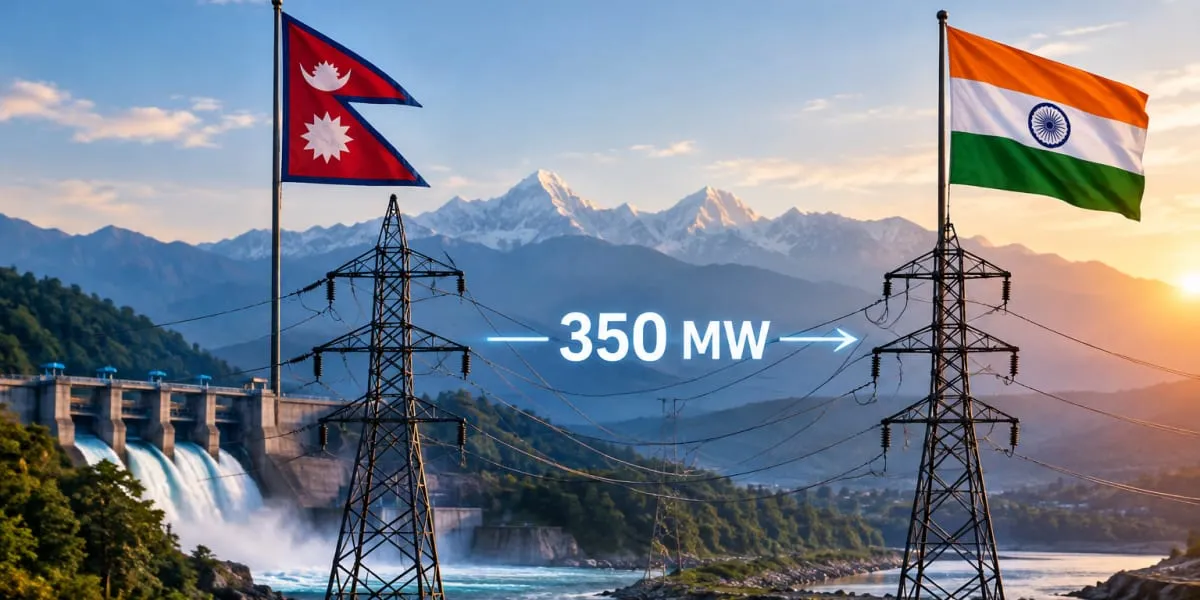
Nepal has received approval to import up to 350 MW of electricity from India during the winter season to meet domestic demand. The decision follows a decline in hydropower generation and damage to several projects caused by floods in the country.

The Central Electricity Authority (CEA), under India’s Ministry of Power, has authorised the Nepal Electricity Authority (NEA) to procure electricity at competitive rates through the Indian Energy Exchange (IEX). The approval allows imports for up to 17 hours a day and is valid from November 17, 2026, to July 31, 2027.

Of the approved capacity, Nepal can import 300 MW through the Kataiya-Kushaha, Ramnagar-Surajpura and Raxaul-Parwanipur transmission lines. The remaining 50 MW can be sourced through the New Nautanwa-Mainahiya transmission line, according to details released by the NEA.

Nepal relies heavily on run-of-the-river hydropower projects, making electricity generation seasonal. Higher river flows during summer enable the country to produce surplus power for export, mainly to India, while lower water levels during winter reduce domestic generation and increase the need for imports.

The power supply situation has also been affected by damage to hydropower projects in central Nepal during the Rasuwa-Bhotekoshi floods in August. Projects with a combined installed capacity of 431 MW remain disconnected from the national grid following the disaster.

Domestic generation is expected to improve from mid-April as river levels rise gradually. This could reduce Nepal’s reliance on imported electricity and enable the country to resume exports, subject to recovery in generation capacity and grid connectivity.

Nepal has received approval to import up to 350 MW of electricity from India during the winter season to meet domestic demand. The decision follows a decline in hydropower generation and damage to several projects caused by floods in the country. The Central Electricity Authority (CEA), under India’s Ministry of Power, has authorised the Nepal Electricity Authority (NEA) to procure electricity at competitive rates through the Indian Energy Exchange (IEX). The approval allows imports for up to 17 hours a day and is valid from November 17, 2026, to July 31, 2027. Of the approved capacity, Nepal can import 300 MW through the Kataiya-Kushaha, Ramnagar-Surajpura and Raxaul-Parwanipur transmission lines. The remaining 50 MW can be sourced through the New Nautanwa-Mainahiya transmission line, according to details released by the NEA. Nepal relies heavily on run-of-the-river hydropower projects, making electricity generation seasonal. Higher river flows during summer enable the country to produce surplus power for export, mainly to India, while lower water levels during winter reduce domestic generation and increase the need for imports. The power supply situation has also been affected by damage to hydropower projects in central Nepal during the Rasuwa-Bhotekoshi floods in August. Projects with a combined installed capacity of 431 MW remain disconnected from the national grid following the disaster. Domestic generation is expected to improve from mid-April as river levels rise gradually. This could reduce Nepal’s reliance on imported electricity and enable the country to resume exports, subject to recovery in generation capacity and grid connectivity.

Related Stories

Gold Stories

Next Story
Infrastructure Urban

NDMC Approves Five Prakriti Cafés in Three Delhi Parks

The New Delhi Municipal Council (NDMC) approved the setting up of five Prakriti Cafés across three prominent parks in the capital during its council meeting on Tuesday. The locations include Lodhi Garden, Nehru Park and BRICS Garden on Shanti Path. Two cafés will be developed in Lodhi Garden, while two others will come up in Nehru Park. The remaining café is planned for BRICS Garden. The council granted in-principle approval to explore the project under the Build-Operate-Transfer (BOT) model. Under the proposed arrangement, the selected agency will develop the cafés at its own cost and man..

Next Story
Infrastructure Transport

Air India and Airbus to Build India's First Corporate SAF Programme

Air India and Airbus have partnered to develop a framework for India’s first voluntary corporate Sustainable Aviation Fuel (SAF) programme. The feasibility study will examine how businesses can reduce lifecycle emissions associated with air travel by voluntarily supporting the procurement and use of SAF. Jürgen Westermeier, President and Managing Director of Airbus India and South Asia, and P Balaji, Group Head of Governance, Risk and Compliance and Corporate Affairs at Air India, signed the Feasibility Study Agreement. The signing took place in the presence of Rammohan Naidu Kinjarapu, Min..
Next Story
Infrastructure Energy

Indian Companies to Buy US LPG from Four Firms in 2027

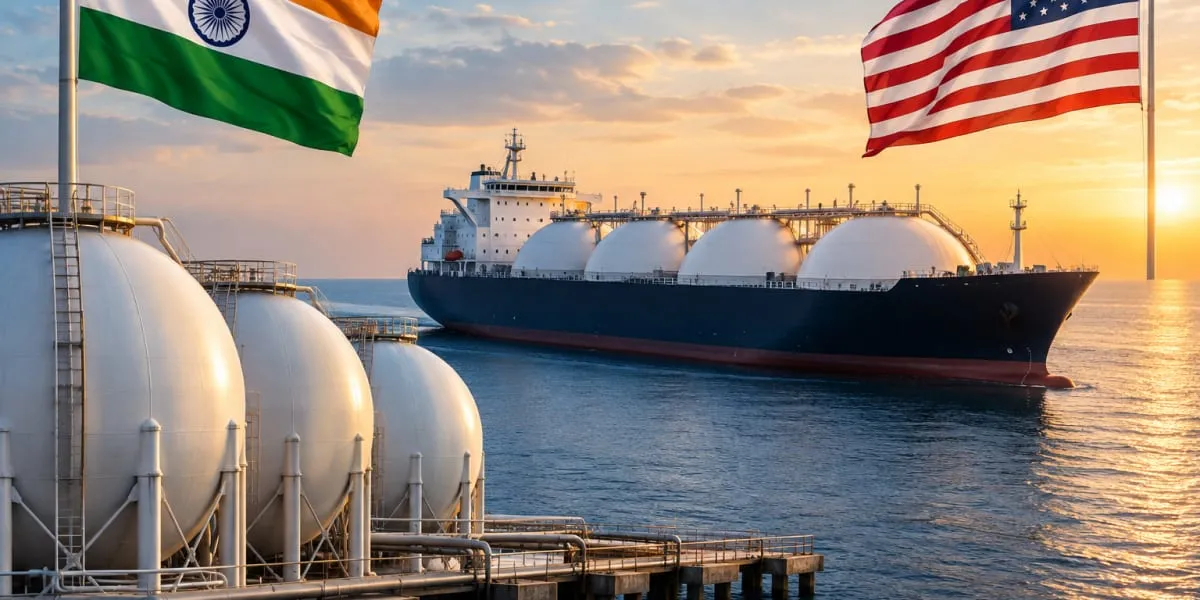
Indian state-run oil companies have awarded a joint tender to Saudi Aramco, Chevron, TotalEnergies Trading SA (Totsa) and Vitol for the import of about 2.75 mn t of US liquefied petroleum gas (LPG) in 2027. The contracts are intended to diversify supplies and reduce India’s reliance on the Middle East. Indian Oil, Bharat Petroleum and Hindustan Petroleum floated the tender in September. They sought four very large gas carrier (VLGC) cargoes each month on a delivered basis and one cargo each month on a free-on-board basis from the US. A VLGC typically carries about 46,000 t of LPG, which cons..

Advertisement

Subscribe to Our Newsletter

Get daily newsletters around different themes from Construction world.

STAY CONNECTED

Advertisement

SPECIAL OFFER
QR Code