Air India and Airbus to Build India's First Corporate SAF Programme
AVIATION & AIRPORTS

Air India and Airbus to Build India's First Corporate SAF Programme

Air India and Airbus have partnered to develop a framework for India’s first voluntary corporate Sustainable Aviation Fuel (SAF) programme. The feasibility study will examine how businesses can reduce lifecycle emissions associated with air travel by voluntarily supporting the procurement and use of SAF.

Jürgen Westermeier, President and Managing Director of Airbus India and South Asia, and P Balaji, Group Head of Governance, Risk and Compliance and Corporate Affairs at Air India, signed the Feasibility Study Agreement. The signing took place in the presence of Rammohan Naidu Kinjarapu, Minister of Civil Aviation.

The proposed framework is based on the voluntary procurement and use of SAF on selected routes. It would allow Air India to offer Scope 3 SAF certificates (SAFc) to eligible corporate customers, enabling them to account for emissions reductions by comparing the lifecycle carbon footprint of SAF with that of conventional jet fuel under recognised global standards.

Verified savings under the programme would help participating organisations monitor progress towards the 2050 net-zero carbon emissions target set by the Air Transport Action Group, the International Air Transport Association and the International Civil Aviation Organisation. The study is intended to create a scalable model that encourages participation across sectors and supports the development of a domestic SAF ecosystem.

The initiative forms part of wider efforts by both companies to reduce aviation’s environmental impact through fleet modernisation, fuel-efficient aircraft design, operational improvements and market-based measures. Air India has ordered 600 new aircraft, including 350 from Airbus, and is expanding non-stop city-pairs. The airline has also upgraded route-planning software, improved coordination with air traffic management, reduced single-use plastics and adopted lighter cabin equipment. Other measures include regular engine and airframe washing, single-engine taxiing and autonomous electric vehicle towing, alongside the use of renewable or waste-derived fuels certified under schemes such as the International Civil Aviation Organisation’s CORSIA and the European Union’s Renewable Energy Directive.

Air India and Airbus have partnered to develop a framework for India’s first voluntary corporate Sustainable Aviation Fuel (SAF) programme. The feasibility study will examine how businesses can reduce lifecycle emissions associated with air travel by voluntarily supporting the procurement and use of SAF. Jürgen Westermeier, President and Managing Director of Airbus India and South Asia, and P Balaji, Group Head of Governance, Risk and Compliance and Corporate Affairs at Air India, signed the Feasibility Study Agreement. The signing took place in the presence of Rammohan Naidu Kinjarapu, Minister of Civil Aviation. The proposed framework is based on the voluntary procurement and use of SAF on selected routes. It would allow Air India to offer Scope 3 SAF certificates (SAFc) to eligible corporate customers, enabling them to account for emissions reductions by comparing the lifecycle carbon footprint of SAF with that of conventional jet fuel under recognised global standards. Verified savings under the programme would help participating organisations monitor progress towards the 2050 net-zero carbon emissions target set by the Air Transport Action Group, the International Air Transport Association and the International Civil Aviation Organisation. The study is intended to create a scalable model that encourages participation across sectors and supports the development of a domestic SAF ecosystem. The initiative forms part of wider efforts by both companies to reduce aviation’s environmental impact through fleet modernisation, fuel-efficient aircraft design, operational improvements and market-based measures. Air India has ordered 600 new aircraft, including 350 from Airbus, and is expanding non-stop city-pairs. The airline has also upgraded route-planning software, improved coordination with air traffic management, reduced single-use plastics and adopted lighter cabin equipment. Other measures include regular engine and airframe washing, single-engine taxiing and autonomous electric vehicle towing, alongside the use of renewable or waste-derived fuels certified under schemes such as the International Civil Aviation Organisation’s CORSIA and the European Union’s Renewable Energy Directive.

Related Stories

Gold Stories

Next Story
Infrastructure Urban

NDMC Approves Five Prakriti Cafés in Three Delhi Parks

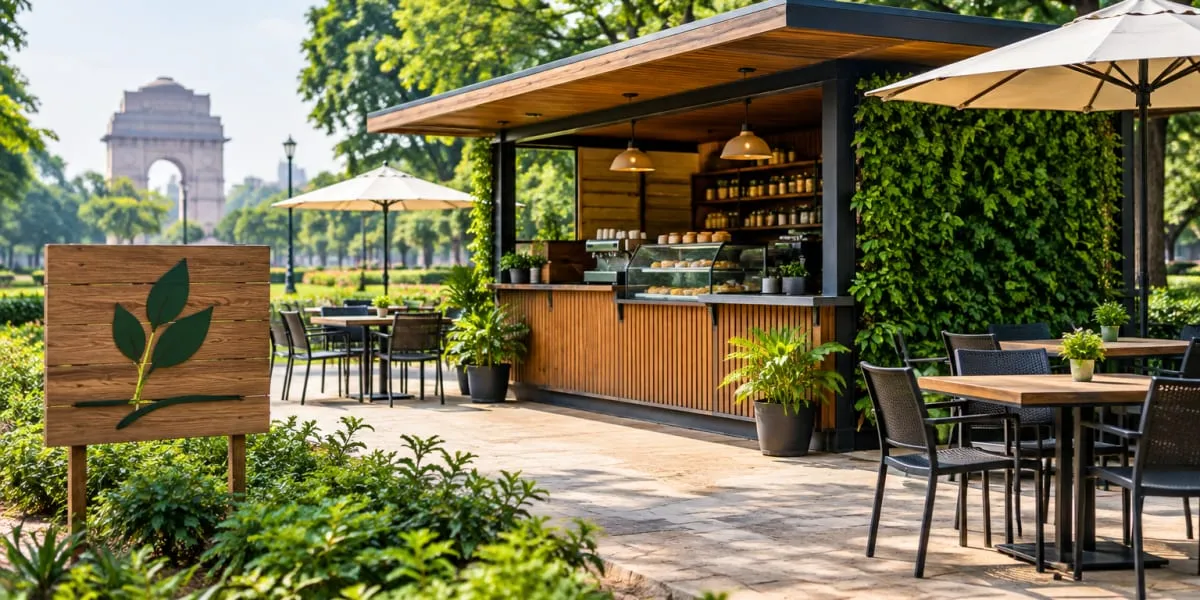
The New Delhi Municipal Council (NDMC) approved the setting up of five Prakriti Cafés across three prominent parks in the capital during its council meeting on Tuesday. The locations include Lodhi Garden, Nehru Park and BRICS Garden on Shanti Path. Two cafés will be developed in Lodhi Garden, while two others will come up in Nehru Park. The remaining café is planned for BRICS Garden. The council granted in-principle approval to explore the project under the Build-Operate-Transfer (BOT) model. Under the proposed arrangement, the selected agency will develop the cafés at its own cost and man..

Advertisement

Subscribe to Our Newsletter

Get daily newsletters around different themes from Construction world.

STAY CONNECTED

Advertisement

SPECIAL OFFER
QR Code