Gurdaspur-Jammu Pipeline Nears Completion as J&K Fast-Tracks CGD
ECONOMY & POLICY

Gurdaspur-Jammu Pipeline Nears Completion as J&K Fast-Tracks CGD

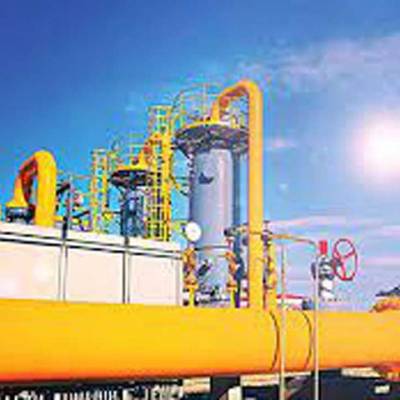
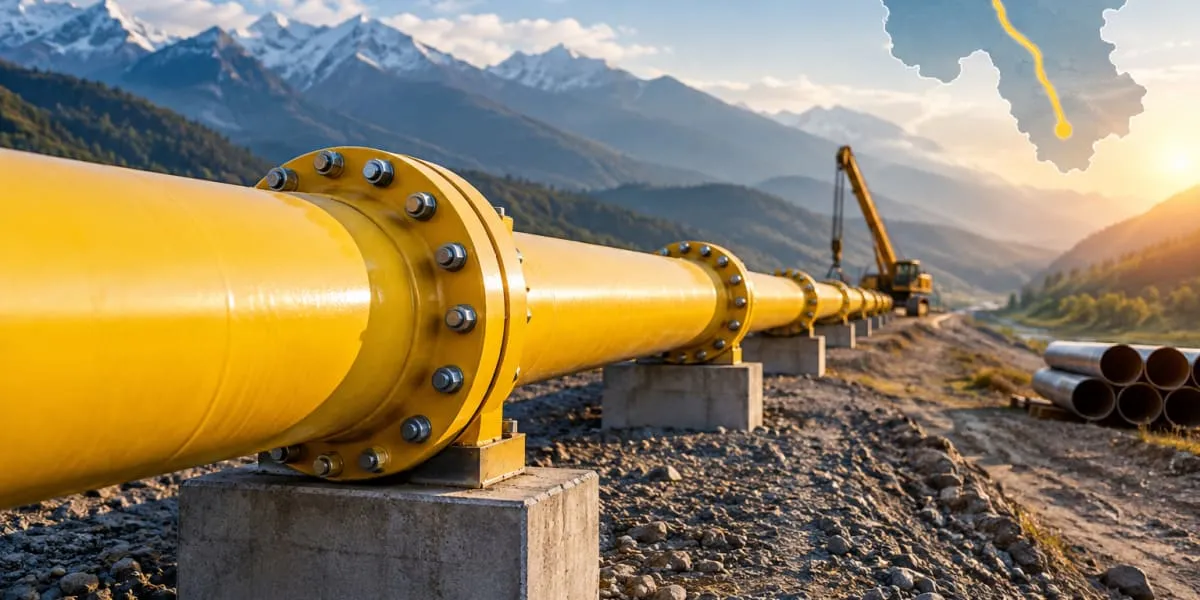
The Jammu and Kashmir Government has moved to accelerate the downstream City Gas Distribution (CGD) network as the Gurdaspur-Jammu Natural Gas Pipeline enters its final construction phase. The transmission project, being executed by GAIL (India), has reached 92.70 per cent completion and has a revised deadline of December 2026, according to the latest Government of India report.

The pipeline project has an estimated cost of Rs. 5.22 bn and is intended to bring natural gas into the Jammu region. Indian Oil is simultaneously implementing a Rs. 5.38 bn CGD project to connect households, commercial establishments and industries across five districts of Jammu division, but progress on the downstream network has remained limited.

To address administrative and infrastructure-related bottlenecks, the government has constituted district-level committees for Jammu, Samba and Kathua. Headed by the respective District Development Commissioners, the committees will coordinate with government departments, urban local bodies, industrial agencies and oil marketing companies or CGD entities to support timely project execution.

The panels will oversee single-window clearances, including permissions for road cutting and other works, and facilitate the planned shifting of utilities such as water, electricity and sewerage infrastructure. They will also monitor CGD implementation, identify interdepartmental issues and convene periodic meetings to resolve delays and support the extension of gas infrastructure to end consumers.

The committees have further been tasked with preparing and finalising master plans for housing colonies, commercial areas and industrial estates, including facilities under the Jammu and Kashmir Small Scale Industries Development Corporation and Jammu and Kashmir State Industrial Development Corporation. The planned network will provide Piped Natural Gas for household cooking, support fuel supplies for commercial and industrial users, and enable Compressed Natural Gas infrastructure for vehicles. The administration’s challenge will be to convert improved coordination into faster last-mile execution once the transmission pipeline becomes operational.

The Jammu and Kashmir Government has moved to accelerate the downstream City Gas Distribution (CGD) network as the Gurdaspur-Jammu Natural Gas Pipeline enters its final construction phase. The transmission project, being executed by GAIL (India), has reached 92.70 per cent completion and has a revised deadline of December 2026, according to the latest Government of India report. The pipeline project has an estimated cost of Rs. 5.22 bn and is intended to bring natural gas into the Jammu region. Indian Oil is simultaneously implementing a Rs. 5.38 bn CGD project to connect households, commercial establishments and industries across five districts of Jammu division, but progress on the downstream network has remained limited. To address administrative and infrastructure-related bottlenecks, the government has constituted district-level committees for Jammu, Samba and Kathua. Headed by the respective District Development Commissioners, the committees will coordinate with government departments, urban local bodies, industrial agencies and oil marketing companies or CGD entities to support timely project execution. The panels will oversee single-window clearances, including permissions for road cutting and other works, and facilitate the planned shifting of utilities such as water, electricity and sewerage infrastructure. They will also monitor CGD implementation, identify interdepartmental issues and convene periodic meetings to resolve delays and support the extension of gas infrastructure to end consumers. The committees have further been tasked with preparing and finalising master plans for housing colonies, commercial areas and industrial estates, including facilities under the Jammu and Kashmir Small Scale Industries Development Corporation and Jammu and Kashmir State Industrial Development Corporation. The planned network will provide Piped Natural Gas for household cooking, support fuel supplies for commercial and industrial users, and enable Compressed Natural Gas infrastructure for vehicles. The administration’s challenge will be to convert improved coordination into faster last-mile execution once the transmission pipeline becomes operational.

Related Stories

Gold Stories

Next Story
Infrastructure Urban

NDMC Approves Five Prakriti Cafés in Three Delhi Parks

The New Delhi Municipal Council (NDMC) approved the setting up of five Prakriti Cafés across three prominent parks in the capital during its council meeting on Tuesday. The locations include Lodhi Garden, Nehru Park and BRICS Garden on Shanti Path. Two cafés will be developed in Lodhi Garden, while two others will come up in Nehru Park. The remaining café is planned for BRICS Garden. The council granted in-principle approval to explore the project under the Build-Operate-Transfer (BOT) model. Under the proposed arrangement, the selected agency will develop the cafés at its own cost and man..

Next Story
Infrastructure Transport

Air India and Airbus to Build India's First Corporate SAF Programme

Air India and Airbus have partnered to develop a framework for India’s first voluntary corporate Sustainable Aviation Fuel (SAF) programme. The feasibility study will examine how businesses can reduce lifecycle emissions associated with air travel by voluntarily supporting the procurement and use of SAF. Jürgen Westermeier, President and Managing Director of Airbus India and South Asia, and P Balaji, Group Head of Governance, Risk and Compliance and Corporate Affairs at Air India, signed the Feasibility Study Agreement. The signing took place in the presence of Rammohan Naidu Kinjarapu, Min..

Next Story
Infrastructure Energy

Indian Companies to Buy US LPG from Four Firms in 2027

Indian state-run oil companies have awarded a joint tender to Saudi Aramco, Chevron, TotalEnergies Trading SA (Totsa) and Vitol for the import of about 2.75 mn t of US liquefied petroleum gas (LPG) in 2027. The contracts are intended to diversify supplies and reduce India’s reliance on the Middle East. Indian Oil, Bharat Petroleum and Hindustan Petroleum floated the tender in September. They sought four very large gas carrier (VLGC) cargoes each month on a delivered basis and one cargo each month on a free-on-board basis from the US. A VLGC typically carries about 46,000 t of LPG, which cons..

Advertisement

Subscribe to Our Newsletter

Get daily newsletters around different themes from Construction world.

STAY CONNECTED

Advertisement

SPECIAL OFFER
QR Code