JCB India Welcomes PMGSY-III Extension till March 2028
ROADS & HIGHWAYS

JCB India Welcomes PMGSY-III Extension till March 2028

JCB India has welcomed the Government of India’s decision to extend the Pradhan Mantri Gram Sadak Yojana (PMGSY-III) till March 2028, calling it a significant step toward strengthening rural connectivity and improving access to essential services.

The company said the extension reaffirms the government’s focus on enhancing road infrastructure that links villages with growth centres and key services, helping improve everyday mobility, strengthen local economies, and support inclusive development.

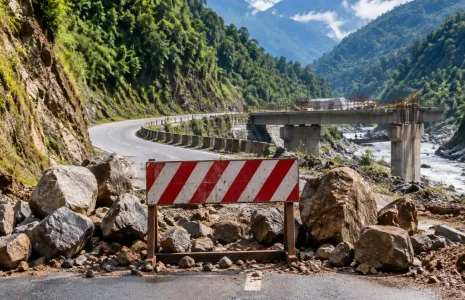
According to JCB India, improved rural road connectivity plays a crucial role in enabling quicker access to hospitals and specialised medical care, ensuring smoother transportation of agricultural produce, and providing easier access to education and employment hubs. The company noted that better roads can reduce delays and losses for farmers and ensure timely support for rural households in emergencies.

JCB India said continued investment in rural infrastructure will create lasting social and economic impact by empowering communities, improving supply chains, and laying the foundation for balanced development across the country.

Commenting on the development, Deepak Shetty, CEO and Managing Director, JCB India, said, “Rural roads shape daily outcomes. They decide how quickly help arrives in an emergency and how livelihoods take root Programmes like PMGSY have a tangible impact on everyday life in rural India.”

He added that improved road infrastructure also strengthens connections between rural populations and urban services, helping reduce inefficiencies such as losses in perishable goods and supporting more stable economic opportunities in underserved regions.

“As India advances towards its Viksit Bharat vision, JCB welcomes the extension of PMGSY-III and stands firmly with the Government in strengthening last-mile connectivity to drive inclusive and sustainable growth,” Shetty said.

PMGSY-III is aimed at improving rural road networks and enhancing connectivity to promote economic development and social progress in remote regions.

JCB India has welcomed the Government of India’s decision to extend the Pradhan Mantri Gram Sadak Yojana (PMGSY-III) till March 2028, calling it a significant step toward strengthening rural connectivity and improving access to essential services.The company said the extension reaffirms the government’s focus on enhancing road infrastructure that links villages with growth centres and key services, helping improve everyday mobility, strengthen local economies, and support inclusive development.According to JCB India, improved rural road connectivity plays a crucial role in enabling quicker access to hospitals and specialised medical care, ensuring smoother transportation of agricultural produce, and providing easier access to education and employment hubs. The company noted that better roads can reduce delays and losses for farmers and ensure timely support for rural households in emergencies.JCB India said continued investment in rural infrastructure will create lasting social and economic impact by empowering communities, improving supply chains, and laying the foundation for balanced development across the country.Commenting on the development, Deepak Shetty, CEO and Managing Director, JCB India, said, “Rural roads shape daily outcomes. They decide how quickly help arrives in an emergency and how livelihoods take root Programmes like PMGSY have a tangible impact on everyday life in rural India.”He added that improved road infrastructure also strengthens connections between rural populations and urban services, helping reduce inefficiencies such as losses in perishable goods and supporting more stable economic opportunities in underserved regions.“As India advances towards its Viksit Bharat vision, JCB welcomes the extension of PMGSY-III and stands firmly with the Government in strengthening last-mile connectivity to drive inclusive and sustainable growth,” Shetty said.PMGSY-III is aimed at improving rural road networks and enhancing connectivity to promote economic development and social progress in remote regions.

Next Story
Infrastructure Transport

MMRDA Removes 1.14 lakh m of Metro Barricades

In a bid to ease congestion and improve urban mobility during monsoon, MMRDA has undertaken one of the largest coordinated barricade removal and monsoon preparedness drives across its ongoing metro and infrastructure projects.With substantial progress achieved in viaduct and structural works across multiple metro corridors, barricades from completed stretches beneath metro viaducts are being systematically removed, restoring maximum possible road space before the monsoon. Wider carriageways across key arterial roads are expected to improve traffic flow, reduce congestion, support better rainwa..

Next Story
Infrastructure Transport

Pune Division to Remove All Diamond Crossings by Year-End

The Pune railway division has announced plans to remove all 16 diamond crossings by the end of 2026 as part of a major yard remodelling project following the derailment of a Vande Bharat Express at Pune Junction on April 27. Railway authorities said the replacements aim to improve safety and streamline train operations across the busy station. The decision followed a Central Railway finding that the accident involved a non-standard diamond crossing and highlighted the need for replacement. Regular maintenance of existing crossings will continue until the replacement work is completed. Official..

Next Story
Infrastructure Urban

Goa Declares 80 Million Square Metres No Development Zone

The Goa state government has declared 80 million square metres (mn) of land a no development zone, designating the area as protected from new construction. The notification reclassifies tracts across the state under a no development category for planning and regulatory purposes. The declaration signals a formal halt to new building permits within the defined zone. Authorities indicated that maps will be issued to show broad boundaries while detailed surveys will refine precise limits. The move transfers responsibility for enforcement to local planning authorities and relevant departments, whic..

Advertisement

Subscribe to Our Newsletter

Get daily newsletters around different themes from Construction world.

STAY CONNECTED

Advertisement

Advertisement

Advertisement