


J&K Government Notifies Common Duct Policy 2026
ROADS & HIGHWAYS

J&K Government Notifies Common Duct Policy 2026

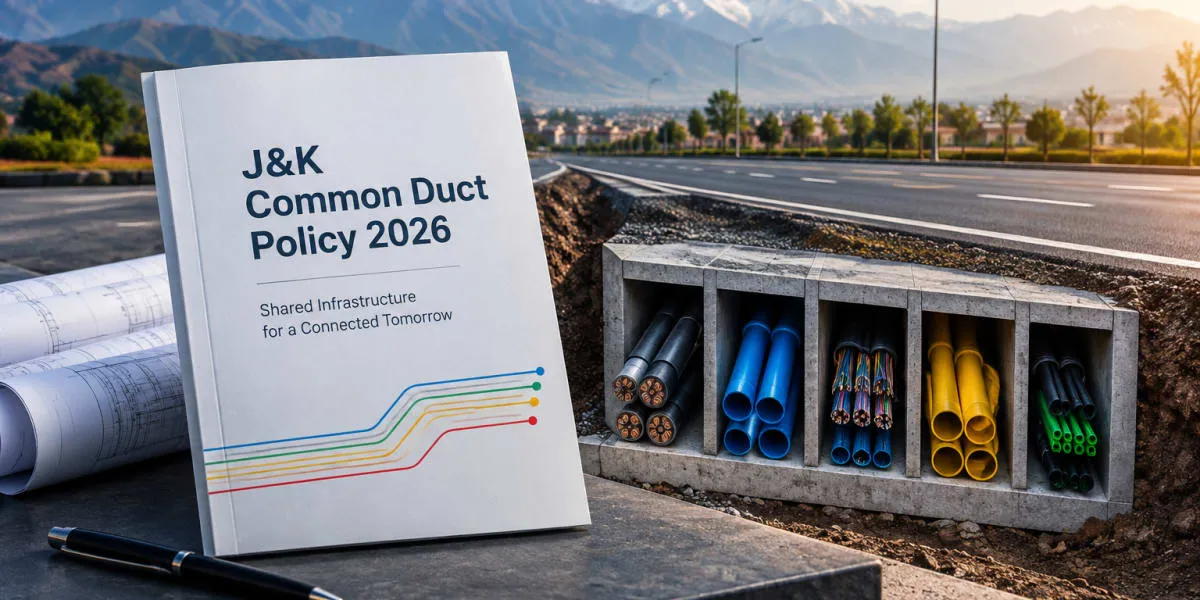
The Jammu and Kashmir government has notified the Jammu and Kashmir Common Duct Policy 2026, creating a framework for shared underground corridors for power, water, telecommunications, gas and digital networks. The policy was approved by the Council of Ministers and issued through Government Order No. 199-JK(HUD) of 2026.

The policy requires common ducts to be integrated into the design of new roads and provides for phased retrofitting of high-traffic existing roads. It also introduces single-window Right of Way clearances, cost-sharing arrangements among utility providers and digital asset mapping through the Call Before You Dig platform.

The government said the framework is intended to prevent repeated excavation of completed roads by different agencies installing or repairing separate utility lines. Shared conduits, ducts and cable pathways can accommodate electricity cables, telecom and fibre lines, water pipes, gas pipelines and sewage systems within a unified underground structure.

The arrangement is also expected to reduce capital and operational expenditure by allowing providers to share civil works and infrastructure. It provides for access to shared ducts on a transparent, non-exclusive and non-discriminatory basis, allowing multiple service providers to use the corridors under common rules.

The policy is aimed at reducing traffic disruption, dust, noise and roadside accidents associated with trenching. It also seeks to limit visual clutter caused by overhead wires and poles, support cleaner cityscapes and improve long-term urban planning for residential, industrial and housing projects across the union territory.

The Jammu and Kashmir government has notified the Jammu and Kashmir Common Duct Policy 2026, creating a framework for shared underground corridors for power, water, telecommunications, gas and digital networks. The policy was approved by the Council of Ministers and issued through Government Order No. 199-JK(HUD) of 2026. The policy requires common ducts to be integrated into the design of new roads and provides for phased retrofitting of high-traffic existing roads. It also introduces single-window Right of Way clearances, cost-sharing arrangements among utility providers and digital asset mapping through the Call Before You Dig platform. The government said the framework is intended to prevent repeated excavation of completed roads by different agencies installing or repairing separate utility lines. Shared conduits, ducts and cable pathways can accommodate electricity cables, telecom and fibre lines, water pipes, gas pipelines and sewage systems within a unified underground structure. The arrangement is also expected to reduce capital and operational expenditure by allowing providers to share civil works and infrastructure. It provides for access to shared ducts on a transparent, non-exclusive and non-discriminatory basis, allowing multiple service providers to use the corridors under common rules. The policy is aimed at reducing traffic disruption, dust, noise and roadside accidents associated with trenching. It also seeks to limit visual clutter caused by overhead wires and poles, support cleaner cityscapes and improve long-term urban planning for residential, industrial and housing projects across the union territory.

Related Stories

Gold Stories

Next Story
Technology

Where Infrastructure Meets Intelligence: Inside Bentley's Year inc

Oct 28, 2026  @Tanveer PadodeA first-hand account of Bentley’s 2026 awards, where AI, digital twins and engineering innovation are reshaping infrastructure delivery.- By Tanveer Padode, CEO, IMPACCT: A first-hand account of Bentley’s 2026 awards, where AI, digital twins and engineering innovation are reshaping infrastructure delivery.Two days in SingaporeConstruction is won or lost in two places: how a project is designed and how it is delivered. Technology has promised to improve both for years, and the question I carried into Bentley's Year in Infrastructure, held at the Fairmont Si..

Next Story
Infrastructure Transport

Vaishnaw Inaugurates Two Rail Sections in Madhya Pradesh

Railway Minister Ashwini Vaishnaw on October 24 inaugurated the Satna-Devendranagar and Rewa-Churhat rail sections under the Lalitpur-Singrauli Railway Project in Madhya Pradesh. He also flagged off the new Devendranagar-Churhat passenger train service through video conferencing. Chief Minister Dr Mohan Yadav attended the event. The new Rewa-Churhat railway line, which extends approximately 65 km, was built at a cost of over Rs. 10 bn. The 53 km Satna-Devendranagar line was constructed at a cost of over Rs. 8 bn. The passenger service is expected to provide improved rail access to residents in..
Next Story
Infrastructure Transport

Railways Minister to Inaugurate New Rail Sections Covering 118 km

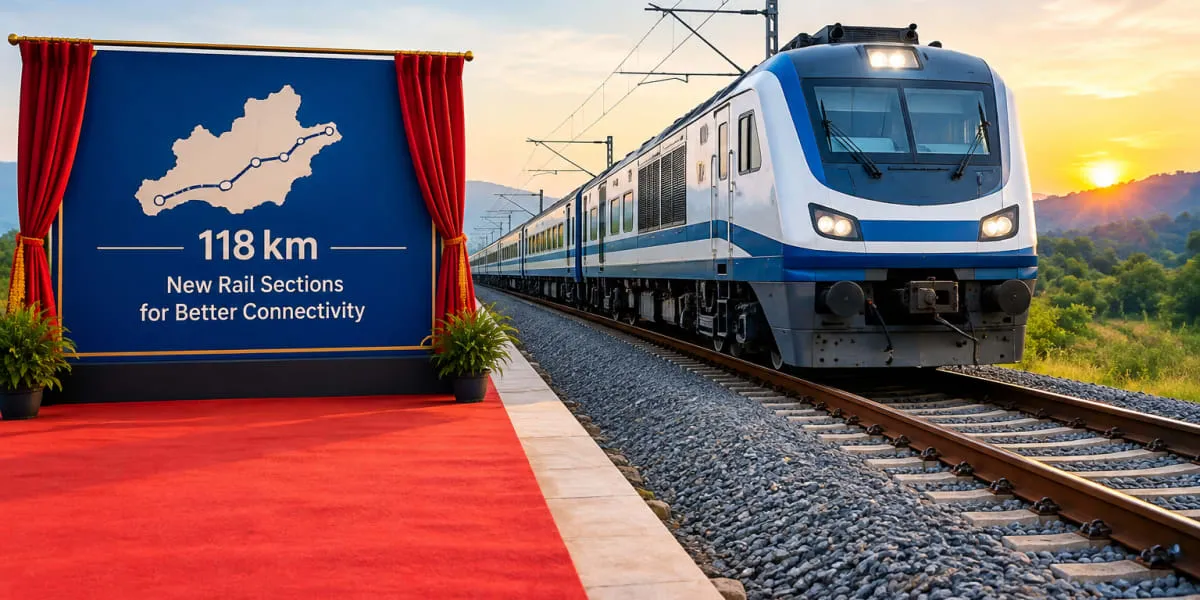
Railways Minister Ashwini Vaishnaw will inaugurate the Satna-Devendra Nagar and Rewa-Churhat rail sections in Madhya Pradesh on October 24. The two sections have a combined length of 118 km and are intended to improve passenger and freight connectivity across the region. Vaishnaw will also flag off a new train service between Devendra Nagar and Churhat. Madhya Pradesh Chief Minister Mohan Yadav will attend the inauguration programme, according to information released by the Ministry of Railways. The 53-km Satna-Devendra Nagar section is expected to improve rail access to Satna, Nagod, Devendra..

Advertisement

Subscribe to Our Newsletter

Get daily newsletters around different themes from Construction world.

STAY CONNECTED

Advertisement

SPECIAL OFFER
QR Code