Kempegowda Tower Poses Heritage Hitch To Tunnel Road Project
ROADS & HIGHWAYS

Kempegowda Tower Poses Heritage Hitch To Tunnel Road Project

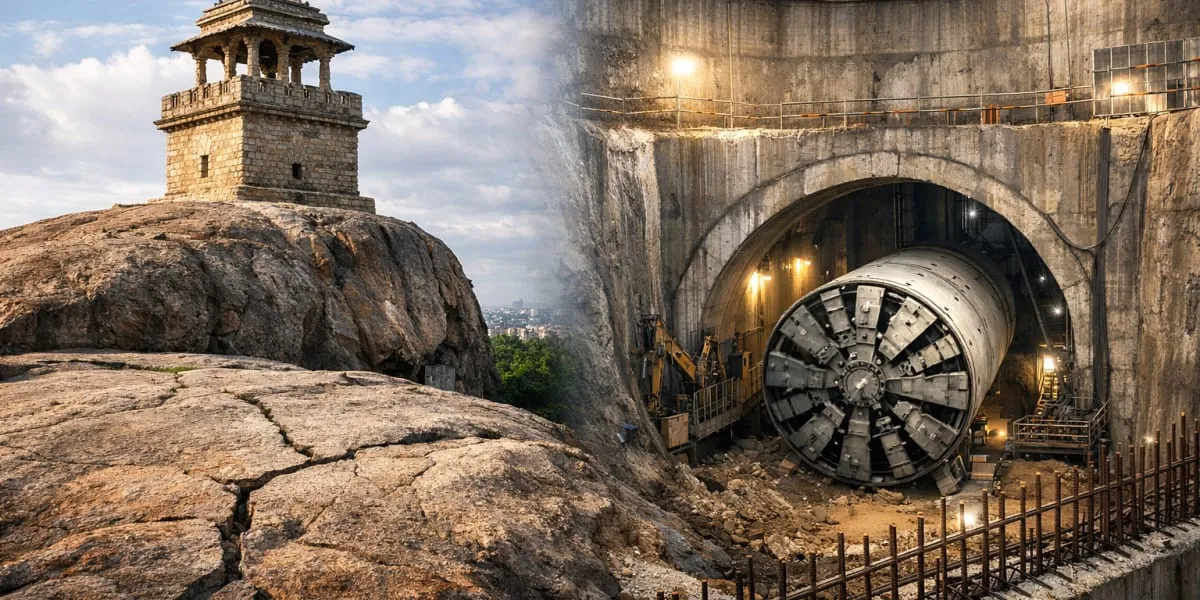
The Geological Survey of India expert committee has warned that ramps and the tunnel boring machine shaft planned close to Lalbagh rock and Kempegowda watchtower could redistribute stresses and induce small displacements or cracking in the rock mass, potentially causing long-term structural damage, according to a 27-page report. The committee noted that tunnelling and excavation beneath or adjacent to the rock require assessment because of these geotechnical risks.

On page 18 the committee said the proximity of the historic Kempegowda watchtower on the crest of the monument amplifies the concern and that displacements of the rock could affect both the geotechnical and structural stability of the monument rock and heritage landmark. The watchtower is a four-century-old landmark with historical accounts dating it to 1537 while some sources place its construction in 1606, and Karnataka Tourism describes it as a 16th-century structure built by Kempegowda I. Any suggestion that a major road project could threaten a landmark bearing Kempegowda's name could prove politically sensitive for the state government and for Chief Minister D K Shivakumar, who has announced initiatives to honour the founder in the last three years.

The GSI stopped short of saying the tower will be damaged but raised concerns about risks posed by vibration, excavation, stress redistribution and possible fracturing, particularly because of the tower's location atop the monument. The committee recommended an independent technical review of the location of TBM Shaft four to maximise its setback from the protected monument before construction begins and called for additional geotechnical investigations, noting groundwater drawdown and construction vibration have implications for the stability of the National Geological Monument.

Historian Suresh Moona described the Kempegowda tower as a complex structure with a significant historical background linked to Bengaluru's culture and heritage, and he said the towers were built for security and are situated on elevated regions by highways, becoming an insignia of the Bengaluru City Corporation. Authorities will need to balance infrastructure development with conservation and ensure reviews and studies are completed before tunnelling proceeds to mitigate the identified risks.

The Geological Survey of India expert committee has warned that ramps and the tunnel boring machine shaft planned close to Lalbagh rock and Kempegowda watchtower could redistribute stresses and induce small displacements or cracking in the rock mass, potentially causing long-term structural damage, according to a 27-page report. The committee noted that tunnelling and excavation beneath or adjacent to the rock require assessment because of these geotechnical risks. On page 18 the committee said the proximity of the historic Kempegowda watchtower on the crest of the monument amplifies the concern and that displacements of the rock could affect both the geotechnical and structural stability of the monument rock and heritage landmark. The watchtower is a four-century-old landmark with historical accounts dating it to 1537 while some sources place its construction in 1606, and Karnataka Tourism describes it as a 16th-century structure built by Kempegowda I. Any suggestion that a major road project could threaten a landmark bearing Kempegowda's name could prove politically sensitive for the state government and for Chief Minister D K Shivakumar, who has announced initiatives to honour the founder in the last three years. The GSI stopped short of saying the tower will be damaged but raised concerns about risks posed by vibration, excavation, stress redistribution and possible fracturing, particularly because of the tower's location atop the monument. The committee recommended an independent technical review of the location of TBM Shaft four to maximise its setback from the protected monument before construction begins and called for additional geotechnical investigations, noting groundwater drawdown and construction vibration have implications for the stability of the National Geological Monument. Historian Suresh Moona described the Kempegowda tower as a complex structure with a significant historical background linked to Bengaluru's culture and heritage, and he said the towers were built for security and are situated on elevated regions by highways, becoming an insignia of the Bengaluru City Corporation. Authorities will need to balance infrastructure development with conservation and ensure reviews and studies are completed before tunnelling proceeds to mitigate the identified risks.

Related Stories

Gold Stories

Next Story
Infrastructure Energy

Vedanta Secures Two Offshore Blocks in KG Basin Under DSF IV

Vedanta Oil and Gas has secured two offshore blocks in the Krishna Godavari (KG) Basin under the Government of India's Discovered Small Field (DSF) IV bidding round, strengthening its exploration and production portfolio along India's east coast.The newly awarded assets include the shallow water block KG/OSDSF/G1/2025 and the deepwater block KG/DWDSF/GD10/2025. The acquisition forms part of Vedanta's strategy to expand its offshore operations and explore India's untapped hydrocarbon resources through advanced technologies and efficient project execution.The blocks were awarded at a contract si..

Next Story
Resources

Hindustan Zinc's Sakhi Enterprise Income Grows 43%

Hindustan Zinc's Sakhi Microenterprise initiative has recorded a 43 per cent year-on-year increase in collective income, rising from Rs 2.3 million in FY26 to Rs 3.28 million, according to the company. The initiative, operated through Sakhi Utpadan Samiti, currently engages 426 women in income-generating activities across multiple production units.The programme aims to promote financial independence by helping rural women develop entrepreneurial skills and establish sustainable livelihoods. One of its beneficiaries, Manju Devi, who previously depended on seasonal agricultural work, now operate..
Next Story
Technology

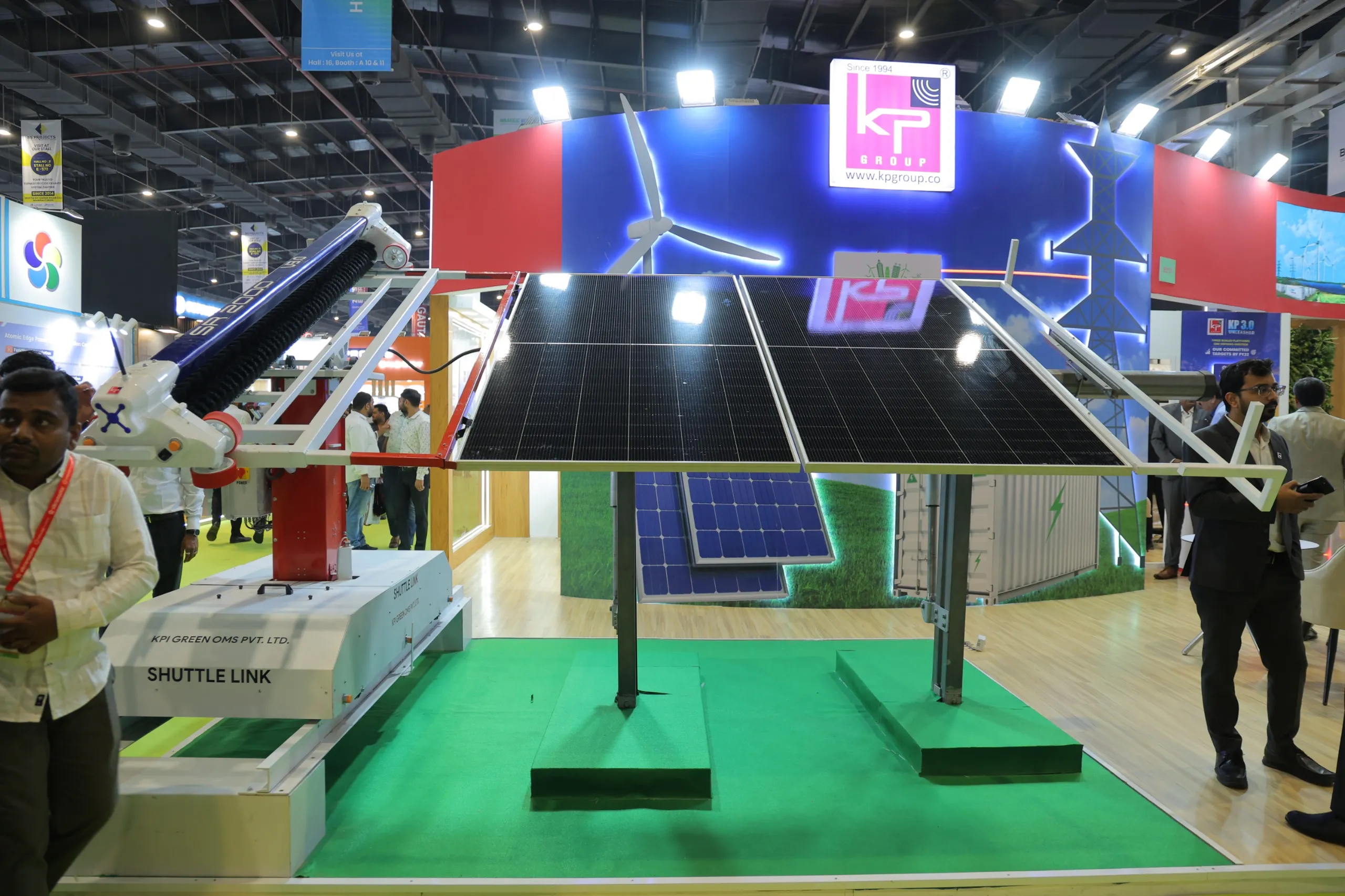
KP Group Launches Waterless Solar Cleaning Robot at REI Expo

KP Group's KPI Green OMS has launched the SR 2000 V3.0, a waterless robotic solar panel cleaning system designed for single-axis tracker and fixed-tilt solar power plants, at the Renewable Energy India (REI) Expo 2026 in Greater Noida. The robot aims to improve solar plant efficiency while reducing water consumption and maintenance requirements.Designed to address dust accumulation on solar modules, particularly in dry and remote locations, the SR 2000 V3.0 uses a UV-resistant polybutylene terephthalate (PBT) brush operating at 130 rpm. According to the company, the system achieves a cleaning ..

Advertisement

Subscribe to Our Newsletter

Get daily newsletters around different themes from Construction world.

STAY CONNECTED

Advertisement

SPECIAL OFFER
QR Code