Government Plans to Privatise 11 Airports Through Five Groups
ECONOMY & POLICY

Government Plans to Privatise 11 Airports Through Five Groups

The Centre is preparing to bring 11 airports under private management to expand India’s aviation infrastructure and attract fresh investment. The proposed exercise covers airports including Varanasi, Amritsar, Raipur, Bhubaneswar and Tiruchirappalli, with bidding scheduled to begin by December 2026 and transactions targeted for completion by the end of the 2026-27 financial year.

The Airports Authority of India (AAI) plans to offer the facilities through five groups rather than as individual assets. The proposed structure would pair smaller airports with larger facilities that have stronger commercial prospects, improving the appeal of regional airports to private operators. The facilities would be offered under 50-year lease agreements.

The planned groups would combine Varanasi with Gaya and Kushinagar, Amritsar with Kangra, Bhubaneswar with Hubballi, Raipur with Aurangabad, and Tiruchirappalli with Tirupati. Investors would bid for these clusters and take responsibility for managing and developing the airports within each group.

The bundled model is intended to address the difficulty smaller airports face in attracting private capital because of lower passenger volumes and limited commercial opportunities. By combining them with airports offering stronger revenue potential, the government hopes to create financially viable packages while supporting wider regional aviation development.

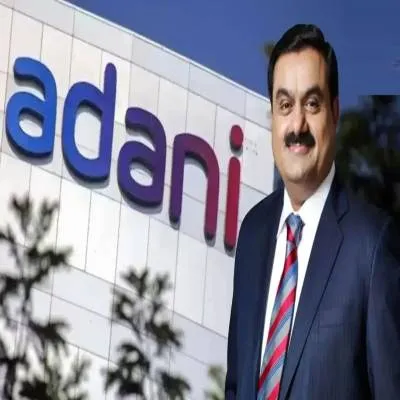
The government is also considering limits on the number of packages that an individual bidder can acquire, aiming to prevent excessive concentration of airport infrastructure ownership. Adani Group and GMR Group are established private airport operators, while JSW Group is among the business groups reportedly interested in airport assets.

Investor outreach is planned through roadshows in Mumbai, Dubai and Singapore. The events would present the proposed packages, explain the bidding framework and gather feedback from Indian companies, financial institutions, overseas infrastructure funds and sovereign wealth funds. The final bidding conditions, lease terms and investor response will determine how the packages are distributed, with completion targeted for March 2027.

The Centre is preparing to bring 11 airports under private management to expand India’s aviation infrastructure and attract fresh investment. The proposed exercise covers airports including Varanasi, Amritsar, Raipur, Bhubaneswar and Tiruchirappalli, with bidding scheduled to begin by December 2026 and transactions targeted for completion by the end of the 2026-27 financial year. The Airports Authority of India (AAI) plans to offer the facilities through five groups rather than as individual assets. The proposed structure would pair smaller airports with larger facilities that have stronger commercial prospects, improving the appeal of regional airports to private operators. The facilities would be offered under 50-year lease agreements. The planned groups would combine Varanasi with Gaya and Kushinagar, Amritsar with Kangra, Bhubaneswar with Hubballi, Raipur with Aurangabad, and Tiruchirappalli with Tirupati. Investors would bid for these clusters and take responsibility for managing and developing the airports within each group. The bundled model is intended to address the difficulty smaller airports face in attracting private capital because of lower passenger volumes and limited commercial opportunities. By combining them with airports offering stronger revenue potential, the government hopes to create financially viable packages while supporting wider regional aviation development. The government is also considering limits on the number of packages that an individual bidder can acquire, aiming to prevent excessive concentration of airport infrastructure ownership. Adani Group and GMR Group are established private airport operators, while JSW Group is among the business groups reportedly interested in airport assets. Investor outreach is planned through roadshows in Mumbai, Dubai and Singapore. The events would present the proposed packages, explain the bidding framework and gather feedback from Indian companies, financial institutions, overseas infrastructure funds and sovereign wealth funds. The final bidding conditions, lease terms and investor response will determine how the packages are distributed, with completion targeted for March 2027.

Related Stories

Gold Stories

Next Story
Real Estate

Landmark Group plans Rs 150 billion NCR expansion

Landmark Group has announced expansion plans across two real estate projects in the National Capital Region (NCR), with a combined estimated sales potential of Rs 150 billion. The projects include Landmark One, a 2.1 million sq ft corporate office development on Golf Course Extension Road in Gurugram, and a proposed integrated hospitality, commercial and residential development on Dwarka Expressway.Landmark One has an estimated sales value of Rs 40 billion. The project involves an estimated construction investment of Rs 10 billion, apart from the underlying land, currently valued at around Rs ..
Next Story
Real Estate

RMZ entities secure 5-Star ratings in GRESB 2026

RMZ has been recognised as a Global and Regional Sector Leader in the 2026 Global Real Estate Sustainability Benchmark (GRESB) Real Estate Development Assessment, with three of its entities scoring 99.6 out of 100. RMZ Nexus LLP, Millenia Realtors Private Limited and Infralogix LLP secured 5-Star ratings in their respective categories across the Office and Industrial sectors.In the 2026 Development Benchmark, RMZ Nexus LLP and Millenia Realtors Private Limited were named Sector Leaders in the Office and Office Non-Listed categories in Asia. Infralogix LLP received the distinction in the Indust..

Next Story
Products

Schneider Electric deploys smart building systems at Jupiter Hospitals

Schneider Electric has partnered with Jupiter Hospitals to deploy connected building technologies aimed at improving energy efficiency, patient comfort and operational performance across its hospital campus. The deployment of its EcoStruxure Building Operation platform and SpaceLogic thermostats is helping the hospital achieve energy savings of up to 28 per cent, according to the company.With heating, ventilation and air-conditioning (HVAC) systems accounting for nearly 60 per cent of the hospital's total energy consumption, improving efficiency while maintaining the conditions required for pa..

Advertisement

Subscribe to Our Newsletter

Get daily newsletters around different themes from Construction world.

STAY CONNECTED

Advertisement

SPECIAL OFFER
QR Code