SC Questions NHAI over Tracking of Parked Highway Vehicles
ROADS & HIGHWAYS

SC Questions NHAI over Tracking of Parked Highway Vehicles

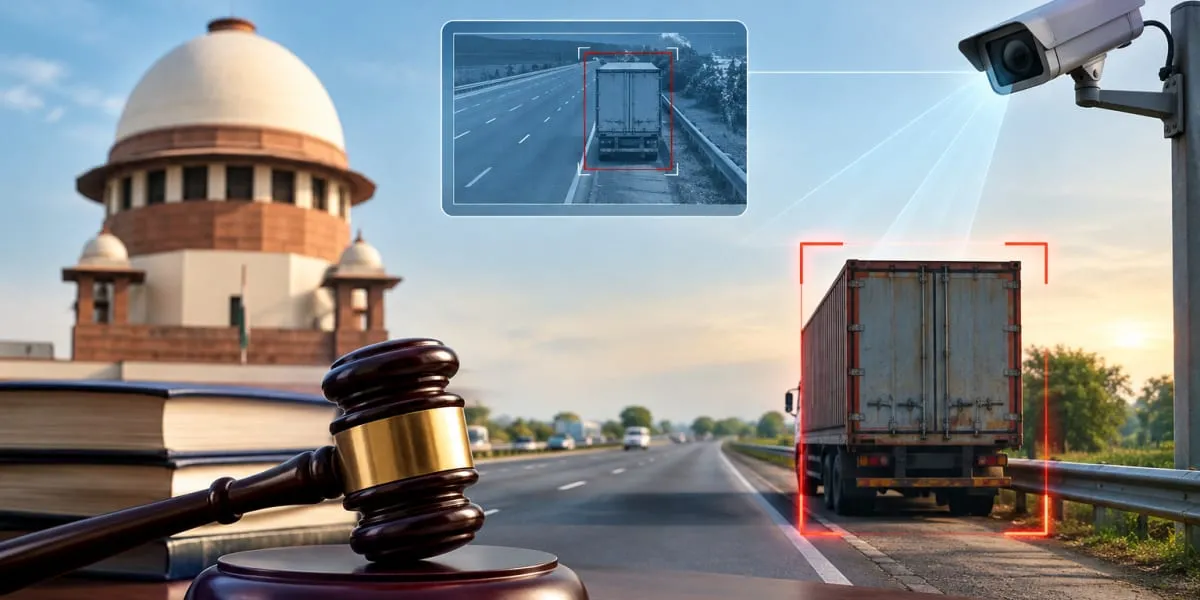
The Supreme Court has questioned the National Highways Authority of India (NHAI) over the absence of an electronic surveillance system to identify and immediately track vehicles parked or left stationary on highways. The court raised the issue amid concerns that such vehicles are contributing to serious road accidents.

A bench comprising Justices Vikram Nath, Augustine George Masih and Sandeep Mehta asked why NHAI had not developed a technology-based mechanism despite having the resources to do so. The issue was raised after amicus curiae ANS Nadkarni referred to recent accidents involving vehicles stopped on highways.

The observation was made during proceedings in a suo motu case arising from the November 2025 accident in Phalodi, Rajasthan. Fifteen people were killed when a tempo traveller collided with a stationary trailer truck on the Bharatmala Highway.

The court was informed that NHAI already conducts highway patrols to identify unauthorised parking. However, the bench indicated that an electronic system could help detect stationary vehicles more quickly and facilitate immediate intervention by the authorities.

The court scheduled the matter for October 13, when it is expected to consider applications concerning the removal of encroachments from highways. It has previously directed that heavy and commercial vehicles must not park or stop on national highway carriageways or paved shoulders, except at designated bays, lay-bys or wayside amenities.

The court has also directed the Centre and NHAI to identify accident blackspots and other critical areas on national highways. It previously noted that national highways account for only around 2 per cent of India’s total road length but are linked to nearly 30 per cent of road fatalities, highlighting the need for stronger monitoring and enforcement measures.

The Supreme Court has questioned the National Highways Authority of India (NHAI) over the absence of an electronic surveillance system to identify and immediately track vehicles parked or left stationary on highways. The court raised the issue amid concerns that such vehicles are contributing to serious road accidents. A bench comprising Justices Vikram Nath, Augustine George Masih and Sandeep Mehta asked why NHAI had not developed a technology-based mechanism despite having the resources to do so. The issue was raised after amicus curiae ANS Nadkarni referred to recent accidents involving vehicles stopped on highways. The observation was made during proceedings in a suo motu case arising from the November 2025 accident in Phalodi, Rajasthan. Fifteen people were killed when a tempo traveller collided with a stationary trailer truck on the Bharatmala Highway. The court was informed that NHAI already conducts highway patrols to identify unauthorised parking. However, the bench indicated that an electronic system could help detect stationary vehicles more quickly and facilitate immediate intervention by the authorities. The court scheduled the matter for October 13, when it is expected to consider applications concerning the removal of encroachments from highways. It has previously directed that heavy and commercial vehicles must not park or stop on national highway carriageways or paved shoulders, except at designated bays, lay-bys or wayside amenities. The court has also directed the Centre and NHAI to identify accident blackspots and other critical areas on national highways. It previously noted that national highways account for only around 2 per cent of India’s total road length but are linked to nearly 30 per cent of road fatalities, highlighting the need for stronger monitoring and enforcement measures.

Related Stories

Gold Stories

Next Story
Technology

Where Infrastructure Meets Intelligence: Inside Bentley's Year inc

Oct 28, 2026  @Tanveer PadodeA first-hand account of Bentley’s 2026 awards, where AI, digital twins and engineering innovation are reshaping infrastructure delivery.- By Tanveer Padode, CEO, IMPACCT: A first-hand account of Bentley’s 2026 awards, where AI, digital twins and engineering innovation are reshaping infrastructure delivery.Two days in SingaporeConstruction is won or lost in two places: how a project is designed and how it is delivered. Technology has promised to improve both for years, and the question I carried into Bentley's Year in Infrastructure, held at the Fairmont Si..
Next Story
Infrastructure Transport

Vaishnaw Inaugurates Two Rail Sections in Madhya Pradesh

Railway Minister Ashwini Vaishnaw on October 24 inaugurated the Satna-Devendranagar and Rewa-Churhat rail sections under the Lalitpur-Singrauli Railway Project in Madhya Pradesh. He also flagged off the new Devendranagar-Churhat passenger train service through video conferencing. Chief Minister Dr Mohan Yadav attended the event. The new Rewa-Churhat railway line, which extends approximately 65 km, was built at a cost of over Rs. 10 bn. The 53 km Satna-Devendranagar line was constructed at a cost of over Rs. 8 bn. The passenger service is expected to provide improved rail access to residents in..
Next Story
Infrastructure Transport

Railways Minister to Inaugurate New Rail Sections Covering 118 km

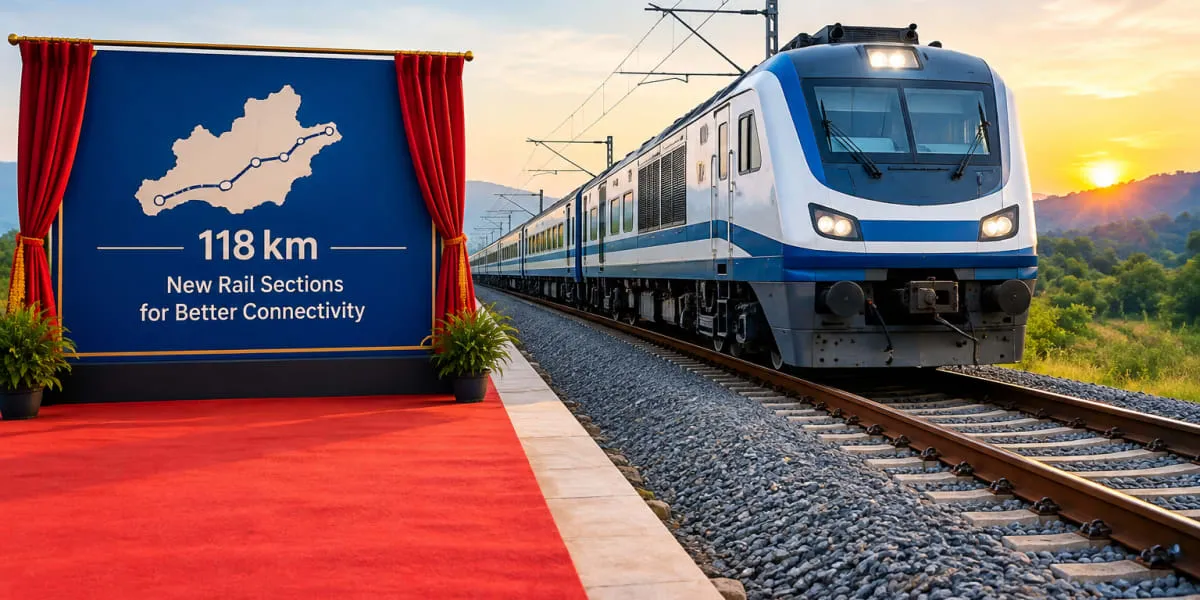
Railways Minister Ashwini Vaishnaw will inaugurate the Satna-Devendra Nagar and Rewa-Churhat rail sections in Madhya Pradesh on October 24. The two sections have a combined length of 118 km and are intended to improve passenger and freight connectivity across the region. Vaishnaw will also flag off a new train service between Devendra Nagar and Churhat. Madhya Pradesh Chief Minister Mohan Yadav will attend the inauguration programme, according to information released by the Ministry of Railways. The 53-km Satna-Devendra Nagar section is expected to improve rail access to Satna, Nagod, Devendra..

Advertisement

Subscribe to Our Newsletter

Get daily newsletters around different themes from Construction world.

STAY CONNECTED

Advertisement

SPECIAL OFFER
QR Code