This is clearly one of the most challenging assignments I have held
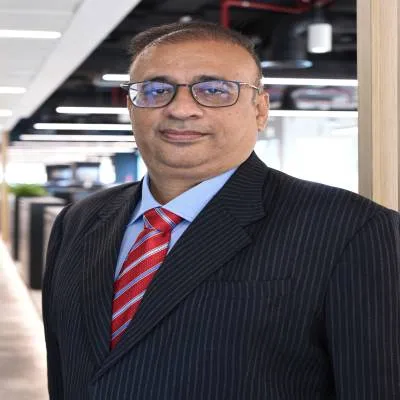
When he walked into the VIP enclosure at the awards venue, the spotlight was on him - he truly owned the space and added effortlessly to the spirit of optimism. Through his successful professional career, Raghav Chandra has been tasked to weather a host of political, apolitical and semi-political issues. (Read profile on page 174) Little wonder then, that his presence resonated so deeply, labelling him a man of action. Yet, while giving his acceptance speech, his humility shone through; he seemed genuinely puzzled on receiving the title of CW Man of the Year 2016.´The highest level of sincerity and integrity defines the basic ethos of the working that I aspire to achieve,´ he told RAHUL KAMAT, as he shared more on NHAI´s plans and his achievements.
NHAI has announced plans to award projects worth Rs.1 lakh crore in the current fiscal. What major factors will help achieve this ambitious goal?
Our intention is clear. NHAI is focused on the target of awarding Rs 1 lakh crore worth of projects by this fiscal. For this financial year, we would be awarding at least 6,000 km of road projects. This clearly suggests that NHAI means business and the same can be embodied with our rigorous project planning, a transparent bidding process, due diligence of every task, etc. In the first place, the scenario was such that stakeholders were reluctant to bid for any road project; however, the scenario has shifted. This is mainly owing to NHAI scrutinising each and every aspect of contracting in a manner that motivates all the participants to come forward and bid.
As a facilitator, we have continued to give confidence to our project developer, contractors and concessionaires that the environment is stable, road contracts are transparent and financially sustainable, and there is seriousness in the agenda to complete our national highway programme. The construction fraternity must understand that NHAI has orchestrated all the confidence in building measures by constantly meeting developers and lenders and, importantly, resolving disputes, so the nation´s building programme does not witness a setback.
What are the complexities involved in NHAI projects today?
On prima facie, the road construction process looks linear; however, each road project has complexities involved such as multiple stakeholders, manpower, evacuation for land acquisition, environment and correct material.
I am not stopping here. The list also includes the Centre and state governments, municipal corporations and gram panchayats. Getting all of them together on a common platform to see reason and appreciate its (the project´s) sensitivities and understand the imperative of road building is a complex undertaking.
What measures are you taking to improve road safety on the national highway stretch?
What we discovered on current national highways stretches is compromise on road design and negligence of road safety measures by stakeholders. The safety of commuters on these stretches is on account of making a road project financially viable. Ergo, we are ensuring all roads are audited (for safety), which has led us to form a consultancy cell for road safety, supported by our in-house experts. Hence, the safety bottleneck will be tackled by these engineering experts.
In addition, we are also identifying black spots on the basis of historical data and analysis. This will permit us to take more preventive steps that will avoid accidents in the near future.
We have identified approximately 350 black spots, of which we have already started functioning on 180 black spots with engineering improvement. It will take another two to three years, as removing black spots is a constant process.
You recently spoke on NHAI´s proposed move to monetise toll-based operational assets. How much do you plan to raise from this project monetisation?
One model through which we raise funds is TOT (Toll-Operate-Transfer), which is a possible model for monetising our road assets. However, other than this, we are raising the required funds through issuing infrastructure bonds, infusing through institutional investor(s), and utilising pension funds, employment provident fund, Life Insurance Corporation, etc. In addition, connecting the international market and, of course, the government´s support line, ie cess funds. So, I would not look at just monetising our road assets as a necessary effort. We are putting in more efforts to identify how we can engage the private sector´s efficiencies (in financial and project execution) for maintaining and operating road projects.
Tell us about the success of the hybrid annuity model (HAM). Is EPC now most preferred for undertaking infrastructural projects? And do we see the phasing out of BOT?
From 2005 to 2014, we have seen the golden days of PPP, but now, it is on a need basis. At present, we are in diversification mode, which means we do not want to purely depend on PPP, but require EPC and HAM to be successful. This will ensure the right project mix for quick delivery of projects to emphasise efficiency and effectiveness rather than cost.
How successful is the new Arbitration Act?
The Act is a positive development for the entire sector. Of course, we had our own variant of arbitration, SAROD, that we have started implementing in NHAI. But we are gradually moving towards the new Act with mutual consent, which includes the third contracting party too. Hence, we are sure that once we implement the new Act, things will speed up further because it is a well-planned legislation and ensures that nobody can fool around and delay proceedings. Things will get streamlined and payments will not remain unchecked.
At present, how many kilometres are achieved per day?
We are constantly improving the amount of work that we are doing at present. It is a huge and complex programme. Apart from statistics, there is greater emphasis on project execution.
I expect that we will achieve 40 per cent more than last year by the end of the financial year.
Can you say with confidence that NHAI has been able to surmount the problem of land acquisition - the biggest worry of any stakeholder?
Although land acquisition has been one of the biggest hurdles for road projects, we have overcome this challenge over the last couple of years. If you ask how, it has been done by setting in place our mechanism and systems and, importantly, the level of coordination with the state government. It has improved significantly, which has resulted in a swift land acquisition process.
Your recent accomplishment includes the challenge of meeting the short timeline in decongesting projects...
The decongestion of cities is something we look upon as a challenge as well as opportunity.
For instance, we have a massive programme for decongesting Delhi. We have the Eastern-Peripheral Expressway project and the Meerut Expressway project; we are building several flyovers and underpasses along the Delhi-Gurgaon road; and we are trying to bring in electronic tolling, and setting in place a lot of automatic traffic management systems, which will be intelligent systems to improve traffic. These factors will help decongest a part of Delhi-NCR. In addition, we are looking at the rapid passenger transport system and will approach and deal with this subject for other cities as well.

You hold a very high-profile position in NHAI; how do you cope with pressures. What is the ultimate achievement in your overall career?
This is clearly one of the most challenging assignments I have held. And it is the most difficult because of its complexity considering legal, human, political, semi-political and administrative issues.
I am dealing with a large construction industry, but the greatest challenge for me is to ensure that the entire process of our working is transparent and ethical, and does not attract any criticism and adverse comments. If I can manage to do that, it will be my greatest strength and greatest success.
CW EXCLUSIVE at the CW Annual Awards 2016 in Mumbai.
To hear him speak, log on to www.ConstructionWorld.in/Awards/videos)
Related Stories

Gold Stories

Anshul Singhal launches Vantrock with Rs 42 billion development plan
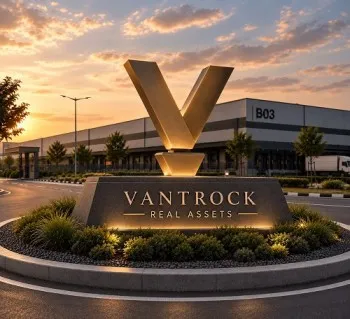
Real estate professional Anshul Singhal has launched Vantrock Real Assets Private Limited (VRAPL), a Mumbai-headquartered platform focused initially on warehousing, industrial and logistics parks. The company plans to develop approximately 11.5 million sq ft of assets, with an estimated gross development value (GDV) of Rs 42 billion (approximately USD 434 million) on completion.The first phase will cover around 3 million sq ft across the National Capital Region (NCR), Bengaluru and Pune, with an estimated development value of Rs 11 billion (approximately USD 113 million). Construction is sched..
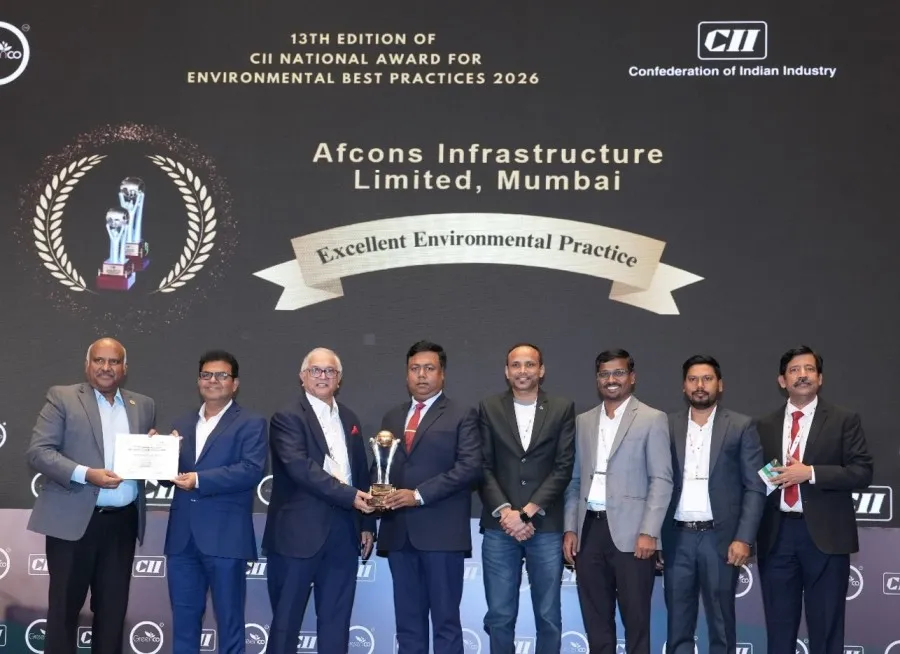
Afcons wins CII award for biodiversity management
Afcons Infrastructure has received the Confederation of Indian Industry (CII) National Award for Environmental Best Practices 2026 in the Biodiversity Management category for its work on the Mumbai-Ahmedabad High Speed Rail Project’s C-2 package.The award was presented at a ceremony in Chennai on 9 October 2026. It was received by Mihir Mishra, Vice-President, CPE, and Sumon Paul, Assistant General Manager, HSE, along with the Afcons team.The project adopted several resource recovery and waste management practices. These included recycling concrete washout waste to recover sand, aggregates a..
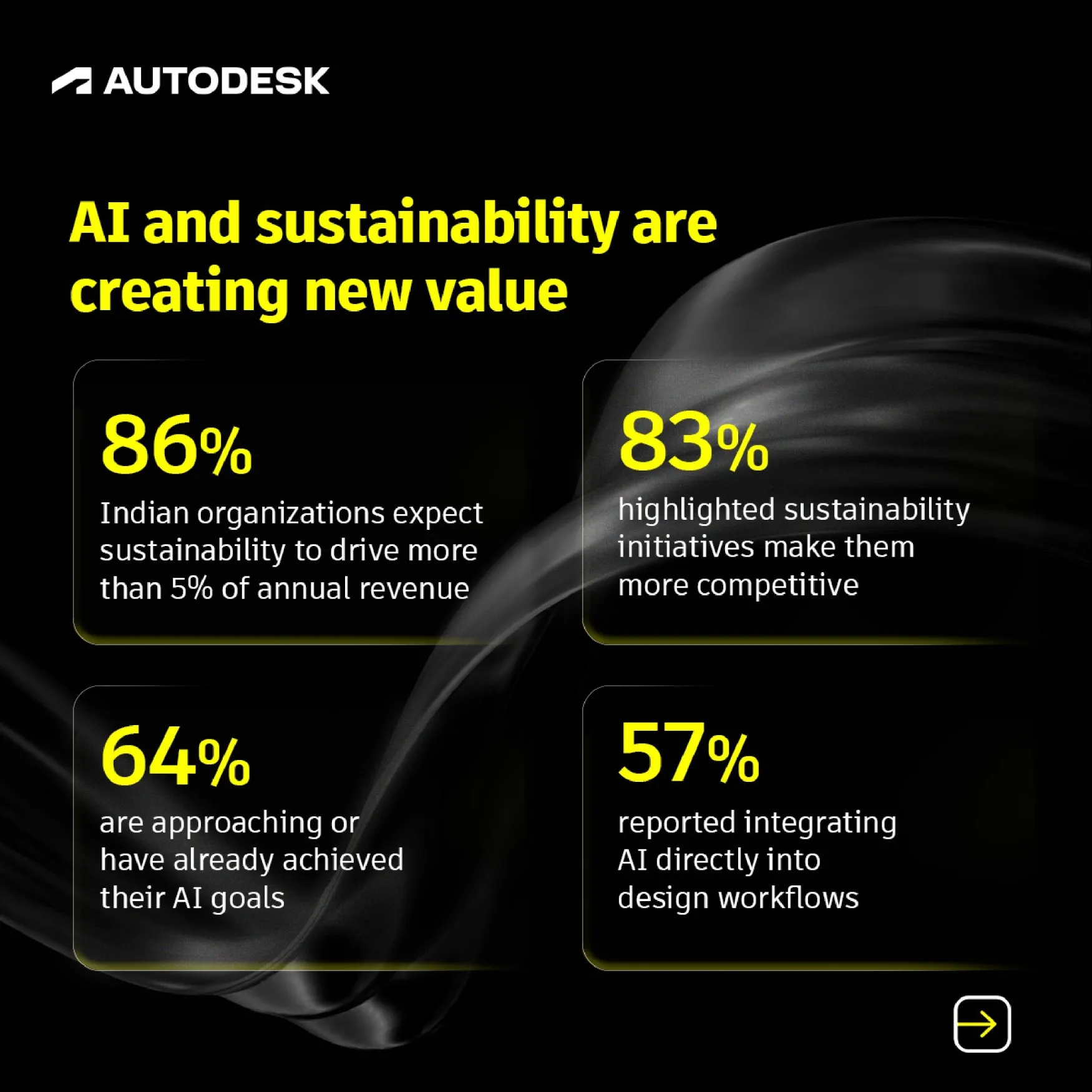
Indian businesses lead globally in planned AI investment, says Autodesk
Indian organisations are moving towards deeper integration of artificial intelligence (AI), digital technologies and sustainability into business operations, according to Autodesk’s 2026 State of Design & Make report. The fourth edition of the annual study highlights growing AI adoption, measurable outcomes from digital transformation and the role of sustainability in long-term business growth.The report found that 64 per cent of Indian organisations are approaching or have achieved their current AI goals. While 88 per cent believe AI will enhance their industry, up from 78 per cent in 2..
Related Articles
Latest Updates