79% of Indian Railways Track now Supports Speeds of 110 Kmph+
RAILWAYS & METRO RAIL

79% of Indian Railways Track now Supports Speeds of 110 Kmph+

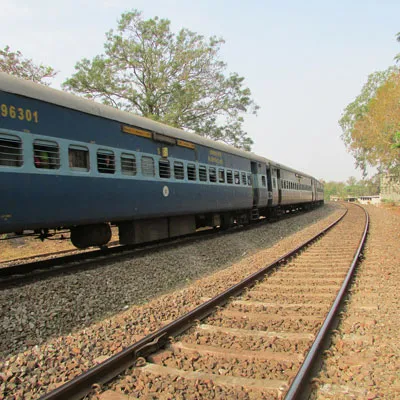
Indian Railways has significantly enhanced the speed potential of its track network over the past decade, with 79 per cent of tracks now capable of supporting speeds of 110 kmph and above, compared with just 40 per cent in 2014. The improvement reflects sustained investment in track modernisation and maintenance aimed at faster and safer train operations.

According to official data, large-scale upgradation works have been undertaken over the last 11 years to improve track quality and performance. Key measures include the use of heavier 60 kg rails, wider-base concrete sleepers, thick web switches, longer rail panels, H-beam sleepers, and extensive deployment of modern track renewal and maintenance machines. In addition, interlocking of level crossing gates and intensive monitoring of track geometry have contributed to enhanced operational safety and higher permissible speeds.

As a result of these interventions, the share of tracks with speed potential below 110 kmph has declined sharply to 20.7 per cent in November 2025 from 60.4 per cent in March 2014. Tracks supporting speeds between 110 kmph and 130 kmph now account for 57.5 per cent of the network, up from 33.3 per cent in 2014. Meanwhile, high-speed sections capable of operating at 130 kmph and above have increased more than fourfold, rising from 6.3 per cent to 21.8 per cent of the total track length during the same period.

The total track length of Indian Railways has also expanded, growing from 79,342 km in 2014 to 1,05,672 km in 2025, further strengthening the network’s capacity and reach. Railway officials said the enhanced speed potential is enabling faster passenger services, better timetable adherence and more efficient freight movement.

This information was provided by Ashwini Vaishnaw, Minister for Railways, Information & Broadcasting, and Electronics & Information Technology, in a written reply to a question in the Lok Sabha, highlighting Indian Railways’ continued focus on infrastructure modernisation and network upgradation.

Indian Railways has significantly enhanced the speed potential of its track network over the past decade, with 79 per cent of tracks now capable of supporting speeds of 110 kmph and above, compared with just 40 per cent in 2014. The improvement reflects sustained investment in track modernisation and maintenance aimed at faster and safer train operations.According to official data, large-scale upgradation works have been undertaken over the last 11 years to improve track quality and performance. Key measures include the use of heavier 60 kg rails, wider-base concrete sleepers, thick web switches, longer rail panels, H-beam sleepers, and extensive deployment of modern track renewal and maintenance machines. In addition, interlocking of level crossing gates and intensive monitoring of track geometry have contributed to enhanced operational safety and higher permissible speeds.As a result of these interventions, the share of tracks with speed potential below 110 kmph has declined sharply to 20.7 per cent in November 2025 from 60.4 per cent in March 2014. Tracks supporting speeds between 110 kmph and 130 kmph now account for 57.5 per cent of the network, up from 33.3 per cent in 2014. Meanwhile, high-speed sections capable of operating at 130 kmph and above have increased more than fourfold, rising from 6.3 per cent to 21.8 per cent of the total track length during the same period.The total track length of Indian Railways has also expanded, growing from 79,342 km in 2014 to 1,05,672 km in 2025, further strengthening the network’s capacity and reach. Railway officials said the enhanced speed potential is enabling faster passenger services, better timetable adherence and more efficient freight movement.This information was provided by Ashwini Vaishnaw, Minister for Railways, Information & Broadcasting, and Electronics & Information Technology, in a written reply to a question in the Lok Sabha, highlighting Indian Railways’ continued focus on infrastructure modernisation and network upgradation.

Next Story
Technology

Bluebeam launches Task Link and mobile upgrades

Bluebeam, part of the Nemetschek Group, has announced the launch of Task Link along with major upgrades to its iOS and Android applications, aimed at unifying office and field teams across construction projects.Task Link is described as a first-of-its-kind native integration between Bluebeam Revu and GoCanvas, enabling a connected workflow between planning and on-site execution. Through the integration, tasks can be pushed directly from Revu to the field, with real-time updates and automated notifications as work progresses. Field teams can capture verifiable on-site data using GoCanvas mobile..

Next Story
Building Material

Kumaraswamy Invites Envoys to Join Flagship Bharat Steel 2026

Union Minister for Steel and Heavy Industries, HD Kumaraswamy, held an interactive meeting with Ambassadors and diplomatic representatives of key partner countries, inviting them to actively participate in Bharat Steel 2026, the flagship international conference-cum-exhibition of the Ministry of Steel scheduled for April 2026.The meeting saw strong participation from representatives of countries that play a significant role in the global steel value chain. It formed part of the Ministry’s broader outreach efforts to deepen international cooperation and strengthen India’s engagement with ma..

Next Story
Infrastructure Transport

Centre Clears Rs 8.87 Bn Plan for World-class Mumbai Marina

The Union Government has approved a Rs 8.87 billion proposal to develop a world-class marina at Mumbai Harbour, a move expected to significantly boost coastal shipping, maritime tourism and waterfront-led urban development in India’s financial capital.The proposed ‘Viksit Bharat Mumbai Marina’ has been cleared by the Ministry of Ports, Shipping and Waterways in line with the vision of Prime Minister Narendra Modi to create global-standard tourism destinations and strengthen the country’s maritime economy. The project is designed to open up Mumbai’s waterfront for public use while att..

Advertisement

Subscribe to Our Newsletter

Get daily newsletters around different themes from Construction world.

STAY CONNECTED

Advertisement

Advertisement

Advertisement

Advertisement

Open In App