BEML Unveils Driverless Train For Bengaluru Pink Line
RAILWAYS & METRO RAIL

BEML Unveils Driverless Train For Bengaluru Pink Line

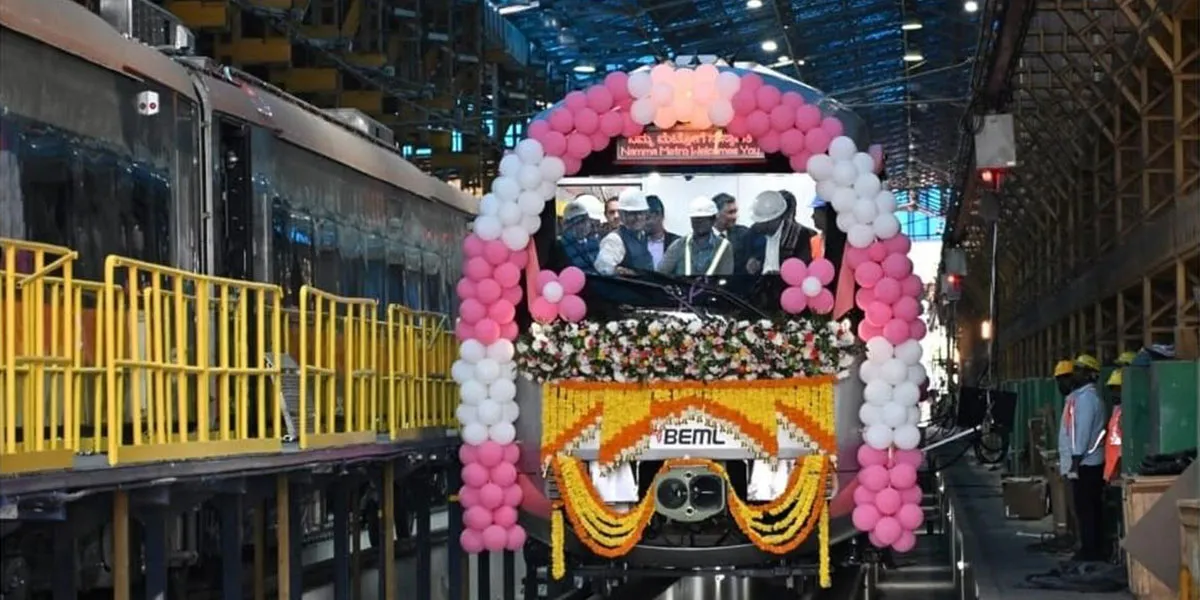
BEML Ltd has rolled out the prototype of its new driverless metro trainset for Bengaluru’s Namma Metro Phase 2, covering the upcoming Pink Line and the Phase 2A and 2B corridors.

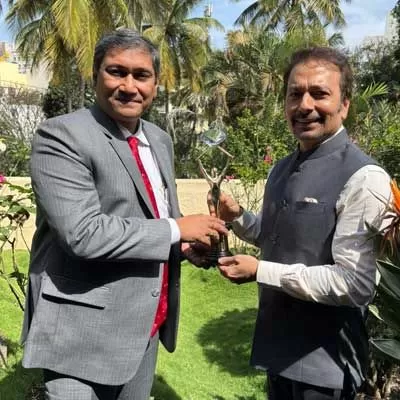
The public sector undertaking unveiled the first six-coach, fully automated trainset for the Pink Line at its Bengaluru Rail Complex. The corridor, connecting Kalena Agrahara in the south to Nagawara in the north, is expected to open in stages by the end of 2026. The prototype was formally flagged off by Bangalore Metro Rail Corporation Ltd Managing Director J Ravishankar, in the presence of BEML Chairman and Managing Director Shantanu Roy and senior officials from both organisations.

Under the ongoing contract, BEML will supply 318 standard-gauge metro coaches for the Pink Line and the Blue Line, which serves the airport corridor. The trainsets have been designed and engineered entirely in-house at BEML’s Bengaluru facility and will undergo extensive testing and commissioning in line with BMRCL’s schedule. BEML will also provide comprehensive maintenance support for up to 15 years.

Officials said the rollout represents a major milestone in the execution of a Rs 31.77 billion contract secured through competitive bidding. The prototype highlights BEML’s expanding role in India’s metro ecosystem, particularly in fully automated Grade of Automation-4 systems.

The new trainsets feature modern interiors, energy-efficient systems, upgraded passenger information displays, wider gangways, USB charging points, ergonomic seating and enhanced accessibility features. They comply with advanced fire safety and crashworthiness standards and are compatible with Communication-Based Train Control technology, enabling fully driverless operations.

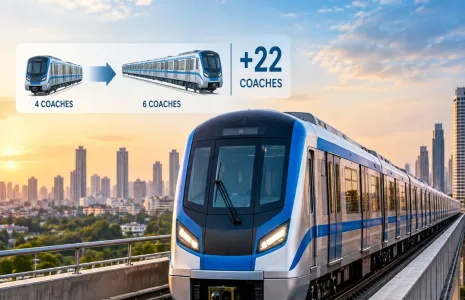
BEML, the largest rolling stock supplier to Bengaluru Metro, has also received an additional order worth Rs 4.14 billion for six more driverless trainsets for the Yellow Line under Phase 2. Combined with an earlier order for 42 additional cars, the total supply commitment for Phase 2 has increased from 318 to 396 metro coaches.

In August 2023, BEML secured the original contract to manufacture and maintain 318 metro coaches, or 53 trainsets, over a 15-year period. This included 96 coaches for the Pink Line and 222 coaches for the Blue Line covering the Phase 2A and 2B extensions.

A senior BMRCL official said the delivery schedule has been delayed from the original June 2025 target. The revised plan now envisages the delivery of 16 trains before completion of the full Pink Line in December 2026, allowing sufficient time for trial runs, inspections and approvals from the Commissioner of Metro Rail Safety.

The first prototype unveiled on 11 December will be transported to the Kothanur depot after 15 December and will undergo a minimum of five months of testing. The 21.3-kilometre Pink Line, comprising 13.8 kilometres of underground sections and 7.5 kilometres of elevated track, is a critical part of Namma Metro’s Phase 2 expansion. Once operational, it is expected to significantly strengthen north–south connectivity, linking dense residential areas and major commercial hubs with the city centre and enabling interchange with the upcoming airport line at Nagawara.

BEML Ltd has rolled out the prototype of its new driverless metro trainset for Bengaluru’s Namma Metro Phase 2, covering the upcoming Pink Line and the Phase 2A and 2B corridors. The public sector undertaking unveiled the first six-coach, fully automated trainset for the Pink Line at its Bengaluru Rail Complex. The corridor, connecting Kalena Agrahara in the south to Nagawara in the north, is expected to open in stages by the end of 2026. The prototype was formally flagged off by Bangalore Metro Rail Corporation Ltd Managing Director J Ravishankar, in the presence of BEML Chairman and Managing Director Shantanu Roy and senior officials from both organisations. Under the ongoing contract, BEML will supply 318 standard-gauge metro coaches for the Pink Line and the Blue Line, which serves the airport corridor. The trainsets have been designed and engineered entirely in-house at BEML’s Bengaluru facility and will undergo extensive testing and commissioning in line with BMRCL’s schedule. BEML will also provide comprehensive maintenance support for up to 15 years. Officials said the rollout represents a major milestone in the execution of a Rs 31.77 billion contract secured through competitive bidding. The prototype highlights BEML’s expanding role in India’s metro ecosystem, particularly in fully automated Grade of Automation-4 systems. The new trainsets feature modern interiors, energy-efficient systems, upgraded passenger information displays, wider gangways, USB charging points, ergonomic seating and enhanced accessibility features. They comply with advanced fire safety and crashworthiness standards and are compatible with Communication-Based Train Control technology, enabling fully driverless operations. BEML, the largest rolling stock supplier to Bengaluru Metro, has also received an additional order worth Rs 4.14 billion for six more driverless trainsets for the Yellow Line under Phase 2. Combined with an earlier order for 42 additional cars, the total supply commitment for Phase 2 has increased from 318 to 396 metro coaches. In August 2023, BEML secured the original contract to manufacture and maintain 318 metro coaches, or 53 trainsets, over a 15-year period. This included 96 coaches for the Pink Line and 222 coaches for the Blue Line covering the Phase 2A and 2B extensions. A senior BMRCL official said the delivery schedule has been delayed from the original June 2025 target. The revised plan now envisages the delivery of 16 trains before completion of the full Pink Line in December 2026, allowing sufficient time for trial runs, inspections and approvals from the Commissioner of Metro Rail Safety. The first prototype unveiled on 11 December will be transported to the Kothanur depot after 15 December and will undergo a minimum of five months of testing. The 21.3-kilometre Pink Line, comprising 13.8 kilometres of underground sections and 7.5 kilometres of elevated track, is a critical part of Namma Metro’s Phase 2 expansion. Once operational, it is expected to significantly strengthen north–south connectivity, linking dense residential areas and major commercial hubs with the city centre and enabling interchange with the upcoming airport line at Nagawara.

Next Story
Infrastructure Transport

East Vinod Nagar Metro Station Wins NECA 2025 Honour

East Vinod Nagar Metro Station on Delhi Metro’s Pink Line has been named the “Best Performing Unit” in the metro stations category at the National Energy Conservation Awards (NECA) 2025, recognising its excellence in energy efficiency and conservation practices. The award was presented by President Droupadi Murmu at a ?????? held at Vigyan Bhawan on the occasion of National Energy Conservation Day. The recognition highlights Delhi Metro’s continued focus on sustainable operations and efficient energy management across its network. Delhi Metro Rail Corporation (DMRC) Managing Director..

Next Story
Infrastructure Transport

DMRC Begins Work On Lajpat Nagar–Saket Phase IV Corridor

The Delhi Metro Rail Corporation (DMRC) has commenced construction on the Lajpat Nagar–Saket G Block corridor under Phase IV, marking the first section beyond the project’s priority corridors where physical work has begun. The elevated corridor forms part of the Golden Line (Line 11) and will feature eight stations: Lajpat Nagar, Andrews Ganj, Greater Kailash-1, Chirag Delhi, Pushpa Bhawan, Saket District Centre, Pushp Vihar and Saket G Block. Once operational, the line is expected to significantly enhance metro connectivity across key parts of South Delhi. According to DMRC, the corrido..

Next Story
Infrastructure Transport

MoPSW Reviews Inland Water Transport Projects In Varanasi

A high-level review meeting chaired by Vijay Kumar, Secretary, Ministry of Ports, Shipping and Waterways (MoPSW), was held in Varanasi to assess the progress of Inland Water Transport (IWT) projects and advance plans to develop the city as a major IWT hub. During the meeting, Kumar reviewed multiple ongoing IWT initiatives, with senior officials from central and state agencies participating to strengthen coordination and accelerate project implementation. In line with the Ministry’s vision for Varanasi, discussions covered the expansion of cargo handling capacity at the Multi-Modal Terminal..

Advertisement

Subscribe to Our Newsletter

Get daily newsletters around different themes from Construction world.

STAY CONNECTED

Advertisement

Advertisement

Advertisement

Advertisement

Open In App