Bengaluru’s Green, Purple lines have no rainwater harvesting
RAILWAYS & METRO RAIL

Bengaluru’s Green, Purple lines have no rainwater harvesting

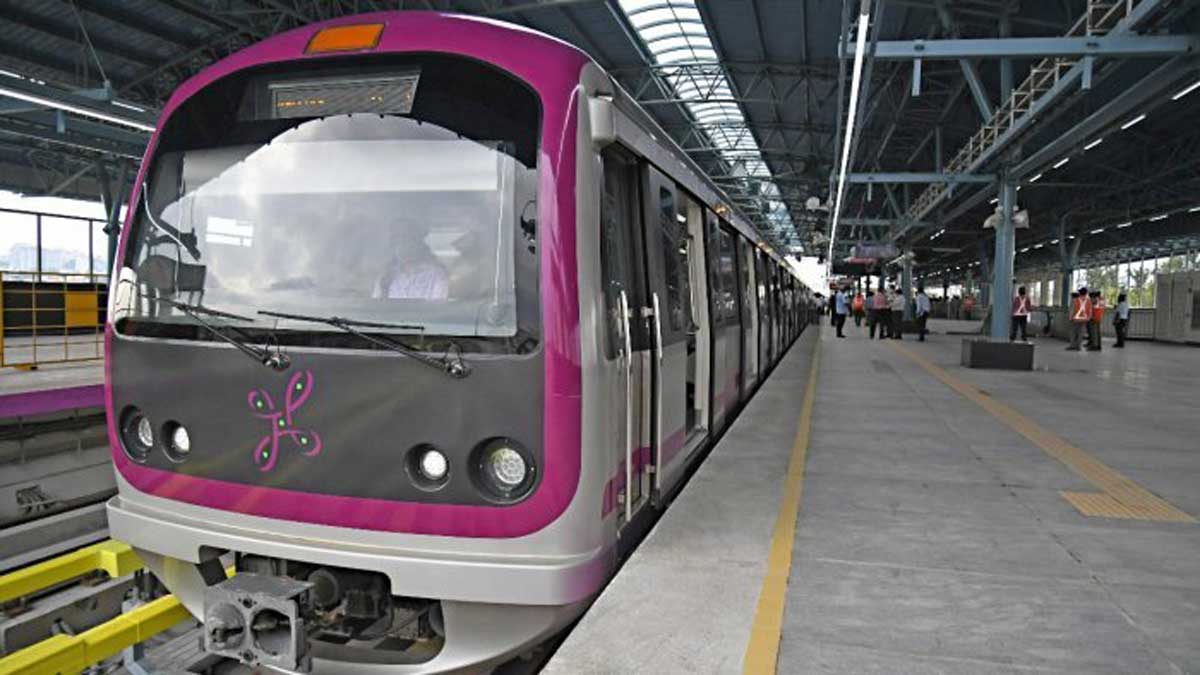
A survey carried out by the NGO ActionAid India found that there is no rainwater harvesting structures (RWH) across the stretch of Green and Purple lines of Bangalore Metro Rail Corporation (BMRCL).

The survey was conducted from June 9 to June 14, between Silk Institute station and Nagasandra station on Green Line and Magadi station and Kengeri station on Purple Line. “A total of 1,189 pillars were surveyed. Throughout the surveyed stretch of 41 km, it was noticed that there were no RWH structures collecting rainwater to recharge groundwater. Additionally, the Pink Line, which is under construction, was surveyed for the stretch of Kalena Agrahara to Tavarekere metro station, covering a distance of approximately 7 km of elevated stretch,” the survey said.

Rainwater harvesting is the collection and storage of rainwater that runs off from roof tops, parks, roads, open grounds, etc. This water runoff can be either stored or recharged into groundwater. Rainwater harvesting, according to experts, is the solution to reduce water scarcity.

During the survey it was also found that pits constructed close to the pillars were filled with gravel stones. “BMRCL hasn’t made any press statement so far clarifying the objective of these pits. In the survey, it has been noted that across the Green Line and Purple Line, these pits were filled with soil and trash. It is clear that after a few minutes of rain, water starts overflowing from the pits on to the road. These pits are not of any help in conserving rainwater,” it said.

In the survey, it was also suggested that BMRCL take up the responsibility of RWH structures across the Green, Purple and Pink lines. “The RWH structure found between MG Road and Byappanahalli Metro Station is a commendable example of efficient groundwater recharge by BMRCL – Namma Metro. It successfully captures and recharges every drop of rain, showcasing the immense potential for sustainable water management. BMRCL should take up similar RWH structures across the Green, Purple and Pink lines,” the survey said.

"Join industry leaders at RAHSTA Expo, India's premier platform for roads, highways and traffic infrastructure. Register now to explore innovations, network with experts and shape the future of mobility."

A survey carried out by the NGO ActionAid India found that there is no rainwater harvesting structures (RWH) across the stretch of Green and Purple lines of Bangalore Metro Rail Corporation (BMRCL).The survey was conducted from June 9 to June 14, between Silk Institute station and Nagasandra station on Green Line and Magadi station and Kengeri station on Purple Line. “A total of 1,189 pillars were surveyed. Throughout the surveyed stretch of 41 km, it was noticed that there were no RWH structures collecting rainwater to recharge groundwater. Additionally, the Pink Line, which is under construction, was surveyed for the stretch of Kalena Agrahara to Tavarekere metro station, covering a distance of approximately 7 km of elevated stretch,” the survey said.Rainwater harvesting is the collection and storage of rainwater that runs off from roof tops, parks, roads, open grounds, etc. This water runoff can be either stored or recharged into groundwater. Rainwater harvesting, according to experts, is the solution to reduce water scarcity.During the survey it was also found that pits constructed close to the pillars were filled with gravel stones. “BMRCL hasn’t made any press statement so far clarifying the objective of these pits. In the survey, it has been noted that across the Green Line and Purple Line, these pits were filled with soil and trash. It is clear that after a few minutes of rain, water starts overflowing from the pits on to the road. These pits are not of any help in conserving rainwater,” it said.In the survey, it was also suggested that BMRCL take up the responsibility of RWH structures across the Green, Purple and Pink lines. “The RWH structure found between MG Road and Byappanahalli Metro Station is a commendable example of efficient groundwater recharge by BMRCL – Namma Metro. It successfully captures and recharges every drop of rain, showcasing the immense potential for sustainable water management. BMRCL should take up similar RWH structures across the Green, Purple and Pink lines,” the survey said.

Next Story
Infrastructure Urban

ABS Marine Sees CRISIL Credit Rating Upgrade

ABS Marine Services has secured an upgrade to its long term and short term credit ratings from CRISIL, reflecting improved profitability and revenue growth through long term contracts. CRISIL moved the long term rating from BBB+/Stable to A-/Stable and revised the short term rating from A2 to A2+. The action signals strengthened financial metrics and operational resilience. The company benefited from durable client relationships with firms such as ONGC and Schlumberger. The rating decision followed stronger cash flows and an enlarged bank loan facility, which increased from Rs 3,705 million (m..

Next Story
Infrastructure Transport

Project BRAHMANK Marks 16 Years Of Strategic Roads In Arunachal

Project BRAHMANK is marking 16 years of work to establish strategic road and bridge links across Arunachal Pradesh, maintaining and developing 811 kilometres of roads and nearly 86 bridges that range from small culverts to large steel and arch bridges. These transport links are described as critical for ensuring year-round movement of defence personnel, equipment and essential supplies while improving everyday travel for people in remote villages. The project balances national security requirements with regional development by focusing on reliable access in challenging terrain. Notable enginee..

Next Story
Infrastructure Transport

Longleng CSOs Give One Week Ultimatum Over Two-Lane Highway

Civil society organisations (CSOs) in Longleng district have demanded immediate restoration of the deteriorating Changtongya–Longleng two-lane road and sought a detailed status report on the stalled construction within one week. The demand followed a consultative meeting convened under the Phom Peoples' Council (PPC) to discuss welfare and development concerns. PPC president YB Angam Phom said prolonged non-maintenance had caused hardship to commuters and affected transportation, local commerce and the district's development. The meeting urged authorities to undertake immediate restoration a..

Advertisement

Subscribe to Our Newsletter

Get daily newsletters around different themes from Construction world.

STAY CONNECTED

Advertisement

Advertisement

Advertisement