Bullet Train Project: NHSRCL Signs Contract for 21 km Undersea Tunnel
RAILWAYS & METRO RAIL

Bullet Train Project: NHSRCL Signs Contract for 21 km Undersea Tunnel

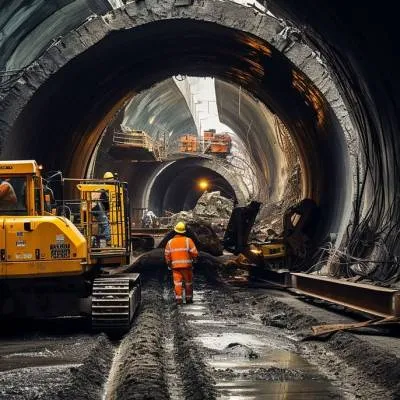
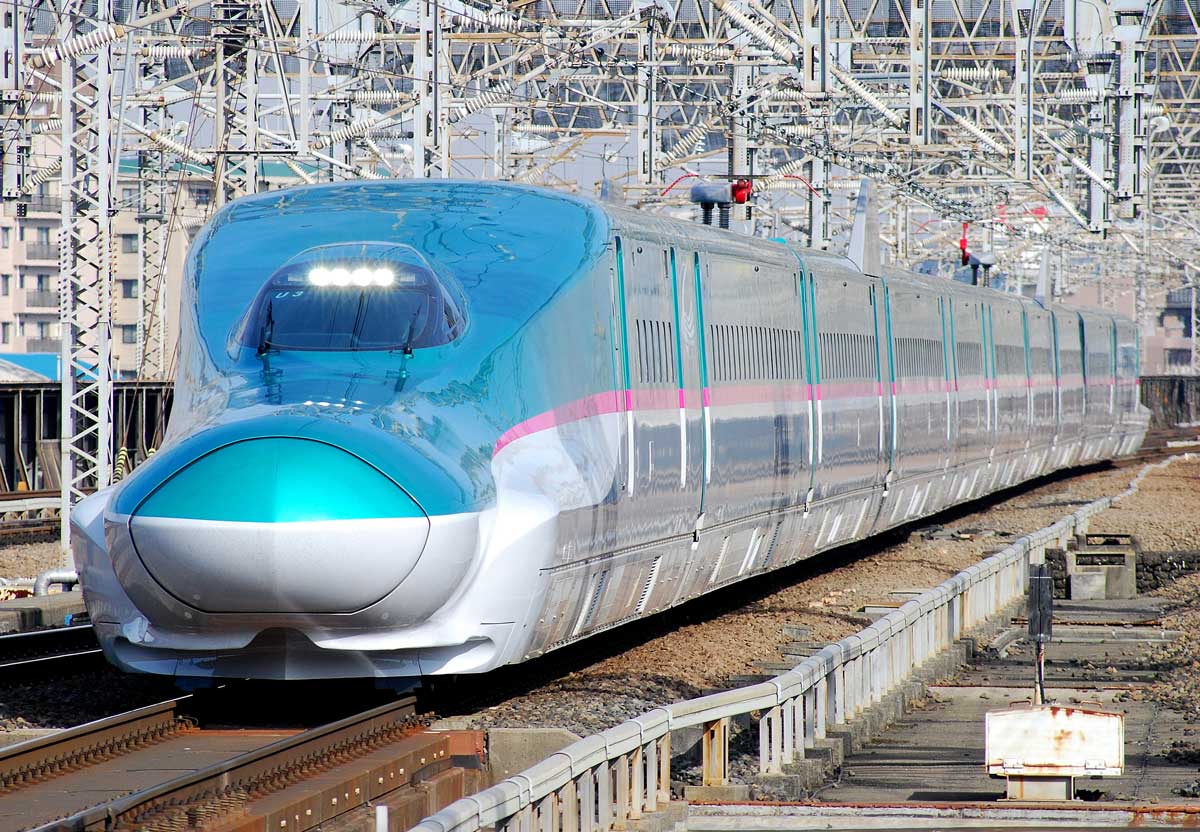
The National High-Speed Rail Corporation (NHSRCL), responsible for India's inaugural bullet train initiative, has entered into a contract with Afcons Infrastructure to construct a 21 km tunnel. This significant tender encompasses the construction of India's first-ever undersea rail tunnel, measuring 7 km in length, located in Maharashtra. The awarded bid for the entire project amounts to approximately Rs 63.97 billion, making it the sole tunnel within the proposed bullet train venture.

According to a statement from NHSRCL, the technical bids for this tender were opened in February, while the financial bids were unveiled in April 2023.

Managing Director of NHSRCL, Rajendra Prasad, stated that the construction of this 21 km tunnel presents one of the most challenging contracts along the Mumbai-Ahmedabad High-Speed Rail corridor. The scope of work encompasses the creation of the country's first twin-track undersea rail tunnel spanning 7 km at Thane Creek. Prasad added, "We will utilise three tunnel boring machines and employ the innovative Austrian tunnelling method for this construction."

The proposed bullet train is expected to operate at a maximum speed of 320 kilometers per hour (kmph), enabling the journey between Mumbai and Ahmedabad to be completed in approximately two hours. The total corridor length spans 508 kilometers, encompassing 12 stations: Mumbai, Thane, Virar, Boisar, Vapi, Bilimora, Surat, Bharuch, Vadodara, Anand, Ahmedabad, and Sabarmati.

Railways Minister Ashwini Vaishnaw stated in March of this year that the bullet train project could potentially be operational by August 2026, with the aim of expanding its service to a larger section by 2027.

Current estimates project the cost of the bullet train initiative to exceed Rs 1000 billion, with ticket prices for the full journey anticipated to be over Rs 2,000 per passenger. In May 2016, the government estimated the Internal Rate of Return of the project at 4 per cent and the Economic Internal Rate of Return at 11.8 per cent.

"Join industry leaders at RAHSTA Expo, India's premier platform for roads, highways and traffic infrastructure. Register now to explore innovations, network with experts and shape the future of mobility."

The National High-Speed Rail Corporation (NHSRCL), responsible for India's inaugural bullet train initiative, has entered into a contract with Afcons Infrastructure to construct a 21 km tunnel. This significant tender encompasses the construction of India's first-ever undersea rail tunnel, measuring 7 km in length, located in Maharashtra. The awarded bid for the entire project amounts to approximately Rs 63.97 billion, making it the sole tunnel within the proposed bullet train venture.According to a statement from NHSRCL, the technical bids for this tender were opened in February, while the financial bids were unveiled in April 2023.Managing Director of NHSRCL, Rajendra Prasad, stated that the construction of this 21 km tunnel presents one of the most challenging contracts along the Mumbai-Ahmedabad High-Speed Rail corridor. The scope of work encompasses the creation of the country's first twin-track undersea rail tunnel spanning 7 km at Thane Creek. Prasad added, We will utilise three tunnel boring machines and employ the innovative Austrian tunnelling method for this construction.The proposed bullet train is expected to operate at a maximum speed of 320 kilometers per hour (kmph), enabling the journey between Mumbai and Ahmedabad to be completed in approximately two hours. The total corridor length spans 508 kilometers, encompassing 12 stations: Mumbai, Thane, Virar, Boisar, Vapi, Bilimora, Surat, Bharuch, Vadodara, Anand, Ahmedabad, and Sabarmati.Railways Minister Ashwini Vaishnaw stated in March of this year that the bullet train project could potentially be operational by August 2026, with the aim of expanding its service to a larger section by 2027.Current estimates project the cost of the bullet train initiative to exceed Rs 1000 billion, with ticket prices for the full journey anticipated to be over Rs 2,000 per passenger. In May 2016, the government estimated the Internal Rate of Return of the project at 4 per cent and the Economic Internal Rate of Return at 11.8 per cent.

Next Story
Real Estate

Pecan Realty Completes Rs 1.5 Billion Transactions

Pecan Realty has recently completed four institutional transactions worth over Rs 1.5 billion over the past two years, strengthening its position as an execution-led real estate platform. The deals include resolution-led acquisitions, structured finance transactions and capital partnerships across its development portfolio.The transactions covered acquisitions through the National Company Law Tribunal process and helped provide repayment or exits to both private and public sector lenders. The company said the deals demonstrate its ability to resolve complex project situations, work with instit..

Next Story
Real Estate

SNN Estates Expands North Bengaluru Housing Project

SNN Estates has announced an expansion of its SNN Estates Felicity residential project in North Bengaluru following strong buyer demand, with 75 per cent of the first-phase inventory sold within three days of launch.The developer will add 76 apartments in the new phase, taking the project's estimated revenue potential to around Rs 1,000 crore upon completion of Phase 2.Spread across 6.5 acres in Rachenahalli, near Manyata Tech Park, the project comprises 604 apartments in 1.5, 2, 2.5, 3 and 4 BHK configurations. The development includes a 50,000-sq-ft clubhouse with amenities such as sports co..

Next Story
Infrastructure Urban

SCG Drives ASEAN Industrial Transformation Strategy

SCG is strengthening its focus on ASEAN as a key growth region by advancing industrial transformation, enhancing competitiveness and building resilient regional value chains. Thammasak Sethaudom, President and Chief Executive Officer, SCG, highlighted the need for industries to continuously develop capabilities, strengthen resilience and deepen regional cooperation to achieve sustainable long-term growth.SCG views ASEAN as an important growth engine alongside China, supported by favourable demographics, trade connectivity and investment flows. With ASEAN’s GDP projected to grow by around 4.7..

Advertisement

Subscribe to Our Newsletter

Get daily newsletters around different themes from Construction world.

STAY CONNECTED

Advertisement

Advertisement

Advertisement